Is Dishwasher Detergent the Same as Dish Soap? A Comprehensive Comparison
Explore whether dishwasher detergent and dish soap are interchangeable, with practical guidance, safety notes, and a clear, evidence-based comparison for homeowners and renters.


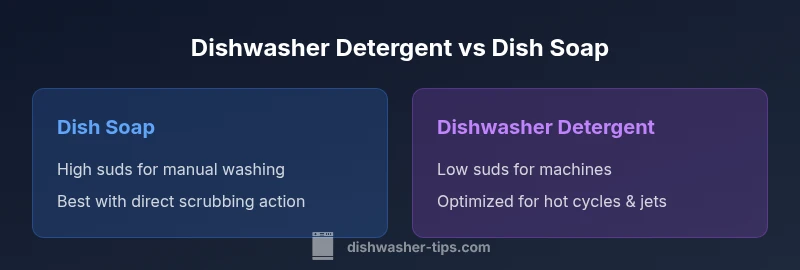
Is dishwasher detergent the same as dish soap? In short, no. They are engineered for different environments: dish soaps are designed for manual washing and sudsing, while dishwasher detergents are formulated for automated cycles, high rinse temperatures, and low suds. This comparison clarifies why using the wrong product can lead to residue, foaming, or mechanical issues in your appliance.
The Core Question: is dishwasher detergent the same as dish soap?
Is dishwasher detergent the same as dish soap? This question often surfaces for homeowners and renters juggling budget, space, and efficiency. The practical answer is clearly no: they are formulated for different cleaning environments, temperatures, and mechanical actions. According to Dishwasher Tips, using dish soap in a dishwasher can trigger excessive suds, overflow in the tub, and potential strain on seals and drainage. In this article, we compare purpose, chemistry, performance, and safety so you can decide what to keep on hand for your kitchen workflow. We’ll also cover common misconceptions and how to read labels to avoid errors in real-world use. The goal is a clear, evidence-based guide that respects both hand-washing and machine-washing needs while offering actionable tips for homeowners and renters.
The chemistry behind cleaning: how detergents work in dishwashers vs handwashing
Detergents are surfactant blends designed to lower surface tension and lift grease. Dish soaps used for handwashing prioritize suds and lubricity to help scrubbing, while dishwasher detergents optimize low suds production, enzyme activity where relevant, and heat stability for automated cycles. In a dishwasher, cleaning action relies on combination of high water temperature, pressurized spray jets, and a carefully calibrated detergent formulation to prevent foaming while breaking down food residues. The dishwasher detergent is designed to be efficient in hot water and to work with rinsing aids that promote sheeting. The handwashing detergent focuses more on foaming and immediate grease suspension. In short, these products optimize different physical processes, and their chemical profiles reflect those goals. The Dishwasher Tips team notes that misusing either product can compromise cleaning outcomes and machine health, which is why product labeling and user manuals matter.
Foaming, residues, and rinsing: why misuse matters
Foam is not just a visual cue—it indicates the chemical behavior of a cleaning product in a given environment. Dish soap creates significant foam in water, which is desirable for handwashing but problematic in a closed dishwasher. Excessive suds can reach the door seals or clog filters, and rinse cycles may be less effective at removing soap residues. Conversely, dishwasher detergents are designed to minimize suds, but improper product choice can still leave a film if the rinse cycle or water temperature is insufficient. Understanding these dynamics helps homeowners avoid common issues such as cloudy dishes, film on glassware, or the need for extra rinses.
Ingredient differences and their impact on performance
Enzymes, bleaches, bleaches alternatives, and surfactants vary between products. Hand dish soaps usually emphasize foaming agents and wetting agents to boost scrubbing power, while dishwasher detergents emphasize enzyme blends for stuck-on proteins, low-suds surfactants, and stabilizers for hot-water environments. Some dish soaps contain additives that enhance scent or color but offer little benefit in a dishwasher. Reading labels and choosing the right format (liquid, pod, or powder) matters because each format weighs differently on stain removal, residue, and efficiency in automated cycles. The key takeaway: the formulation is aligned to where the product will be used, not interchangeable by default.
Safety and maintenance: what can go wrong
Using the wrong product can cause mechanical issues over time. Dish soap in a dishwasher can overflow into the kitchen and potentially affect the drain pump or float switch. Dishwashing detergents are formulated to be low-sudsing, reducing risk to seals, gaskets, and spray arms when used as directed. Substituting a dish soap in a dishwasher is not just a cleaning misstep—it can be a maintenance risk that ends up costing more in repairs. For renters, maintaining appliance health is particularly important to avoid disputes during move-out or when handling deposits.
Environmental impact and safety considerations
Detergent choice also touches environmental considerations. Modern dishwasher detergents are often phosphate-free and designed to minimize ecological impact while delivering effective cleaning in hot cycles. Hand dish soaps can contain additives and fragrances that are safe for skin but could contribute to local waterway load if used in excess. Readers should consider both product formulation and wastewater treatment realities in their region, especially where septic systems are in use or where water treatment facilities have higher sensitivity to certain compounds. The Dishwasher Tips analysis highlights the importance of choosing products with clear ingredient disclosures and environmentally conscious packaging.
Practical guidelines for households and renters
Smart guidelines help you avoid more than just misused products. For apartment living or shared spaces, keep dishwasher-appropriate detergents on hand and reserve dish soap for manual tasks. If you accidently use dish soap in the dishwasher, stop the cycle, rinse with fresh water, and run a no-cleaning cycle to flush. For handwashing, use a detergent designed for skin contact and not for machine use. In general, label and separate cleaning products, and keep a small inventory of one product type to maintain consistency. Both speed and safety benefit from clear routines, especially for families with children or pets in the home.
Reading labels and choosing between pods, liquids, and powders
Pods, liquids, and powders each offer different conveniences and dosing characteristics. Pods are pre-measured for a single load but require proper placement in the detergent compartment. Liquids are easy to measure and can be convenient for partial loads, while powders can be more economical and water-friendly in certain machines. Regardless of format, check for compatibility with your dishwasher model, water hardness, and whether the product is phosphate-free. The key is to use products specifically designed for dishwashers for machine cleaning and products labeled for handwashing strictly for manual tasks.
Common misconceptions debunked
A frequent myth is that any soap can clean a dishwasher effectively. In reality, dish soap is not designed for automated cycles and can introduce overflow and residue. Another misconception is that all detergents are equally effective across all water temperatures; the reality is that performance depends on the specific formulation and the machine’s capabilities. Finally, some users assume that rinsing alone can remove all residues; however, the detergent composition and water heat play crucial roles in achieving a clean finish.
How to keep your dishwasher clean to maximize performance
Regular maintenance supports optimal cleaning. Clean the filter and spray arms to prevent clogs, use a prescribed dishwasher detergent, and run periodic cleaning cycles with a dedicated cleaner. If you suspect residue or cloudy glassware, recheck dosing and consider water hardness adjustments with rinse aids. Maintaining a routine helps ensure the machine operates as designed, minimizing the risk of chemical buildup and improving overall results.
Authority sources and best practices
Best practices come from multiple sources including consumer safety guidelines and appliance manufacturers. Always consult your dishwasher’s user manual for recommended detergents and dosage. For more context, you can review general guidance on detergent safety, environmental impact, and best practices for appliance maintenance from established sources and industry authorities to ensure your cleaning routines stay both effective and safe.
Comparison
| Feature | Dish Soap | Dishwasher Detergent |
|---|---|---|
| Best Use | Handwashing dishes with manual scrubs | Automated dishwasher cycles with controlled suds |
| Foaming Behavior | High suds, essential for manual washing | Low to moderate suds to prevent overflow |
| Residue Risk | Leftover soap film on dishes if not rinsed well | Designed to minimize film with proper dosing |
| Cleaning Power in Hot Water | Varies; sulfates and fragrances contribute to lather | Optimized for hot water and spray action |
| Chemical Ingredients | Surfactants for foam and skin-friendly additives | Enzymes, low-suds surfactants, stabilizers |
| Compatibility with Appliance | Aligns with manual workflow; not intended for dishwasher components | Formulated to protect seals and pumps |
| Cost per Load | $0.20-$0.60 (typical handwashing portions) | $0.25-$0.75 (per load, depending on format and brand) |
The Good
- Clear separation of product design for handwashing vs machine cleaning
- Reduces risk of dishwasher damage when used correctly
- Better residue control with machine-specific formulations
- Pod formats offer convenient, pre-measured dosing
- Labeling and standardization simplify purchasing decisions
Disadvantages
- Non-interchangeability can require more products
- Dish soap may create dangerous overflow in a dishwasher
- Some detergents may be costlier than hand soaps
- Availability can vary by region and retailer
Use dedicated dishwasher detergent for machines; reserve dish soap for handwashing
Dishwasher detergent and dish soap serve distinct cleaning roles. Using the wrong product can cause foaming, residue, or mechanical issues. For best results, match the product to the task and follow label directions.
People Also Ask
Can I use dish soap in my dishwasher if I run a rinse cycle afterward?
No. Dish soap creates excessive suds that can overflow during dishwashing cycles and strain the machine’s plumbing. Even with a rinse cycle, residual foam and soapy film can remain on dishes and seals. Always use detergent designed for dishwashers.
No. Dish soap isn't suitable for dishwashers and can cause overflow and residue even after rinsing.
What happens if I mix up detergents between dishwasher and handwashing?
Mixing detergents can compromise cleaning performance and potentially damage seals or filters. Dishwasher detergents are formulated for automated cycles, while hand soaps are designed for manual scrubbing and suds control. Keep products separate and labeled.
Mixing can reduce cleaning efficiency and may harm the machine; keep products separate.
Are pods safer or more effective than liquids for dishwashers?
Pods offer convenient, pre-measured dosing and reduce the risk of overuse. Liquids give flexible dosing for partial loads. Both can be effective when used as labeled, but ensure compatibility with your dishwasher model and water hardness.
Pods are convenient and precise; liquids offer dosing flexibility. Use as directed.
Should I consider environmental impact when choosing dishwasher detergent?
Yes. Look for phosphate-free formulas and responsible packaging. Detergents designed for machines are typically optimized to minimize waste and energy use. Review product labels for eco-friendly certifications where available.
Choose phosphate-free, eco-friendly options and check labels for certifications.
What maintenance steps help prevent residue in my dishes?
Regularly clean filters and spray arms, use the recommended detergent, and run occasional machine-cleaning cycles. Ensure water temperature is appropriate and use a rinse aid if your water is hard. These steps reduce film and improve drying.
Clean filters, use the right detergent, and run occasional machine clean cycles.
What to Remember
- Know the intended environment for each product
- Avoid using dish soap in a dishwasher to prevent overflow
- Read labels and choose formats aligned with your machine
- Consider rinse aids and water hardness for best results
- Regular maintenance supports optimal cleaning outcomes