How to Put Dishwasher Gel in Dishwasher: A Step-by-Step Guide
Learn the correct method to add dishwasher gel, where to pour, and how much to use. Practical tips to prevent leaks and residue in daily cycles from Dishwasher Tips.


Learn how to properly add dishwasher gel to your dishwasher: locate the detergent dispenser, choose the right gel, and pour it as directed on the bottle. Do not use dish soap; close the dispenser, select a cycle, and run a wash. This guide also covers HE vs standard machines, how much gel to use (per label), and tips to prevent leaks.
How dishwasher gel works in modern dishwashers
Dishwasher gel is a liquid detergent designed to dissolve evenly in the wash cycle, releasing surfactants that lift grease and food particles from dishes. Compared with powder, gel can be less prone to clumping in the dispenser and is easier to measure accurately. The gel should be poured into the dedicated detergent compartment, not into the drum or onto dishes. In most households, you will choose a gel formulated for automatic dishwashers and compatible with your machine's wash cycle. For high-efficiency (HE) models, use a low-sudsing formula to prevent excess foam. Gel detergents often perform well in cool or medium-temperature cycles, but they still rely on the machine's pumps to distribute evenly. Always check the bottle for whether the product is labeled as HE-compatible. If you have very hard water, you may want to consider a rinse aid to improve drying and reduce film on glassware.
Before you pour: identify your dishwasher and compatibility
Before pouring gel, identify your dishwasher type and read the bottle label. Not all liquids are created equal for every machine; some models require low-suds formulas and others tolerate standard detergents. If your dishwasher is labeled HE, choose a gel that explicitly states compatibility with HE cycles. For households with hard water, confirm whether the product includes anti-scale agents or if you should pair it with a rinse aid. By starting with the right detergent and recognizing your unit type, you reduce the chance of suds overflow, residue, or poor cleaning results. This approach aligns with best practices discussed by Dishwasher Tips and other reputable sources.
Where to pour gel: locating the detergent dispenser
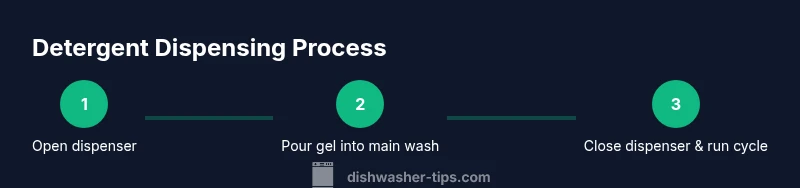
Most dishwashers feature a detergent dispenser on the inside of the door with two compartments: one for the pre-wwash and one for the main wash. Open the dispenser cover and locate the main wash chamber. Pour the gel into the main wash compartment only, avoiding the rinse aid slot unless instructed by the bottle. If your model exposes a dosage indicator or lines, fill to the indicated level rather than guessing. Close the lid firmly; a partially open dispenser can leak during the cycle. For models with a flip-top lid, ensure it snaps shut completely to prevent foam leakage. In some newer units, the dispenser can be accessed by pulling a small tab; consult your manual if the release is not obvious.
How to measure and pour gel: best practices
Use the measuring cap or a dedicated measuring cup to pour the gel. Always follow the detergent bottle's instructions for dosage. If there is a built-in dosage indicator on the bottle, use it as your guide rather than eyeballing the amount. Avoid pouring gel directly onto dishes or into the drum, as this can cause spotty cleaning and foaming. After loading, wipe any accidental spills from the dispenser with a dry cloth to prevent residue on glassware. For heavy soiled loads, refer to the bottle’s guidance and consider using a pre-soak or higher cycle if your dishwasher supports it. These practices help ensure consistent cleaning without buildup in the dispenser.
Special considerations for HE dishwashers
High-efficiency machines require low-suds detergents to prevent excessive foam, which can interfere with cleaning and drainage. Always choose a gel labeled as HE-compatible if your unit is HE-rated. Some gels are more concentrated than others; in those cases, a smaller amount is typically sufficient. If your detergent bottle suggests a different dosage for HE cycles, adhere to that instruction. Also verify that your dishwasher’s water pressure and temperature settings align with the detergent’s recommendations. If you notice foam escaping the dispenser or unusual sounds during a cycle, switch to a milder formulation or consult the manufacturer’s guidelines.
Common mistakes and how to avoid them
Avoid using regular dish soap, which can create excessive suds and overflow. Do not mix different detergents in the same cycle, as incompatible formulations can reduce cleaning effectiveness. Overfilling the main wash compartment can cause gel to spill into the rinse compartment and leave a film on dishes. If the dispenser seems stuck or won’t latch, inspect for residue or brittle seals and clean as needed. Finally, never pour detergent into the rinse aid slot unless the bottle explicitly instructs you to do so. Following these precautions helps maintain dispenser reliability and optimal cleaning results.
Maintenance: keeping the dispenser clean to prevent clogs
Regularly inspect and clean the detergent dispenser to remove old gel residue that can dry and clog dispensing fins or seals. Use a damp cloth to wipe the inside surfaces and a soft brush to clear tight spots. After cleaning, run a quick rinse cycle with empty dishes to verify the dispenser releases correctly. Store detergents in a cool, dry place away from direct sunlight and children. Keeping the dispenser clean is a simple step that reduces maintenance calls and helps your dishwasher work more efficiently over time.
Environmental and safety tips for gel detergents
Choose a gel that is environmentally friendly and manufactured by reputable brands. Always store detergents out of reach of children and follow label safety warnings, including avoiding ingestion or contact with eyes. If a spill occurs on skin, rinse immediately and wash hands after handling products. Recycle detergent bottles where possible and consider using a rinse aid if you have hard water. These practices support safe use and reduce environmental impact while keeping your dishwasher running smoothly.
Troubleshooting gel issues
If gel leaks from the dispenser during a cycle, stop the machine if possible and wipe up the spill to prevent foaming in undesired areas. Check that the dispenser lid closes properly and there is no residue sealing the latch. If cleaning does not resolve the issue, consult your dishwasher’s manual for dispenser troubleshooting steps or contact customer support. Persistent poor cleaning results may indicate detergent compatibility issues, worn seals, or mineral buildup in the spray arms.
Authority sources
For further guidance on safe and effective dishwasher detergent use, refer to authoritative sources on household appliance safety and energy efficiency:
- https://www.cpsc.gov
- https://www.energystar.gov
- https://www.epa.gov
Tools & Materials
- Dishwasher gel detergent (liquid)(Ensure it is formulated for automatic dishwashers and compatible with your machine's cycle (HE or standard))
- Measuring cup or spoon(Use the bottle’s built-in dosage indicator or a dedicated measuring cup to avoid under/over-dosing)
- Detergent dispenser clean cloth(A dry cloth to wipe any gel spills from the dispenser)
- Rinse aid (optional)(Helpful for hard water; follow label guidance if used)
- User manual for your dishwasher(Check for model-specific instructions)
Steps
Estimated time: 5-10 minutes
- 1
Open the detergent dispenser
Gently open the detergent dispenser on the inside of the door to access the main wash chamber. Confirm you can clearly see the main wash compartment and that there are no obstructions. Opening the lid now reduces the chance of spills later in the cycle.
Tip: If the latch feels stiff, clean around the hinge with a dry brush to avoid a snap shut during loading. - 2
Check compatibility and label guidance
Read the bottle label to ensure the gel is suitable for your machine’s cycle (HE vs standard) and to understand dosage recommendations. If you’re unsure about your model’s requirements, consult the user manual or the detergent’s help resources.
Tip: When in doubt, start with the bottle’s recommended amount for a normal load. - 3
Pour gel into the main wash compartment
Pour the gel into the main wash chamber only, using a measuring cup or the bottle’s cap as a guide. Do not pour into the rinse aid slot or directly onto dishes. Close the dispenser lid securely before starting the cycle.
Tip: Pour slowly to avoid splashes and wipe any spills promptly to prevent residue on glassware. - 4
Close the dispenser and load the dishwasher
Snap the dispenser lid shut firmly to ensure it releases during the wash. Load dishes according to the manufacturer’s guidance, ensuring nothing is obstructing the spray arms.
Tip: Check that tall items aren’t blocking the dispenser path. - 5
Run the cycle
Select the appropriate wash cycle based on soil level and load type, then start the dishwasher. Avoid opening the door mid-cycle to prevent sudden pressure changes.
Tip: If your machine has a half-load option, use it for smaller loads to save energy. - 6
Post-cycle check and cleanup
After the cycle finishes, inspect the dispenser for any remaining gel or residue. Wipe the area dry if needed and store a spare bottle away from heat sources.
Tip: Regular maintenance reduces clogging and prolongs dispenser life.
People Also Ask
Where do I put dishwasher gel?
Pour the gel into the main wash detergent compartment on the inside of the door. Do not put gel in the drum or rinse aid slot unless the bottle specifies otherwise.
Pour the gel into the main wash detergent compartment and close the lid.
Can I use liquid dish soap in a dishwasher?
No. Liquid dish soap creates excessive suds that can overflow and damage the dishwasher. Use only dishwasher detergents.
No—use dishwasher detergent only.
How do I know how much gel to use?
Follow the detergent bottle’s instructions. Some bottles have dosage lines or a built-in indicator to guide you based on load size and soil level.
Follow the label’s guidance for dosage.
What if gel leaks from the dispenser?
Wipe up the spill, ensure the dispenser lid is closed properly, and check for residue that may hinder sealing in future cycles.
Wipe it up and reseal the dispenser.
Is gel better than pods or powder?
Gels offer easy dosing and dissolve well in many cycles; pods provide pre-measured portions, while powders can be more prone to clumping. Choose based on your preference and water conditions.
Both options work; pick what fits your routine.
Do I need to pre-rinse dishes before using gel?
Usually not. Modern detergents and dishwashers are designed to clean without pre-rinsing, though you should scrape off large food scraps.
Most loads don’t require pre-rinsing.
Watch Video
What to Remember
- Pour gel only into the main wash detergent compartment.
- Follow the bottle’s dosage guidance; avoid overfilling.
- Use HE-compatible gel if you have an HE dishwasher.
- Keep the dispenser clean to prevent clogs and residue.
- Rinse aid can help with hard water and better drying.