How to Use Dishwasher Powder: A Practical Step-by-Step Guide
Learn how to use dishwasher powder correctly with practical, step-by-step instructions. This guide covers dosing, loading, cycle selection, and storage to prevent residue and achieve clean dishes.


To use dishwasher powder correctly, measure the recommended scoop, load dishes properly, and choose a cycle that matches soil level. You’ll need powder detergent, a measuring scoop, and clean, dry dishes. Use hot water, avoid overdosing, and store powder in a sealed container. This quick guide helps you prevent residue and improve cleaning results.
What dishwasher powder is and how it works
Dishwasher powder is a granular detergent designed to break down grease and food residue when it dissolves in water. When the powder dissolves, cleaning agents are released and travel through the spray arms to reach every dish. Powder detergents can be stable in storage and often cost-effective, which makes them popular for households with varying rinse temperatures. Understanding how dishwasher powder functions helps you use it more effectively and avoid common issues like residue or film. The Dishwasher Tips team emphasizes that choosing a powder with the right balance of enzymes and surfactants for your water type improves results. In this guide, we’ll cover how to use dishwasher powder properly and how to adjust for water hardness and load patterns.
How powder compares to other detergents
Powder detergents, tablets, and gels all have strengths. Powders typically offer stable shelf life and flexible dosing, which is handy when soil levels vary. Tablets combine detergent and sometimes rinse aid in a single pack, but not all models dissolve them evenly. Gels may perform well in cooler water but can be less effective on heavy soil. The choice often depends on water hardness, machine type, and user preferences. The key is to follow the label’s guidance and adjust based on your experience with residues or films. Dishwasher Tips analysis suggests that consistent dosing and appropriate cycle selection are more important than the detergent format itself for achieving clean dishes.
Preparing your dishwasher for powder use
Before you load, inspect the dishwasher for cleanliness: clean filters, remove food particles, and ensure spray arms are free of clogs. Powder detergents work best when the dispenser is dry so the dose releases properly in the main wash. If you notice powder clumping near the dispenser, transfer to a dry container and ensure humidity is kept low in the cabinet. Also, remove any old detergent buildup from the dispenser area to prevent stuck lids. In homes with hard water, you might need a different rinse approach; check your manual for guidance on using powder in combination with rinse aids.
Loading and dosing: best practices
Arrange items to maximize water flow and avoid blocking jets. Place bowls and plates at angles so water can reach them and be sure that mugs do not nest. Add the powder to the detergent dispenser following the model’s instructions, not on top of the dishes. Do not pre-mix or dissolve powder in advance; this can alter dissolution timing and reduce cleaning efficiency. For soils with more grease, you may need to rely on a longer main wash or a cycle with higher temperature, per the package guidance. Always use the provided scoop and level it to ensure a consistent dose.
Handling hard water and additives
Hard water can interact with detergent and leave mineral residue on dishes. If your water is hard, use a powder formulated for hard water or add a rinse aid according to the manufacturer’s directions. Do not combine extra chlorine cleaners with powder detergents, as this can affect cleaning chemistry. The rinse aid helps with drying and spotting by reducing surface tension and promoting sheeting action. If you have a water-softening system, ensure it is correctly adjusted for the detergent you use.
Common mistakes and how to avoid residue
Overdosing is a frequent cause of white film on glassware, bowls, and utensils. If you see residue, reduce the dose according to the package and run a maintenance or quick-clean cycle as needed. Underloading or overcrowding can also prevent complete cleaning, so adjust the load to improve circulation. Another mistake is using powder in models that are not designed for it; always check the manual for compatibility with powder detergents. After cycles, inspect spray arms and filters for clogs and clean as needed.
Maintenance and storage for powder detergents
Store detergent in a dry, cool location away from moisture and sunlight to avoid clumping and degradation of cleaning agents. Always seal the container after use and avoid transferring powder to another container that could introduce moisture. If you notice powder sticking to the sides of the container, gently tap it down to break clumps. Keep the powder away from pets and children, and replace the container if the seal is compromised. Consider labeling the storage area to prevent accidental exposure to heat or humidity.
Troubleshooting: when dishes still come out dirty
First, re-run with the same powder in a longer cycle and hotter wash, if your dishwasher manual supports it. If residue persists, check for hard water issues and consider a rinse aid or water-softening option. Inspect the dishwasher’s filters and spray arms for grease or food debris that might hinder performance. If you are consistently experiencing poor results with a particular powder, try a different brand or switch to a powder with a higher cleaning power rating on the package. Consult the user manual or contact the manufacturer if problems continue.
When to switch detergents or seek professional help
Detergent performance can vary between brands and formulations. If you notice persistent residue, films, or dull dishes after trying powder with correct dosing and cycles, reassess your powder choice and try a different brand or formulation. For ongoing issues beyond typical loading and dosing, consider a service check to ensure your dishwasher is draining properly, seals are intact, and spray arms are unobstructed. The Dishwasher Tips team recommends following the steps outlined here and reaching out for professional help when the problem persists.
Tools & Materials
- Powder dishwasher detergent (powder form)(Choose a powder that is compatible with your dishwasher and water hardness)
- Measuring scoop or the scoop included with the detergent(Use the scoop to measure a level dose; avoid heaping the powder)
- Sealable dry storage container(Keeps powder dry and free-flowing)
Steps
Estimated time: Total time: 20-40 minutes
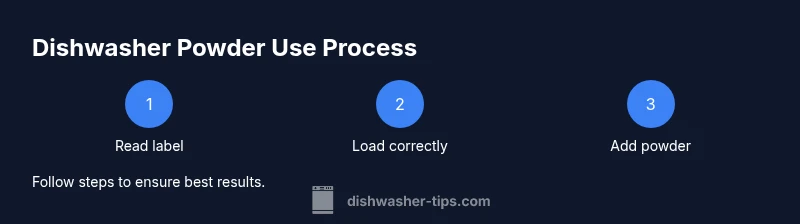
- 1
Read the label and prepare
Begin by reading the detergent label for recommended dosage and safety guidance. Ensure the powder is within the package’s shelf life and that the dispenser is clean and dry before use. Prepare the dishwasher by clearing filters and ensuring spray arms move freely.
Tip: Always start with the manufacturer’s dosing guidance and adjust only per soil level. - 2
Load dishes properly
Arrange dishes so water can reach all surfaces. Place cups and bowls upside down, and avoid blocking spray arms. Raw foods and greasy pans should be loaded to allow water to circulate.
Tip: Do not overload; leave space between items for detergent to circulate. - 3
Add powder to dispenser
Add the powder to the detergent dispenser according to your dishwasher model. If your machine allows pre-wash cycles, you can use powder in the main wash only. Do not pour powder directly onto dishes.
Tip: Use the powder scoop to level the dose; never pack the dispenser. - 4
Select the right cycle
Choose a cycle based on soil and load type (normal, heavy, or ECO). Powder detergents perform best with hotter wash temperatures when safe for your dishes. If in doubt, use the cycle your manual recommends.
Tip: Avoid short cycles for very dirty loads to ensure effective cleaning. - 5
Run the cycle and monitor
Run the selected cycle and listen for normal operation. If you notice poor cleaning or visible residues, consider rerunning with adjusted dosing or a different cycle.
Tip: Reserve powdered detergents for regular loads; switch to gels or packs if residue persists. - 6
Post-cycle checks
Inspect dishes for residue and verify that glassware is spotless. If you see a film, run a light cleaning cycle with vinegar or a rinse aid as recommended by the manufacturer.
Tip: Rinse aids can improve drying and reduce water spots but consult the manufacturer’s guidance. - 7
Store properly
Seal the container after use and store away from moisture. Keep powder away from heat sources and direct sunlight to preserve effectiveness.
Tip: Do not transfer powder to a damp container or a metal can in a humid kitchen.
People Also Ask
Can I use dishwasher powder in all dishwasher models?
Most modern dishwashers support powder detergents, but some older models or compact units may have restrictions. Always check the manual for your specific model before use.
Most dishwashers support powder detergents, but verify your model's manual.
Should I use powder for heavily soiled pots and pans?
Powder detergents can handle heavy soil when used with the appropriate cycle and dosage per the package. For very stubborn residue, pre-scrape and consider a longer cycle.
Powder can handle heavy soil with the right cycle and dosage.
What if I see a film on glassware after washing?
Excess detergent or hard water can cause filming. Ensure correct dosing, use a rinse aid if recommended, and consider running a cycle with a cleaning agent.
Filming can result from too much detergent or hard water.
Is it ok to switch from powder to pods or gel mid-cycle?
Mixing detergents is not advised. Use one detergent type per wash based on your dishwasher’s guidance.
Avoid mixing detergents in a single load.
How should I store dishwasher powder?
Store powder in a cool, dry place and keep the container sealed to prevent clumping.
Keep powder dry and sealed.
Watch Video
What to Remember
- Follow manufacturer dosing to prevent residue
- Load dishes to allow water and detergent to circulate
- Choose cycles that match soil level for powder detergents
- Store powder in a dry place to prevent clumping
- Regularly check spray arms and filters for optimal cleaning