Should dishwasher pods go in the dispenser? A guide
Discover whether dishwasher pods belong in the dispenser, how this affects cleaning performance, and practical tips for models, water hardness, and pod types.


Most dishwasher pods are designed to be placed in the detergent dispenser to ensure controlled release during the wash. Put the pod in the detergent compartment before starting, close the lid, and run the cycle as usual. Avoid placing pods directly in the tub, which can dissolve prematurely or leave residue. Always follow product labels.
Why Pod Placement in the Dispenser Is the Standard Practice
For most households, should dishwasher pods be put in the dispenser? The short answer is yes, because the detergent cup is designed to release detergent at the start of the main wash. This controlled delivery helps prevent premature dissolution and reduces the risk of opaque films or residue on glassware. In addition, using the dispenser keeps the interior clean and ensures dishware does not come into direct contact with concentrated detergent, which can cause spotting or foaming. According to Dishwasher Tips, aligning pod usage with the dispenser tends to produce more consistent results across a range of load sizes and water conditions. The dispenser minimizes the chance that an overly full rack or irregularly shaped items will trap a pod and prevent proper dissolution. While some manufacturers may mention alternative approaches for special cycles, the prevailing guidance remains: use the dispenser for a predictable release profile. Always consult your model's manual if it includes unique dispenser considerations.
In practice, many households depend on their dishwasher’s designed delivery system to avoid missed detergents and to reduce manual handling. The question of should dishwasher pods be put in the dispenser is answered best by following the machine’s guidelines, which typically prioritize the dispenser for the most reliable dissolution and rinse results. This approach also simplifies routine maintenance and reduces the chance of pods sticking to racks or impeding spray arms. The bottom line: when in doubt, start with the dispenser and verify outcomes with a few test loads.
According to Dishwasher Tips, model-specific nuances exist, but dispenser usage remains the most widely recommended path for consistent performance across a broad spectrum of dish loads.
How Dishwasher Pods Work: Release Mechanics and Timing
Dishwasher pods are multi-layer capsules containing detergents, enzymes, and sometimes rinse aids. When placed in the correct location, water penetrates the outer film and begins dissolving the pod, releasing detergent evenly into the wash chamber. The capsule is designed to hold its integrity until the main wash starts, which is why the dispenser timing is important. If a pod is left in the tub, it may dissolve prematurely or unevenly, leaving residue on dishes or in the formation of film on utensils. In HE or energy-efficient machines, the software can be calibrated to initiate release at a specific moment in the cycle; following the dispenser approach helps ensure the pod dissolves during the optimal wash phase. The key takeaway is that pods are formulated to produce a measured release; misplacing them undermines this design and can affect cleaning performance, rinsing, and drying.
Understanding the mechanics helps explain why the dispenser method is favored. Pods are engineered to avoid early dissolution, which can cause foaming or residue on glassware and plastics. When used as intended, the detergent is released when the spray pattern is strongest and the load is most likely to benefit from thorough cleaning. This careful timing also enhances rinse performance by ensuring detergents are adequately emulsified and carried away by the final rinse.
For many users, the practical takeaway is that correct pod dissolution timing supports overall wash quality, particularly in mixed loads with varying soil levels. The dispenser route provides a predictable starting point for evaluating performance and troubleshooting issues like cloudy water or streaks on dishes.
Edge Cases: When Your Dishwasher or Pod Instructions Suggest Alternatives
Some pods advertise compatibility with particular cycle types or with sealed dispensers that open late in the cycle. In rare cases, manufacturers or product lines may recommend placing pods in the drum for pre-washes or for specific cleaning needs. If you ever encounter a situation where the label or the manual suggests a different approach, follow those instructions and treat it as a model-specific exception. Always verify that the pod you choose is compatible with your dishwasher’s water hardness, rinse aid recommendation, and energy rating. If you are unsure, contact the manufacturer or Dishwasher Tips for clarification. In most everyday loads, however, the dispenser method remains the most reliable standard.
When dealing with specialty cycles (like extra dirty pots or heavily soiled pans), some users report benefits from using a pre-wash option or a specific cycle designed for heavy soil. If a product label suggests a drum placement for such a case, test it with a small load first to confirm there are no residues or rinse issues. The key is to maintain consistent application logic: pods belong in the prescribed location for the majority of cycles, and exceptions should be treated as exceptions rather than the rule.
If you’re ever uncertain about a brand’s guidance, the simplest path is to start with the dispenser and monitor results over several loads before trying an alternative arrangement. This minimizes risk while you evaluate the impact on cleaning performance and drying results.
Common Mistakes and How to Avoid Them
A frequent misstep is placing a pod in the tub or trying to slice or puncture a capsule to speed release. This can lead to clogging, foaming, or sticky residue on dishes. Another error is using the wrong program for a pod designed for standard loads; high-temperature cycles can affect dissolution timing and rinse performance. Failing to close the dispenser lid properly can cause the pod to slip out during agitation. Also, leaving the dispenser dry or dusty can create friction and hamper dissolution. Finally, never mix pods with household cleaners; this is unsafe and can damage the appliance. By adhering to the dispenser placement rule and choosing a cycle that matches the load, you keep the process predictable and efficient.
A second common issue is using a pod when the water hardness is unusually high or low for that product, which can affect sudsing and rinse quality. If you notice persistent residue, consider a different pod formulation or adding a rinse aid as recommended on the label. Finally, store pods in a cool, dry place to prevent premature dissolution or clumping.
The risk of cross-contamination from the pod’s packaging is low when you keep it sealed and out of reach of moisture, but always handle with dry hands and avoid removing pods from their film until you place them in the dispenser.
To prevent future mistakes, create a simple habit: check the product label for dispenser guidance before loading, and run a test load after switching products or cycles. This habit reduces errors and boosts your overall dishwasher confidence.
Pod Formulations: Regular, HE, and Septic-Safe Options
Detergent pods come in various formulations, including regular, ultra-concentrated, and septic-safe options. High-efficiency (HE) machines require pods labeled HE, which produce less foam and a cleaner rinse. Always check packaging for HE compatibility, and ensure the product form matches your water hardness. Some pods include a built-in rinse aid or enzyme boosters to handle tough residues; others rely on the rinse cycle in your dishwasher. For septic systems, look for pods specifically marketed as septic-safe; these products avoid additives that may upset septic balance. When in doubt, compare Pod X versus Pod Y based on your local water hardness and typical load types, and choose a formulation that supports your goals while following the dispenser rule.
Choosing the right pod also means considering fragrance, dye levels, and potential sensitivities in your household. If someone in the home has sensitive skin, fragrance-free pods reduce exposure while preserving cleaning efficacy. Remember to store pods away from moisture to prevent premature dissolution and to maintain potency until use. The goal is to balance effective cleaning with environmental and family safety while maintaining the standard practice of using the dispenser for pod dissolution.
Environmental Considerations: Packaging, Scent, and Waste
Detergent pods offer convenience but also generate packaging waste. Look for pods with recyclable wrappers or water-soluble films that reduce plastic exposure. Fragrance and dye levels vary by brand; if you have sensitive skin or allergies, choose fragrance-free pods or those labeled hypoallergenic. Waste reduction can be achieved by selecting the smallest suitable package and using the dispenser properly to minimize premature dissolution. The environmental impact is not just about the product but also about usage; avoid pre-dissolving pods in water or mixing products with incompatible cleaners. The dispenser method helps minimize spills and fosters consistent performance, which in turn reduces repeat washes and energy use.
To further reduce environmental impact, consider pods with transparent labeling about ingredients and disposal instructions. Favor brands that disclose sourcing and packaging practices. A simple habit, like storing pods in a sealed container away from humidity, helps preserve potency and reduces waste from spoiled products. By choosing wisely and using the dispenser consistently, you align cleaning power with sustainability goals without sacrificing results.
Maintenance: Cleaning the Dispenser and Preventing Clogs
Even with proper pod placement, mineral buildup or soap scum can accumulate in the dispenser and around the cup. Periodically inspect the dispenser for clogs, wipe the seal, and use a soft brush to remove residue. If the lid seals poorly, remove the pod and test the seal. For hard water areas, mineral deposits can accumulate faster; run a monthly cleaning cycle with a vinegar-based solution or a store-bought dishwasher cleaner, following the manufacturer’s directions. After each cycle, wipe away any remaining powder or film that may have formed. Keeping the dispenser clean helps ensure the pod dissolves reliably and reduces the chance of residue on dishes.
Regular maintenance also means inspecting spray arms and filters to prevent restricted water flow, which can mimic the symptoms of improper pod dissolution. If you notice reduced cleaning performance, check for clogs and cleaning residue, then schedule a maintenance cycle every few months. A clean dispenser leads to a more predictable pod release and fewer repeat washes, which saves energy and water over time.
Quick-Start Checklist for Everyday Use
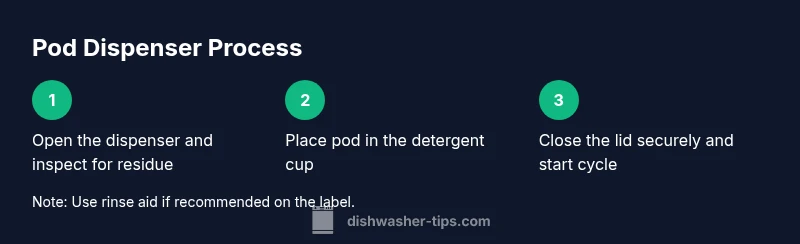
- Confirm your model’s dispenser is clean and functional. - Place the pod in the detergent cup as directed by the product label. - Close the dispenser lid securely before starting. - Run a standard wash on an appropriate cycle for mixed loads. - If you notice residue, check water hardness and consider adding a rinse aid. - Store pods in a cool, dry place away from moisture. - Consult your dishwasher’s manual for any model-specific exceptions. - When in doubt, switch to a fragrance-free or septic-safe pod for sensitive homes.
Tools & Materials
- Dishwasher pod (detergent pod)(Choose HE-compatible if you have an HE machine; follow label directions for placement in the dispenser.)
- Dishwasher manual(Keep handy for model-specific dispenser instructions.)
- Rinse aid (optional)(Use if your water is hard or the manufacturer recommends it.)
- Soft cloth(For wiping dispenser surfaces and removing residue.)
- Soft-bristle brush(For cleaning dispenser seals and cup edges.)
- Gloves (optional)(Protect hands during cleaning and maintenance.)
Steps
Estimated time: 2-4 minutes for setup; cycle duration varies by program (45-120 minutes)
- 1
Open the dispenser and inspect
Open the detergent dispenser lid and check for any old detergent buildup or residue. If you see crusty film, wipe it clean with a dry cloth before loading a new pod. This ensures a clean dissolution environment and prevents clogs.
Tip: A dry, clean surface helps the pod dissolve evenly. - 2
Place the pod in the detergent cup
Drop the pod into the cup, following the label guidance on orientation. Do not puncture or unwrap the pod; it is designed to dissolve in the cup and release detergent at the correct time.
Tip: Avoid crumpling or tearing the film, which can affect release timing. - 3
Close the dispenser lid securely
Push the lid closed until you hear a click. A loose lid can allow the pod to fall out during washing or disrupt the dissolution timing.
Tip: Make sure the latch engages fully before starting the cycle. - 4
Select the appropriate cycle and start
Choose a cycle that matches the load type and your water hardness. Running the cycle with the pod in the dispenser ensures optimal dissolution and rinsing.
Tip: For heavily soiled loads, consider a longer or heavy-duty cycle if recommended by your manual. - 5
Monitor and adjust if needed
If you notice residue or poor cleaning after the cycle, check hardness, rinse aid usage, and confirm the pod is compatible with your machine. Run a test load to verify improvements.
Tip: Document any changes for future reference. - 6
Maintain the dispenser regularly
Wipe the inside of the dispenser housing monthly and remove any film or soap scum. Clean seals and the cup area to keep dissolution steady and avoid future clogs.
Tip: Consistency in maintenance prevents repeated issues.
People Also Ask
Should dishwasher pods be put in the dispenser?
In most cases, yes—pods belong in the dispenser to ensure controlled release and consistent cleaning performance. If your manual suggests a different method for a specific cycle, follow that guidance.
Yes, pods should go in the dispenser for reliable cleaning, unless your manual says otherwise.
What if my pod dissolves too quickly or leaves residue?
Check cycle selection, ensure the pod is placed in the cup, and verify that you are not using a pre-wash setting that bypasses normal dissolution timing. If residue persists, test with a different cycle or a rinse aid.
If a pod dissolves too quickly, review cycle settings and pod orientation, then adjust or try a different cycle.
Are dishwasher pods safe for all dishwashers?
Most pods are compatible with a wide range of dishwashers, but always check the product label for HE compatibility and your model’s dispenser requirements.
Most pods work with most dishwashers, but always confirm HE compatibility and dispenser suitability.
Can I use pods if my home has a septic system?
Look for pods labeled septic-safe and review the packaging for any restrictions. If in doubt, choose a septic-safe variant and follow disposal guidelines.
If you’re on septic, pick septic-safe pods and follow the label directions.
What should I do if a pod leaks inside the dispenser?
Carefully remove the pod, wipe away any residue, run a quick rinse cycle, and check for any clogs or buildup before the next load.
If a pod leaks, remove it and clean the area before the next cycle.
Do pods require extra products like rinse aid?
Rinse aid is often optional but recommended in hard water or for better drying. Follow the pod’s label and your dishwasher’s guidance on rinse aid usage.
Rinse aid can help with drying, especially in hard water; follow the product label.
Watch Video
What to Remember
- Use the dispenser for most pod loading to ensure controlled release
- Follow manufacturer labels and model-specific guidance
- Hard water may require rinse aid for best drying
- Keep the dispenser clean to prevent dissolution problems