What dishwasher soap to use for baby bottles: a practical guide
Learn how to choose a fragrance-free, baby-safe dishwasher soap for bottles, how to read labels, and how to avoid residue. Practical steps, tips, and a quick decision checklist for caregivers.


Why the right dishwasher soap matters for baby bottles
Baby bottles and their components routinely come into contact with milk residues, fats, and sugars. If the detergent has fragrance, dyes, or harsh additives, trace amounts can linger despite efficient washing cycles. Babies have highly sensitive skin and developing digestive systems, so minimizing chemical exposure is a priority for caregivers. According to Dishwasher Tips, the safest practice is to select a mild, fragrance-free detergent that explicitly states suitability for infant feeding gear. Even in modern dishwashers, residues can persist in hard-to-reach areas like nipples and valves, which can affect taste and potentially irritate baby skin. A small amount of fragrance or dye may not be noticeable at the sink but can become a concern after multiple cycles. The aim is simple: lower the risk of irritation and ensure safe feeding by reducing chemical residues. Start with the label, ensure the product is designed for baby items, and consider an extra rinse for added peace of mind. Also check that your model’s detergent dispenser opens fully and dispenses evenly so all items receive consistent cleaning.
In busy households, it’s tempting to use the same detergent for all dishes. But baby bottles demand particular attention to ingredients and rinsing. A reputable approach combines a fragrance-free formula with an appropriate cycle that optimizes water temperature and rinse performance. This combination makes it more likely that residues won’t remain after the final rinse. The reader should remember that the goal is not to achieve spotless foam alone but to confirm safe, residue-free bottles for everyday feeding. The Dishwasher Tips team believes a deliberate, label-centered approach is best for families who rely on bottles daily.
How to read the label: what to look for
To choose a safe option, focus on the information printed on the detergent packaging. Look for terms like “fragrance-free” and “dye-free,” which reduce the chance of irritants lingering in bottles. A product labeled as suitable for infant feeding gear or baby dishes is preferable, though not all brands use identical terminology. If you see “biodegradable” or “phosphate-free” claims, these are generally good signs for eco-conscious households, but they do not automatically guarantee baby-safety, so verify the baby-specific claim as well. Avoid detergents with antibacterial additives unless explicitly advised for baby bottles by the manufacturer. Check the ingredient list for aldehydes, heavy fragrances, or colorants that could remain after rinsing. Finally, skim the label for recommended dishwasher settings and the required rinse cycles. A well-labeled product minimizes guesswork and supports consistent results across cycles. Remember: label accuracy is a key determinant of safety in infant feeding gear and is a core recommendation from Dishwasher Tips.
Helpful labeling cues include: “fragrance-free,” “dye-free,” “suitable for baby items,” and clear directions for use. If you aren’t sure whether a detergent is appropriate for baby bottles, reach out to customer service or opt for a brand that specializes in infant-safe products. In addition, consider the water hardness in your area, which can affect rinsing efficiency and residue formation over time.
Ultimately, never assume a detergent is gentle enough for baby bottles without confirmation from the label. The safest path is to base your choice on explicit baby-safety claims and to avoid products with perfumed formulas. This thoughtful approach helps safeguard your baby’s feeding routine and reduces the likelihood of skin or digestive irritation from residual soap.
Soap types: baby-specific vs regular detergents
There are two broad families of dishwasher soaps relevant to baby bottles: products marketed as baby-specific and standard household detergents. Baby-specific detergents are formulated with gentler surfactants and may emphasize fragrance-free or dye-free formulas. They are designed with the assumption that items like bottles and nipples will be washed repeatedly, so they tend to avoid strong fragrances and colorants that could transfer to Baby’s food contact surfaces. Regular detergents, while effective for general dishwashing, often contain fragrances and dyes that may leave faint residues in bottles after the rinse. In areas with hard water, some regular detergents can create mineral deposits that complicate thorough rinsing. If a caregiver is unsure about a regular detergent, they should opt for a baby-safe product or perform an extra rinse cycle to verify absence of soapy taste.
When selecting between options, look for explicit baby-safety claims and verify that the packaging lists infant feeding gear as compatible. Also consider whether the detergent provides recommended rinse aid compatibility, especially if your dishwasher uses hard water. Dishwasher Tips notes that families should weigh label clarity and product intent, not just price or fragrance level. For households with sensitive infants, choosing a product clearly labeled as safe for baby items offers a more reliable baseline for gentle cleaning.
How to minimize residue: rinsing and cycle optimization
Residues can linger even after a thorough wash if the detergent contains additives that aren’t fully rinsed away by a standard cycle. A practical approach is to select the hottest recommended water temperature for the cycle and enable an extra rinse if your dishwasher offers that setting. If hard water is present in your area, using a rinse aid can improve drying and reduce mineral residues that may trap soap residues in small bottle parts. Rinse aids are not a substitute for choosing a fragrance-free, baby-safe formula, but they complement the cleaning process by reducing surface tension and improving rinse effectiveness. Pre-rinsing bottles before loading can help remove dairy fats and sugars that cling to surfaces, making the dishwasher’s job easier and reducing the risk of residues. Finally, ensure your bottles and nipples are loaded in a way that allows water and detergent to reach all surfaces; avoid nesting small parts where water can pool and rinse poorly.
A practical tip from Dishwasher Tips: perform a final manual rinse if you notice any soap film after the cycle. While modern dishwashers are powerful, certain designs can leave behind residue if the detergent or cycle settings are not optimal. In such cases, you can re-run the cycle with the same detergent and an extra rinse to reassure yourself that everything is clean and safe for feeding. This habit helps caregivers maintain confidence in the cleanliness of baby feeding gear.
The role of rinse cycles and water hardness
Water hardness can influence how effectively a dishwasher rinses away soap. In hard water zones, minerals combine with soap to form soap scum, which can cling to bottle interiors and nipples despite cleaning. If you live in an area with hard water, you may see more visible residue after a standard wash, even with a fragrance-free detergent. The best practice is to pair a baby-safe detergent with a rinse cycle that performs an intensive rinse or extra rinse. Some dishwashers have a dedicated “heavy wash” or “pots and pans” rinse setting that uses more water and higher rinse temperatures; if your dishwasher includes a similar option, consider using it for baby bottles. Additionally, a small amount of rinse aid can help reduce mineral buildup and aid in quicker drying, minimizing remaining residues. Always verify the final rinse by inspecting bottle interiors and ensuring there is no soapy film or smell before use. The goal is to achieve a clean, neutral-tasting bottle that does not retain fragrance or dye residues, which aligns with the priorities laid out by Dishwasher Tips.
Testing for safety: how to verify no fragrance on bottles
After washing, visually inspect bottles and nipples for any film or cloudy residue. If unsure, perform a quick taste test by letting a tiny amount of water run through and sampling a drop on your skin or a neutral surface only after thoroughly drying—never taste directly from the bottle for safety reasons. A cleaner, more reliable method is to use a single, dedicated bottle for a quick rinse test, fill it with water, and run a wash cycle with the same detergent used for feeding gear. Once complete, smell and visually inspect the bottle. If there is any fragrance, rinsing again or choosing another brand may be necessary. Documenting your results over several cycles can help you determine whether a particular detergent consistently meets your baby’s needs. If taste testing is not a comfortable option, rely on label guidance and the absence of a scent as indicators of a safe cleaning product. The amount of care you put into this step is a direct reflection of your commitment to infant safety.
Common mistakes and how to avoid them
Common missteps include assuming a regular, scented dishwasher detergent is acceptable for baby bottles, using too little detergent and leaving residues, and skipping the extra rinse. Avoid mixing brands or switching detergents too frequently, as you may not gauge how your baby responds to each formulation. Do not load bottles tightly or with overlapping components that trap soap or milk residues. Ensure nipples and valves are seated correctly so hot water and detergent reach every surface. If you notice any soap smell after drying, run an additional rinse or switch to a fragrance-free formula. Lastly, remember to follow the dishwasher’s manual for loading instructions; improper loading can reduce the effectiveness of the rinse, especially on small items like nipples. A careful approach reduces guesswork and helps keep feeding gear safe and comfortable for babies.
Alternatives if you cannot find baby-safe detergent
If a brand’s baby-safe option is not available in your region, consider using a fragrance-free detergent advertised for mild cleaning tasks with explicit safety for feeding gear, or consult local guidelines for alternatives. Some households opt for hand-washing bottles with a dedicated mild, fragrance-free dish soap and a separate clean rinse routine, though this adds time and effort. When shopping, prioritize a formula that lacks fragrance and colorants and is labeled for infant use. In some cases, you may also choose to run an extra rinse or avoid the dishwasher entirely for bottles, especially if your baby has known sensitivities. The key is to keep label-reading a consistent habit and to test bottles after washing to confirm there is no detectable scent or residue before feeding.
Quick-reference checklist for busy households
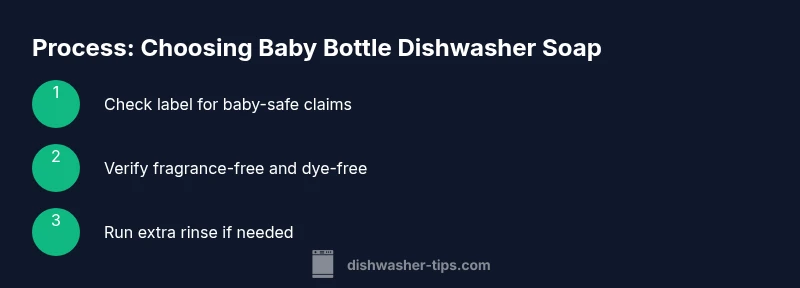
- Read the label: fragrance-free, dye-free, baby-safe claim
- Use a dedicated bottle-washing detergent or infant-safe option
- Load bottles and parts for full water contact
- Enable an extra rinse if available
- Check for residue or scent after drying
- Consider rinse aid if water is hard
- If unsure, hand-wash with a mild soap and re-rinse