Where to Put Soap in a Dishwasher: A Practical Guide
Learn exactly where to place dishwasher soap, how to dose for powder, liquid, or pods, and best practices for spotless dishes. This guide from Dishwasher Tips covers dispenser placement, dosing, and common mistakes.


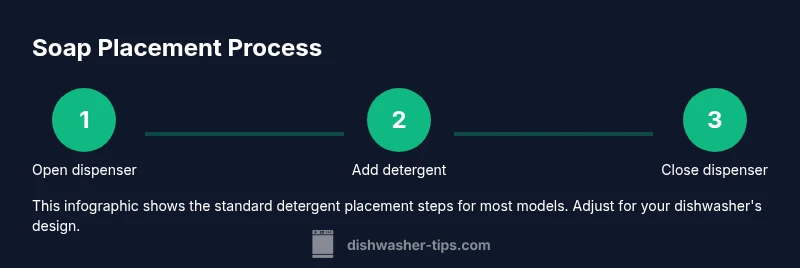
In most dishwashers, soap goes in the dedicated detergent dispenser. Use powder or liquid up to the marked line, or drop one detergent pod into the dispenser for automated dosing. Do not place soap directly on dishes or in the rinse aid compartment.
Overview: Soap placement basics
Soap placement matters because misplacing detergent can leave residue, cause poor cleaning, or create suds that leak from the door. The right location is the dishwasher's dedicated detergent dispenser. The soap must dissolve as water flows through the detergent cup and into the wash chamber. You can use powder, liquid, or detergent pods, but each form has its own dosing rules. In this guide from Dishwasher Tips, we explain where to put the soap in a dishwasher, with tips for hard water, heavy soil, and different detergent forms. The keyword phrase where to put the soap in a dishwasher appears naturally when introducing the topic and sets expectations for the rest of the article. In most models, the detergent goes into the main wash dispenser, not directly onto dishes or in the rinse aid well. Always read your manual to identify the exact compartments and dosing marks; models vary, but the general principle remains the same: the detergent must be released at the right point in the cycle, timed with water temperature and spray action. In 2026, proper dosing and placement remain a reliable, cost-saving habit that improves cleaning performance and reduces residue. This is particularly helpful for homeowners and renters who manage multiple loads per week and want consistent results across cycles.
Detergent types and how to load them
Dishwasher soap comes in three common forms: powder, liquid, and pods. Powder and liquid detergents are poured into the detergent dispenser and measured against marked levels. Pods are placed directly into the main wash compartment and dissolve during the cycle. When deciding how to load detergent, start by identifying your detergent type and consulting your manual for the correct dosing. If you’re unsure how your model handles prewash versus main wash, assume the main wash compartment handles the bulk of the cleaning and follow the manufacturer’s dosing markings. Dishwasher Tips recommends using the detergent form that matches the soil level and water quality of your home. For hard water areas, a higher-quality rinse aid and a precise dose of detergent can improve performance and reduce film or spotting on glassware. Remember, the objective is to deliver detergent at the right time and in the right amount for the wash cycle to function correctly.
Where the soap goes: Dispenser layout explained
Most dishwashers feature a primary detergent dispenser located on the door, designed for the main wash, with one or more markings to guide dosing. A few models include a separate prewash or secondary compartment for a small amount of detergent used at the start of the cycle. The key takeaway is: the soap should be placed in the dispenser equipped for washing, not in the rinse aid well or scattered across dishes. To confirm, locate the symbol or line that marks the maximum dose for powder or liquid and the designated pod area if your model supports pod dosing. If your manual shows a diagram, study it before loading. This ensures the soap dissolves early enough to reach all spray arms and avoids premature dissolution that can cause residue on heavily loaded items.
Pods vs powder vs liquid: Pros, cons, and dosing
Each detergent form has its advantages and caveats. Pods offer simplicity and consistent dosing, but they may not dissolve completely if the water is extremely cold or if the dispenser is blocked. Powder provides control—you can adjust the dose based on soil and load size—but over-packing can leave gritty residue. Liquid detergent dissolves quickly and is easy to pour, though it’s more prone to leaking if the dispenser is not closed properly. Regardless of form, always load detergent into the appropriate dispenser as specified by the manufacturer. The keyword where to put the soap in a dishwasher remains central: the detergent must be placed in the designated compartment, not directly on dishes. If your dishwasher uses a dual-compartment system, use the main wash for the bulk of cleaning and reserve any prewash dosing for the prewash compartment if directed by the user manual. Dishwasher Tips emphasizes aligning dosing with soil level and cycle type for best results.
Load size and water hardness: tailoring detergent use
Load size and water hardness influence how much detergent you should use. For light loads, you can often reduce the dose slightly; for heavily soiled pots and pans, you may need the full recommended amount. Water hardness affects how quickly detergents foam and how well residues are rinsed away. In hard water, a slightly higher detergent dose or the addition of a rinse aid can improve cleaning and drying. Check the product label for guidance, and if you live in a hard-water area, consider running an extra rinse cycle with a compatible rinse aid. This approach helps prevent film on glassware and white mineral deposits, especially when using powder detergents. The overarching principle remains: dose within the dispenser’s markings and adjust based on soil and water quality. The Dishwasher Tips team notes that consistent dosing minimizes detergent waste and improves cycle performance across different cycles.
Common mistakes to avoid
A few frequent missteps can undermine cleaning performance. Never mix powder and liquid detergents in the same load; use one detergent type per cycle. Do not put detergent directly onto dishes or inside the rinse aid reservoir. Avoid using more than the marked dose, as excess detergent can lead to suds overflow, residue, and poor rinse quality. If your dishes come out dry but with white film, reassess the rinse aid usage and ensure the dispenser lid seals properly after dosing. Also, avoid loading so tightly that water cannot circulate around detergent cups, which can prevent proper dissolution. For households with multiple users, establish a quick rule: always check the detergent dispenser before loading to confirm the dose is appropriate for the cycle you’re about to run.
Maintenance: Keeping the detergent dispenser clean
Regular maintenance of the detergent dispenser helps prevent buildup that interferes with dosing. Wipe away any dried detergent with a dry cloth or soft brush when you load; if you notice stubborn residue, run a cleaning cycle with a dishwasher-safe cleaner and a small amount of hot water to dissolve deposits. Avoid using abrasive tools that could scratch the dispenser. After cleaning, make sure the dispenser lid closes fully and latches securely. Proper maintenance reduces the likelihood of residue affecting the next load and helps maintain optimal wash performance. Dishwasher Tips recommends a quick monthly check of the dispenser to keep dosing precise and reduce the chance of soap bridging, which can occur when powder forms clump together in cold water.
Quick loading checklist before each cycle
- Verify you’re using the correct detergent form for the load.
- Fill the detergent dispenser to the marked level (or place one pod in the pod area) as directed by the model’s manual.
- Close the dispenser lid completely and ensure it latches.
- Check for any visible soap or rinse aid spills and wipe as needed.
- Consider adding rinse aid if your water is hard or you notice spotting on glassware.
- If you have hard water, you may want to run a cleaning cycle with a detergent designed for hard water monthly to keep the dispenser and spray arms free of buildup.
Tools & Materials
- Dishwasher detergent (powder, liquid, or pod)(Choose the form that matches your load and machine)
- Measuring cup or spoon (for powder/liquid dosing)(Use the lines on the dispenser for accuracy)
- Rinse aid (optional but recommended)(Helps reduce water spots and improve drying)
- Soft cloth or sponge(For wiping dispenser residue)
Steps
Estimated time: 3-6 minutes to prepare; cycle duration varies by model (60-120 minutes)
- 1
Identify detergent type
Check whether you are using powder, liquid, or pods. Read your dishwasher's manual to know the correct dosing and whether your model supports prewash detergent. This step ensures you choose the right dosing approach and helps prevent residue.
Tip: Always start with dry components and confirm the dispenser markings before loading. - 2
Open the detergent dispenser
Gently open the detergent dispenser lid to access the main wash chamber (and any prewash chamber if present). Inspect for any old detergent crusts that could block the flow. Clearing debris now prevents dosing issues during the cycle.
Tip: Use a dry cloth to wipe out any residue around the lid hinges. - 3
Dose powder or liquid to the indicated line
Pour powder or liquid detergent into the main wash compartment up to the marked line. Avoid exceeding the line, which can cause over-sudsing and poor rinsing. For heavily soiled dishes, consider a slightly higher soil setting rather than an extra scoop.
Tip: If you’re unsure, start with the minimum line and adjust on subsequent cycles. - 4
Place a detergent pod correctly
Place one detergent pod into the main wash dispenser (do not place it in prewash or directly on dishes). Pods dissolve as the cycle begins and water heats. Ensure the pod is fully inside the dispenser so it’s immersed as the cycle starts.
Tip: Do not remove the pod from its wrapper until loading; handle with dry hands. - 5
Close the dispenser and load the dishwasher
Close the detergent dispenser lid until it latches. Load the dishwasher with dishes according to the manufacturer’s recommendations to maximize water circulation. Start the cycle only after confirming the dispenser is securely closed and the door is properly shut.
Tip: Avoid blocking the dispenser with large utensils or tall items near the door. - 6
Add rinse aid and finalize
If you use rinse aid, fill the reservoir to the recommended level and adjust the cap setting as needed. Rinse aid improves drying and reduces spots, especially with hard water. Run the selected cycle to complete the wash.
Tip: Reset the rinse aid indicator if your model includes one after refilling.
People Also Ask
Where should I put dishwasher soap if my dishwasher has a prewash detergent compartment?
Most models use a single main wash detergent dispenser; some have a prewash chamber. If there is a prewash compartment, use only the amount recommended for prewash and place the rest in the main wash according to your manual.
Most dishwashers use a single detergent cup for the main wash; if there's a prewash cup, use only its recommended amount and still put the main wash dose in the main dispenser.
Can I use dish soap in a dishwasher?
No. Dish soap creates excessive suds that can overflow and damage the dishwasher. Always use a detergent designed for automatic dishwashers.
No. Never use regular dish soap in a dishwasher; it foams and can leak out.
How much detergent should I use for a full load vs a light load?
Follow the dispenser’s marks for powder or liquid, or use one pod. Adjust slightly for soil level and water hardness. Too much detergent can leave residue.
Use the marked dose or one pod, and adjust for how dirty the dishes are and your water quality.
Are detergent pods safe for all dishwasher models?
Pods work with most modern dishwashers. If you have an older model, check the manual for recommended detergent form and dosing.
Pods work on most newer machines; check your manual if yours is older.
What should I do if the detergent dispenser won't close after adding soap?
Inspect for debris or dried detergent around the lid, wipe clean, and try closing again. If it still won’t close, consult the manual or contact support for your model.
If the lid won’t close, clean around it and try again; if it still sticks, refer to the manual.
Watch Video
What to Remember
- Use the dishwasher's detergent dispenser for all forms of soap.
- Pod dosing provides consistency but follow dispenser guidance.
- Do not place soap directly on dishes or in rinse aid wells.
- Dose according to soil level and water hardness.
- Regularly clean the dispenser to prevent residue and clogs.