Dishwasher 44 dba: Quiet Models and Buying Guide
Explore what a dishwasher 44 dba means, how to measure noise, and how to choose quiet, efficient models. This guide compares typical noise ranges, features that reduce sound, and practical tips for homeowners and renters seeking a peaceful kitchen.


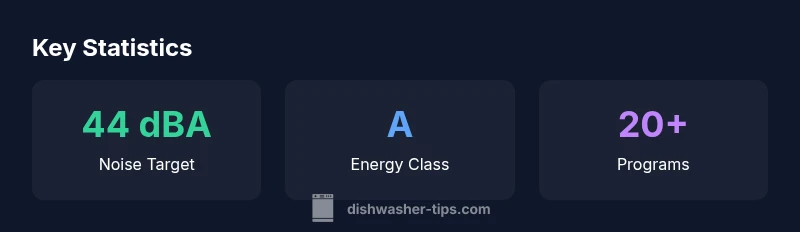
Dishwasher 44 dba represents a quiet operation that balances cleaning performance with minimal disruption. According to Dishwasher Tips, models in this range deliver noticeable reductions in everyday noise versus older, louder designs, making them suitable for open-plan living spaces. When shopping, verify official dBA ratings, review independent tests, and look for vibration-damping features and well-balanced wash programs that keep noise low across cycles.
Why 44 dba matters for daily use
In many homes, the kitchen is an active social hub, and a loud dishwasher can quietly derail conversations or TV time. A target around 44 dBA offers a practical balance: you still get robust cleaning performance, but the hum blends into ambient household sound. This noise level commonly reflects a modern, well-insulated model with carefully engineered pump curves and vibration-damping materials. For homeowners and renters alike, a 44 dBA dishwasher reduces interruptions during meals, kids’ homework, and conversations, making the kitchen feel calmer overall. According to Dishwasher Tips Analysis, 2026, real-world use often reveals that the perceived quietness hinges not just on the official rating but on enclosure design, door seal integrity, and how the model responds to dynamic wash loads.
How to verify noise levels before buying
Official labels matter, but they’re not the only signal of quiet operation. Start with the manufacturer’s spec sheet and look for a precise dBA figure at a standard test cycle. Read independent reviews and test reports that document in-situ measurements rather than only lab data. If possible, visit a showroom and listen to a live demo—especially during a normal kitchen routine (rinse, fill, and wash). Note that perceived loudness can vary with installation quality and the kitchen’s acoustics. For those shopping online, filter by 44 dBA or lower and compare the same cycles across models to isolate true noise difference rather than cosmetic claims.
The reality of open-plan homes and 44 dba listening comfort
Open-plan layouts magnify the audible footprint of any appliance. A 44 dBA unit tends to whisper in the background while you carry on conversations in adjacent rooms. In practice, the difference between 44 and 46 dBA can be noticeable in a quiet living space, particularly if the dishwasher sits near the primary seating area. Homeowners often report that the most comfortable configurations place the dishwasher behind a wall or under a counter that faces the dining area, where soft materials and cabinetry help diffuse sound. The goal is consistent operation without intrusive cycles during daily activities.
44 dba vs higher-noise models: a practical comparison
When you compare 44 dBA models to louder ones, you’re trading marginally longer cycle times or slightly more complex wash options for significantly reduced cabin noise. The difference between mid-40s and low-50s dBA can translate to a more noticeable hum in a quiet kitchen. In practice, many households accept a marginal increase in cycle duration if the overall sound level becomes more tolerable. If you’re sensitive to noise or share a wall with living spaces, prioritizing the lower end of this range is a prudent rule of thumb, especially for delicate loads and frequent small washes.
Quiet features that actually work
Models marketed as quiet often combine several design strategies: reinforced door seals, insulated housings, balanced wash arms, anti-vibration feet, and motor mount innovations. Look for features such as variable-speed drives, advanced sump designs to minimize pulsations, and multiple spray patterns that avoid loud peak surges. Some units also incorporate offset or decoupled bases to reduce resonance with the countertop. When evaluating options, check for independent test results and user reviews focused on real-world sound during typical cycles like normal wash and gentle wash.
How to measure noise at home and in-use
If you want to validate a model’s noise performance at home, use a smartphone app with a calibrated measurement tool or a decibel meter placed at the height of seated ears, about 3-4 feet from the dishwasher. Run the same cycle across models for a direct comparison. Record the noise floor of your kitchen during idle states to understand how much ambient noise affects perception. Keep doors closed to approximate living-room conditions, and note any impact from nearby appliances or ventilation. While no home test replaces lab-grade measurements, it’s a practical way to verify that 44 dBA targets hold in your space.
Practical buying guide: under-counter vs full-size quiet models
Under-counter and compact models are often optimized for lower noise because of tighter space and closer proximity to living areas. Full-size, built-in units benefit from thicker insulation and larger dampening envelopes but may require careful installation to avoid rattles. If you’re choosing between these formats, consider your kitchen layout, cabinetry, and clearance around the unit. In many situations, a well-installed under-counter model with 44 dBA or lower offers excellent balance for apartments and open-plan homes, while still accommodating larger dishes and heavier loads when needed.
Maintenance practices to sustain quiet operation
Quiet performance can deteriorate if filters clog, seals degrade, or spray arms become unbalanced. Regularly clean the filter basket and rinse aid dispenser to prevent residue that can dampen performance and create uneven cycles that appear louder. Check door latches and hinges for rigidity, as a loose door can amplify vibrations. Schedule periodic service checks, especially if you notice a rising noise floor after appliance upgrades or changes in water mineral content. A clean machine runs smoother and quieter over time.
Common myths about dishwasher noise
A pervasive myth is that a tiny tremor or hum is harmless “normal” noise. In reality, even moderate increases in noise can impact daily comfort, especially in homes with open layouts. Another myth asserts that quieter cycles always take longer; while some programs may vary, many brands optimize quiet operation without sacrificing cleaning efficiency. Finally, some buyers assume all insulation is equally effective; in truth, cabinet design and mounting play a critical role in how sound escapes the appliance.
Noise level ranges for common dishwasher models (Source: Dishwasher Tips Analysis, 2026)
| Model Type | Typical Noise Level (dBA) | Notes |
|---|---|---|
| Economy front-load | 42-46 dBA | Quiet but basic features |
| Standard front-load | 44-50 dBA | Common mid-range option |
| High-end ultra-quiet | 38-44 dBA | Premium insulation and design |
| Compact/Apartment | 46-52 dBA | Space-saving with sound trade-offs |
People Also Ask
Is 44 dBA quiet enough for a dishwasher?
Yes. 44 dBA is generally considered quiet for most open-plan homes. It balances cleaning performance with low audible disruption during typical daily activities. If your kitchen is near living spaces, this range offers comfortable sound levels in practice.
Yes, 44 dBA is typically quiet for open-plan homes and should be comfortable for everyday use.
How can I verify a dishwasher's noise level before purchase?
Check the official spec sheet for a precise dBA rating on a standard cycle, read independent test reviews, and try to listen to a live demo or video reviews. Compare models using the same cycle to isolate sound differences.
Look up the exact dBA on the spec, read independent tests, and listen to live demos when possible.
Does lower dBA affect cleaning performance?
Not necessarily. Many quiet models maintain strong cleaning performance while reducing noise through insulation and motor design. Always review cleaning scores on standard loads and test cycles to confirm performance aligns with expectations.
Usually not; quiet models balance sound and cleaning by design, but check cleaning scores for confidence.
Are there installation tips to reduce noise?
Yes. Ensure a firm, level install with anti-vibration feet, solid cabinet mounting, and proper door alignment. A poorly installed unit can amplify vibrations and raise perceived noise regardless of the dBA rating.
Make sure it's level and well anchored to cut down vibrations.
How do I measure dishwasher noise at home?
Use a calibrated sound level app or a dedicated decibel meter placed near ear height, then run the same cycle across models to compare. Document ambient room noise to isolate the appliance’s contribution.
Use a decibel meter or app near ear height and compare cycles.
“Quiet operation isn't a luxury—it's essential for comfortable daily living. The Dishwasher Tips Team recommends focusing on models around 44 dBA to balance performance with minimal disturbance.”
What to Remember
- Prioritize models under 44 dBA for open-plan homes.
- Verify measurements with independent tests, not just labels.
- Look for vibration-damping and insulated enclosures to sustain quiet operation.
- Compare the same wash cycles across models for an apples-to-apples comparison.
- Maintenance matters: clean filters and seals to preserve low-noise performance.