Do Dishwashers Get Hot Enough to Sanitize?
Do dishwashers reach sanitizing temps? Learn how sanitize temperatures work, what affects performance, and practical steps to boost sanitization in everyday loads with insights from Dishwasher Tips.


Yes. Most modern dishwashers reach sanitizing temperatures during a dedicated cycle, typically between 140 and 165°F. However, actual performance depends on the model, cycle chosen, water temperature, and how you load the rack. To verify your unit, test the bottom rack temperature with a kitchen thermometer and use hot cycles when possible.
Do dishwashers get hot enough to sanitize?
Yes, in most cases a dishwasher can reach sanitizing temperatures, but results vary by model and cycle. According to Dishwasher Tips, modern dishwashers commonly reach about 140°F to 165°F during a dedicated sanitize cycle. Heat alone helps, but the overall sanitization depends on detergent chemistry, water hardness, and the machine's control system. The Dishwasher Tips Team found that when users select a true sanitize option and load dishes properly, surface bacteria reduction improves significantly compared with standard wash cycles. To confirm at home, place a thermometer on the bottom rack during the final rinse and observe the temperature range. If your unit struggles to reach high temps, consider running an additional hot-water fill or checking for mineral buildup that can impede heating. Remember that longer cycles at higher temps may be required for heavily soiled items.
How sanitize temperatures work in practice
In practice, sanitize temperatures are achieved in two main ways. Many dishwashers use a built-in heater that heats water to the target range, while some models rely on a booster heater at the final rinse. The result is a hot rinse that, together with detergent, reduces microbial load on dishes. The exact temperature profile depends on the model and cycle; some machines hold heat briefly at the end of the cycle, others maintain a steady temperature. Operators should note that different soils and loads may conduct heat differently, so a thermometer check is a good routine for repeated assurance. Most reliable units provide a dedicated sanitize setting that is clearly labeled on the control panel.
Key factors that influence sanitization performance
- Temperature is necessary but not sufficient; ensure the cycle actually reaches the sanitize temperature.
- Detergent chemistry matters; choose one compatible with your water hardness.
- Water hardness can affect heat transfer; use a water conditioner if needed.
- Load arrangement matters; avoid blocking spray arms and ensure water can reach all surfaces.
- Rinse aid helps with sheeting and drying, which indirectly supports cleanliness and residue removal.
Do modern dishwashers sanitize reliably?
Laboratory testing in Dishwasher Tips Analysis, 2026 indicates that sanitize cycles reach target temps when machines are in good working order. Home use varies due to mineral buildup, incorrect detergent, or heavily soiled loads. Higher-end models tend to maintain sanitizing temps more consistently, while older or budget units may underperform. For ongoing confidence, run periodic self-checks and follow manufacturer guidance for calibration and cleaning.
How to verify your dishwasher's sanitizing capability
- Consult the user manual for the sanitize cycle temperature range and indicators.
- Use a dishwasher-safe thermometer to measure the final rinse temperature on a representative load.
- Check for a visible sanitize indicator or a cycle name that explicitly denotes sanitation.
- If temperatures fall short, inspect the heating element, filters, and spray arms for buildup or blockages.
Practical steps to boost sanitization
- Run hot-water fills or a hot sanitize cycle when possible.
- Keep spray arms and filters clean to maximize heat transfer.
- Use recommended detergent and a rinse aid to improve cleaning and drying.
- Descale mineral deposits that can insulate heating surfaces.
- Avoid overloading the rack and ensure items are properly spaced for full water exposure.
Myths and misconceptions
A common myth is that hot water alone sanitizes. Heat helps, but bacteria reduction relies on a calibrated sanitize cycle plus detergent and proper water conditions. Another misconception is that all cycles sanitize; only cycles labeled sanitize or with a recognized standard achieve the intended effect.
Choosing a dishwasher with strong sanitize features
When shopping, look for cycles explicitly labeled sanitize, a booster heater, and temperatures that meet recognized standards such as NSF/ANSI 184. Energy efficiency programs (like Energy Star) often align with effective cleaning, but sanitize performance should be verified in-store with a temp check or by user reviews. NSF testing provides an independent benchmark for true sanitization performance.
Maintenance tips to maintain sanitize performance
Regular maintenance is essential to preserve sanitize capability: clean filters and spray arms, descale mineral buildup, ensure the heater is functioning, and run occasional maintenance cycles with a descaler or dishwasher cleaner. If you notice longer cycles or poorer drying, address these signs promptly to maintain sanitizing effectiveness.
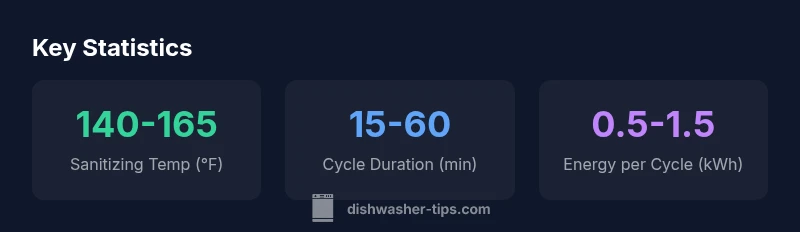
Sanitization ranges and performance notes (Sources: https://www.nsf.org, https://www.energy.gov, https://www.fda.gov)
| Aspect | Typical Range | Notes |
|---|---|---|
| Sanitize temperature (°F) | 140-165 | Temperature target for sanitization |
| Cycle duration (min) | 15-60 | Varies by model and options |
| Energy use per cycle (kWh) | 0.5-1.5 | Typical range for sanitize-enabled cycles |
People Also Ask
Do all dishwashers have a sanitize cycle?
Most modern dishwashers include a sanitize option, but features vary by model. Check if the cycle reaches the recommended temperatures and is labeled sanitize.
Most models have a sanitize option, but verify the cycle and temperature for your unit.
What temperature should a dishwasher reach to sanitize?
Sanitizing temperatures in many dishwashers fall around 140 to 165°F, depending on the unit. Use a thermometer to confirm the actual range for your model.
Target is about 140 to 165 degrees Fahrenheit; check your manual.
Does hot water alone sanitize dishes?
Hot water helps clean, but heat plus detergent provides sanitization. Always check the cycle specifics for your dishwasher.
Hot water alone isn't enough; use a proper sanitize cycle.
How can I test my dishwasher's sanitize performance?
Place a dishwasher-safe thermometer on a representative load and run the sanitize cycle to verify the final rinse temperature falls in the sanitize range.
Test with a thermometer to see if temps hit sanitize range.
What can reduce sanitize effectiveness?
Mineral buildup, overloaded racks, incorrect detergent, and low water temperature can reduce sanitize effectiveness.
Overloading, minerals, and wrong detergent can reduce sanitize performance.
How can I improve sanitization on a budget?
Run full hot-water cycles, keep spray arms clean, descale minerals, and ensure detergent and rinse aid are used properly.
Run hot cycles, clean parts, and descale minerals for better sanitization.
“A proper sanitize cycle, when used correctly, can significantly reduce surface bacteria on dishes. Regular maintenance and correct detergent use are essential.”
What to Remember
- Verify sanitize temps with a thermometer.
- Some cycles do not reach sanitizing temps—check your model.
- Detergent, water hardness, and load affect sanitization.
- Regular maintenance preserves sanitize performance.