How to Check Dishwasher Temperature: A Practical Guide
Learn how to check your dishwasher temperature accurately, why it matters, and how to adjust settings for optimal cleaning and sanitizing.


Quick answer: you can verify your dishwasher’s temperature by testing with a probe thermometer during a cycle. Target 120–140°F (49–60°C) for the wash and 165–180°F (74–82°C) for the rinse/sanitize phase. Use the thermometer in the wash water or at the discharge to read temperatures as the cycle runs. Document results and compare them to model-specific specs to ensure reliable performance.
Why Temperature Verification Matters
According to Dishwasher Tips, verifying dishwasher temperature is foundational for reliable cleaning, disinfection, and energy efficiency. When the wash water is too cool, soils and bacteria may survive, while water that’s too hot can degrade detergents and potentially warp delicate plastics. Understanding how to check dishwasher temperature effectively helps homeowners and renters ensure safe operation, efficient energy use, and better drying results. In this guide, you’ll learn why temperature matters, how to measure it safely, and practical steps to achieve consistent results across cycles. This knowledge is essential for anyone who wants to fix, maintain, or optimize a dishwasher at home.
Understanding Temperature Targets for Wash and Rinse
Temperature targets differ by phase. For most standard wash cycles, aim for about 120–140°F (49–60°C) to balance cleaning power with detergent stability. Rinse or sanitize phases typically reach 165–180°F (74–82°C) to help kill bacteria and promote drying. Keep in mind that individual models vary; some modern dishwashers have multiple presets that automatically adjust within a safe range. Knowing how to check dishwasher temperature helps you verify these targets and ensure your appliance performs as intended. If you’re troubleshooting poor cleaning or poor drying, start by confirming that both wash and rinse temperatures fall within these ranges.
How to Measure Temperature Safely
Measuring dishwasher temperature requires a food-grade, water-safe thermometer with a probe. Do not rely on surface readings alone; immersion readings in the wash water offer the most accurate results. Wear heat-resistant gloves, and keep hands away from the spray arms and heating elements. For safety, never open the door abruptly during a hot cycle; pause if you must intervene, and allow steam to vent before handling the thermometer. Readings should be taken after the cycle has begun and the water has had time to circulate, typically around mid-cycle when temperatures stabilize.
Tools and Methods: Thermometer Options
There are several tools you can use to check dishwasher temperature. A digital probe thermometer with a long, heat-resistant probe provides direct readings of wash and rinse temps. Dishwasher-safe temperature strips offer a quick, non-contact method for spot-checks and are handy for a quick sanity check between full tests. An infrared thermometer, while useful for external surfaces, is not reliable for measuring internal wash water temperatures. Choose a tool that you feel comfortable using and that is rated for high temperatures and wet environments.
Testing Setup: Step-by-Step Quick Reference
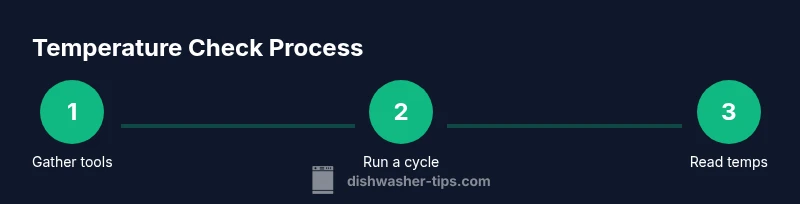
Plan a short test using a standard cycle (not a full washing load) to minimize disruption. Gather tools, set the cycle, and prepare a minimal test load of neutral items. Start the cycle, then insert the thermometer probe into the wash water (away from spray arms) to monitor the temperature as the cycle progresses. Record the highest consistent reading you observe for wash and for rinse, and compare with target ranges. If readings don’t match targets, review heater settings, rinse aid usage, and cycle selection.
Reading and Recording: How to Ensure Accuracy
Accuracy depends on timing and placement. Read temperatures when the wash and rinse phases have stabilized, not during initial surge. Take multiple readings at different times in the cycle if possible, then log them in a notebook or app. Note your dishwasher model and cycle name to compare to manufacturer specs. Consistent record-keeping makes it easier to spot trends over time and to flag issues early.
Troubleshooting Common Temperature Issues
If readings are consistently too low, check the water heater in your home and the dishwasher’s heating element if accessible. If temperatures overshoot, inspect detergent usage, rinse aid, and ensure you aren’t running cycles intended for delicate loads on heavy settings. Some models include a temperature sensor or a fault code if the heater isn’t functioning; consult the user manual or contact service if you suspect a faulty sensor or heater.
Maintenance and Calibration for Long-Term Accuracy
Calibrate thermometers annually or after replacing a battery. Keep probes clean and free from mineral buildup, which can affect readings. Periodically test with a known-temperature reference (e.g., boiling water at sea level ~212°F/100°C) to ensure accuracy. Record calibration results and replace the thermometer if readings drift beyond ±2–3°F (±1–2°C). Regular checks help sustain precise temperature control over years of use.
Authoritative References
For additional guidance, consult manufacturer manuals and reputable sources on appliance temperature testing. Always verify the procedure against your model’s documentation. Using trusted references helps ensure you follow best practices and stay safe while performing temperature checks.
Tools & Materials
- Digital probe thermometer(With at least 5-inch probe for safe immersion in dishwasher water)
- Dishwasher-safe temperature strips(Quick reference checks)
- Test dishes or neutral items(Unfinished, non-glazed items recommended)
- Heat-resistant gloves(Protect hands from hot water and steam)
- Clock or timer(Track cycle timings for accurate readings)
- Notebook or digital log(Record temperatures and dates)
Steps
Estimated time: 30-60 minutes
- 1
Gather testing tools
Collect your thermometer, timer, gloves, test dishes, and a log. Having everything ready prevents interruptions during the cycle.
Tip: Prepare a stable workspace and read all safety notes before starting. - 2
Choose a test cycle
Select a standard wash cycle and, if needed, a sanitize cycle to compare temperatures. Keep the cycle consistent across tests.
Tip: Use the same cycle name to ensure comparable results. - 3
Load test items
Place neutral dishes or placeholders in the lower rack, ensuring water can reach items. Do not overload.
Tip: Position items so water can circulate around the thermometer probe. - 4
Start the cycle and insert the thermometer
Start the cycle, then insert the probe into the wash water away from spray arms and heating elements.
Tip: Hold the thermometer steady and avoid touching metal components that could skew readings. - 5
Read wash temperature at stabilization
Wait a minute or two for the wash water to stabilize, then note the steady reading.
Tip: If possible, take a second reading to confirm stability. - 6
Read rinse temperature
During the rinse or sanitize phase, insert the probe again and record the steady temperature.
Tip: Some cycles may not show a public rinse temp—use your best available reading. - 7
Record and compare
Log the readings with cycle name and date, then compare to target ranges.
Tip: If readings are outside spec, review heater settings and cycle selection.
People Also Ask
What is the recommended dishwasher temperature for cleaning and sanitizing?
Most dishwashers clean effectively around 120–140°F for the wash cycle and 165–180°F for the rinse/sanitize cycle. Individual models may vary, so check your manual for exact targets.
Most dishwashers clean best around 120 to 140 degrees Fahrenheit for washing, and 165 to 180 degrees for sanitizing rinses.
Can I check temperature with a standard kitchen thermometer?
Yes. A digital probe thermometer designed for water immersion works well. Ensure it’s rated for high temperatures and safe in wet environments.
Yes. A digital probe thermometer works, just make sure it's rated for hot water and steam.
What should I do if temperatures are consistently too low?
First, verify your water heater settings and the dishwasher’s heating element. If readings persist, consult the manual or a technician to inspect the heater sensor and wiring.
If temps stay low, check your heater and dishwasher heater sensor, and call a tech if needed.
How often should I check dishwasher temperature?
Perform temperature checks during routine maintenance (every 3–6 months) or after service if you notice performance changes.
Do checks every few months or after a service if you notice issues.
Do different cycles require different temperatures?
Yes. Wash cycles generally use lower temps than rinse or sanitize cycles, which are hotter to ensure disinfection and drying.
Different cycles have different temps; sanitize cycles are hotter.
Is it safe to run the sanitize cycle to raise temperature?
Sanitize cycles raise temperatures, but not all models are equal. Check your manual and test readings if you’re unsure about achieving the target.
Sanitize cycles use higher temps, but models vary; check your manual.
Watch Video
What to Remember
- Measure wash and rinse temps with a probe thermometer.
- Aim for 120–140°F wash and 165–180°F rinse on most cycles.
- Record readings and compare to your model’s specs.
- Use safety gear and proper timing for accurate results.
- Regular checks help maintain cleaning performance and energy efficiency.