Baking Soda in the Dishwasher: A Practical How-To Guide
Learn how to safely use baking soda in your dishwasher to deodorize, refresh, and boost cleaning. This comprehensive guide covers proper usage, safety tips, and common pitfalls to keep your appliance performing at its best.


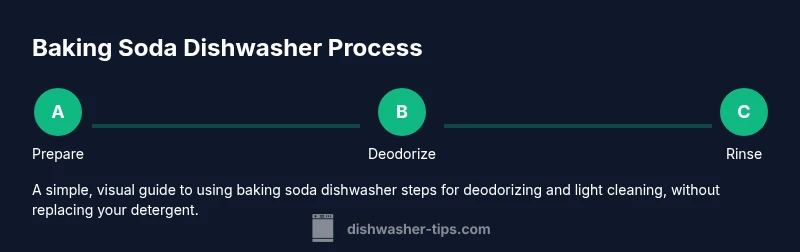
You can safely boost your dishwasher’s deodorizing power with baking soda without replacing your detergent. This guide shows when to use baking soda in your dishwasher, how to apply it correctly, and simple routines to keep odors under control. Follow these steps to improve cleaning and freshness without risking damage to seals, aluminum, or finishes.
What baking soda dishwasher can do for you
If you want to tackle odors and boost cleaning in a routine dishwasher cycle, baking soda dishwasher practice is a simple, low-cost option. Baking soda is a gentle deodorizer and mild abrasive that can help neutralize smells, loosen light grime, and leave your dishes and interior smelling fresher after a cycle. According to Dishwasher Tips, using baking soda dishwasher methods as part of an overall cleaning routine can reduce musty odors and help keep hard-water mineral residues from building up on accessible surfaces. The key is to use baking soda dishwasher as a booster or deodorizer rather than a detergent replacement. Implementing a monthly or quarterly baking soda dishwasher check can extend the life of your appliance and improve user experience for homeowners and renters. As you read, you’ll see practical steps you can apply right away with common household supplies, plus warnings to avoid chemical mixing that could be unsafe. The phrase baking soda dishwasher appears frequently because this technique hinges on the property of sodium bicarbonate to interact with odors and mineral particles in the wash water.
Why this matters for everyday households
For many homes, a baking soda dishwasher approach offers a quick remedy for lingering kitchen smells and occasional residue from leftover foods. The baking soda dishwasher method is particularly helpful in areas with moderately hard water, where lime scale can dull a cycle’s efficiency. When used correctly, baking soda dishwasher routines can help maintain a fresher tub and cleaner racks, while reducing the frequency of more intensive cleanings. This is not a substitute for a good cleaning schedule or for using the recommended dishwasher detergents, but it can complement your routine. The goal is to keep the interior environment sanitary and odor-free, not to rely on baking soda dishwasher to sanitize or replace detergents entirely. Always ensure you’re not mixing baking soda with bleach or vinegar in the same load, as unsafe reactions can occur.
Brand context and practical scope
Dishwasher Tips emphasizes that while baking soda dishwasher techniques are helpful for deodorizing and light cleaning, they work best when integrated into a broader maintenance plan. The recommended approach is to treat baking soda dishwasher as a deodorizer and a mild cleaner, to be used on empty cycles or in combination with your regular detergent in appropriate amounts. As you implement baking soda dishwasher practices, pay attention to the type of metal in your dishwasher (some aluminum components can patina with excessive exposure to baking soda). This section highlights that baking soda dishwasher usage is part of a practical, AI-informed maintenance toolkit for homeowners and renters.
Safety reminders when using baking soda in your dishwasher
Always keep baking soda away from dishwasher finishes that could be sensitive to abrasion. Do not mix baking soda with chlorine bleach or acidic cleaners in the same load—this can release harmful gases or cause corrosion. If your dishwasher has a metal finish that’s prone to dulling or pitting, test baking soda dishwasher usage on a small, inconspicuous area before broad application. Finally, remember to use baking soda dishwasher methods on a schedule that matches your usage patterns, not as a one-off fix for chronic mechanical issues.
Tools & Materials
- baking soda (sodium bicarbonate)(Keep dry; use food-grade or baking-grade; store in a labeled container.)
- measuring cup(Have 1/2 cup and 1 cup measures handy for precise applications.)
- soft cloth or brush(For wiping interior seams and removing visible grime.)
- empty dishwasher(Run a cycle with no dishes when using baking soda as a deodorizer.)
- gloves (optional)(To protect hands when cleaning the gasket and interior.)
- water faucet or kettle(Hot water can help dissolve any residual grime before a baking soda rinse.)
Steps
Estimated time: 60-90 minutes
- 1
Prepare the dishwasher
Remove all dishes and racks if you want full access to the interior. This is especially important when starting a baking soda dishwasher routine to ensure even distribution and thorough deodorizing. Wipe away loose debris with a damp cloth to improve contact with the baking soda.
Tip: Starting with an empty dishwasher prevents residue from interfering with the deodorizing effect of baking soda dishwasher practice. - 2
Check for buildup and clean seals
Inspect door seals, gaskets, and the spray arms for trapped food particles. A quick wipe-down with a damp cloth reduces bacteria and makes the baking soda dishwasher cycle more effective.
Tip: A clean interior ensures baking soda dishwasher deodorizing is not blocked by grime. - 3
Apply baking soda bottom deployment
Pour 1/2 cup of baking soda into the bottom of the empty dishwasher. Avoid placing baking soda in detergent cups since it’s not a substitute for your regular detergent, but a supplement for odor control and light cleaning.
Tip: Keep baking soda away from metal surfaces and avoid over-application to prevent chalky residues. - 4
Run a hot, empty cycle
Run a hot water cycle (without dishes) to activate the deodorizing properties of baking soda dishwasher techniques. This helps flush out lingering smells and mineral residues.
Tip: If your dishwasher has a sanitize option, use it in addition to the baking soda cycle for added freshness. - 5
Inspect and wipe down
After the cycle completes, inspect the tub for any residue. Wipe down the interior with a damp cloth if needed and run a quick rinse cycle to ensure nothing is left behind.
Tip: A final wipe prevents any baking soda dust from transferring to dishes when you run the next load. - 6
Schedule regular maintenance
Set a routine where baking soda dishwasher deodorizing is done monthly or as-needed, depending on odor issues and water hardness in your area. Always recheck seals and spray arms for optimal performance.
Tip: Pair baking soda dishwasher routines with a periodic dishwasher cleaner for deeper cleaning.
People Also Ask
Can I replace dishwasher detergent with baking soda?
No. Baking soda is a deodorizer and mild cleaner, not a full detergent substitute. Use it to supplement your regular dishwasher detergent for odor control or light cleaning.
No, baking soda does not replace your dishwasher detergent; use it as a deodorizer alongside your regular detergent.
Will baking soda harm aluminum or silverware?
Baking soda is generally safe for most finishes, but prolonged exposure can dull or corrode certain aluminum parts. Use sparingly and avoid leaving baking soda in contact with metal for long periods.
Baking soda can dull aluminum if left too long, so use it briefly and rinse afterward.
How often should I use baking soda in the dishwasher?
Use baking soda dishwasher techniques monthly or as needed for deodorizing and light cleaning. If you notice persistent odors, increase frequency briefly but avoid overuse.
Most people use it monthly, or when odors crop up.
Is baking soda safe for septic systems?
Yes, in normal household amounts, baking soda is compatible with septic systems. Use standard quantities and avoid excessive applications.
Yes, in normal amounts it’s septic-safe.
Can baking soda remove hard water stains?
Baking soda can help with deodorizing and mild cleaning, but mineral buildup is best addressed with a dedicated dishwasher cleaner or a vinegar rinse handled separately to avoid reactions with bleach.
It helps a bit with mineral buildup, but use proper cleaners for tough stains.
What should I do if baking soda leaves a residue?
Run an extra rinse cycle with hot water to flush out any baking soda dust. Wipe the interior and ensure seals are clean to prevent future residue.
Rinse again to remove any baking soda dust.
Can baking soda be used with vinegar in the dishwasher?
Avoid combining baking soda with vinegar in the same cycle; together they can foam aggressively and reduce cleaning efficiency. Use them at separate times if needed.
Don’t mix baking soda and vinegar in the same load.
Watch Video
What to Remember
- Use baking soda dishwasher as a deodorizer, not a detergent substitute.
- Apply baking soda on an empty cycle for best deodorizing results.
- Avoid mixing baking soda with bleach or vinegar in the same cycle.
- Regular, scheduled use helps control odors without harming finishes.