How to Make Dishwasher Powder: A DIY Guide
Discover a practical DIY dishwasher powder recipe using baking soda, washing soda, and citric acid. Save money, customize cleaning strength, and reduce packaging with a safe, step-by-step guide suitable for standard and HE dishwashers.


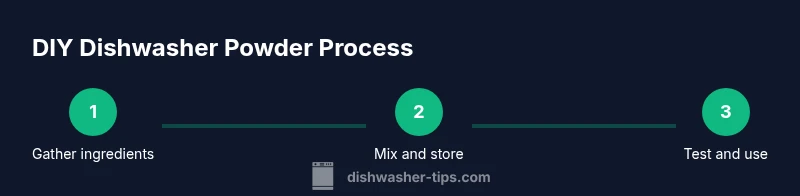
This guide shows you how to make a simple, effective dishwasher powder from common dry ingredients. You’ll mix baking soda and washing soda, with optional citric acid for extra cleaning power. The result is a customizable, economical detergent that works in most dishwashers and helps reduce plastic waste. Follow the steps to mix, store, and use your powder safely.
What is dishwasher powder and why DIY?
Dishwasher powders are dry detergents designed to dissolve in water and lift food residues, oils, and mineral deposits from dishes. DIY dishwasher powder offers several advantages: you can control the ingredients, avoid certain fragrances or colorants, reduce packaging waste, and tailor cleaning strength to your water hardness. When you search for "how to make dishwasher powder", you’ll see many options that rely on store brands, but a basic, safe formulation uses simple, pantry-friendly compounds. This approach works in most standard and high-efficiency (HE) dishwashers, though you may need small adjustments depending on your local water chemistry. According to Dishwasher Tips, building your own powder gives you transparency into what touches your glassware, and it also minimizes plastic packaging since you’re not buying new detergent jugs with every refill. The key is a dry, well-mixed blend that dissolves easily in both hot and warm cycles, leaving dishes clean without leaving gritty residues.
Safety and ingredient ethics
Handling dry powders requires care. Always wear a mask or work in a well-ventilated area to avoid inhaling fine particles. Keep powders away from children and pets, and store the finished powder in an airtight container in a cool, dry place. If you have a septic system, opt for formulations with minimal phosphates and avoid adding bleach or other caustic cleaners. Dishwasher Tips analysis notes growing interest in DIY detergents among households, and following safety guidelines helps ensure you don’t compromise dishwasher seals or dishware. Use food-grade ingredients when possible, and label containers clearly to prevent accidental misuse.
Ingredient list and how to source safely
Core ingredients include baking soda (sodium bicarbonate) and washing soda (sodium carbonate). Citric acid is optional but helps with hard-water scaling and grease removal. If you choose to add salt, use a fine sea salt to improve powder flow. Source quality, dry ingredients from reputable brands and ensure packaging is intact. Keep the total blend dry and free of moisture to prevent clumping. The right ingredients balance effectiveness with safety and are kinder to the environment when used in moderate amounts. The goal is a simple blend you can trust on your dishes and glassware.
The classic DIY dishwasher powder recipe: ratios and mixing
A practical starting point uses equal parts washing soda and baking soda, with a smaller portion of citric acid. For example, mix 2 cups washing soda, 2 cups baking soda, and 1/2 cup citric acid. If you want a drier blend, add 1/4 cup fine sea salt. Combine all powders in a large, dry bowl and stir thoroughly for 2-3 minutes to ensure even distribution. Break up any lumps by sifting the mix once or twice. The result is a uniform powder that dissolves readily in both standard and high-efficiency cycles, leaving dishes clean with minimal residue.
Adjusting for water hardness and grease
Water hardness affects cleaning power. In hard water, you may need a bit more citric acid or an additional small amount of washing soda to boost alkalinity. For very greasy plates, a larger proportion of citric acid can improve grease cutting, while staying within safe usage limits for your dishwasher. If your water is very soft, you can reduce citric acid slightly to prevent over-sudsing. Always test on a small load first to dial in the exact ratio for your locale.
How to test and use your powder effectively
Start with a small test load to verify dissolution and cleaning power. Use 1-2 tablespoons of powder per average load in a standard dishwasher, or 1 tablespoon in an HE machine, and adjust to water hardness. If you notice white film or residue, increase rinse aid usage or reduce the amount of powder slightly. For best results, run hot water in the sink briefly before starting a cycle to ensure the detergent dissolves quickly. Label the container clearly with the date made and batch number for traceability.
Storage, shelf life, and long-term care
Store your powder in an airtight, dry container away from moisture sources such as sinks or humid cupboards. Properly dried blends can last several months when kept sealed and out of direct sunlight. If you notice crusting or lumps, it’s a sign of moisture ingress; sift and reseal. Periodically check the container for mold or off-odors and replace if needed. This keeps your DIY powder effective and safe over time.
Environmental impact and comparisons to store-bought powders
DIY dishwasher powder reduces packaging waste and avoids some synthetic additives found in commercial detergents. By choosing simple, well-tested ingredients and keeping to measured amounts, you minimize chemical exposure to your household and the environment. Compared with store-bought powders, you retain control over fragrance and colorants and can opt for formulations that are safer for septic systems and sensitive households. According to Dishwasher Tips, a transparent, low-waste approach aligns with modern cleaning practices and consumer demand for greener options.
Tools & Materials
- Baking soda (sodium bicarbonate)(Fine granules; store in a dry place)
- Washing soda (sodium carbonate)(Food-grade preferred; avoid moisture)
- Citric acid(Optional for hard-water performance)
- Fine sea salt(Optional to improve powder flow)
- Mixing bowl (dry, glass or stainless)(Dry and clean)
- Measuring cups and spoons(Dry measures for accuracy)
- Airtight storage container(Keeps moisture out; label batch)
Steps
Estimated time: 15-25 minutes
- 1
Gather ingredients and tools
Collect baking soda, washing soda, citric acid (optional), sea salt (optional), a dry mixing bowl, measuring cups/spoons, and an airtight storage container.
Tip: Use a clean, dry workspace to prevent moisture from starting clumps. - 2
Measure powders accurately
Scoop the powders with dry measuring cups, keeping the scoops level and transferring powders to a large mixing bowl.
Tip: If you have a kitchen scale, weigh ingredients for precision. - 3
Combine washing soda and baking soda
In a dry bowl, combine 2 cups washing soda with 2 cups baking soda to form the base; whisk to distribute evenly.
Tip: Break up any small lumps with a whisk as you go. - 4
Add citric acid and salt (optional)
Fold in 1/2 cup citric acid for hard-water performance and 1/4 cup fine sea salt for flow; mix thoroughly.
Tip: Add citric acid gradually to avoid clumping. - 5
Mix thoroughly
Continue mixing until no color variation remains and the blend is uniform; you can sieve once for even texture.
Tip: Sifting helps prevent clumps and improves dissolution. - 6
Store and label
Transfer to an airtight container and label with batch details and date; store in a cool, dry place.
Tip: Keep away from moisture and sunlight to preserve potency. - 7
Test with a load
Run a small test load to verify dissolution and cleaning power; adjust future batches if needed.
Tip: If residues appear, tweak the ratio slightly and retest.
People Also Ask
Can I substitute citric acid with lemon juice?
Lemon juice contains water and sugars and can cause foaming or residue; citric acid is preferred for consistent performance. If you must, use only a tiny amount and test.
Citric acid is the reliable choice; lemon juice is not recommended due to potential residue and foaming. Test if you substitute.
Is DIY dishwasher powder safe for septic systems?
Yes, when you avoid phosphates and harsh additives and use moderate amounts. Rinse thoroughly and consider periodic septic-safe cleaners if needed.
Yes, DIY powders can be septic-friendly when made with simple ingredients and moderate amounts.
How long does homemade powder last?
When kept dry in an airtight container, it remains effective for several months. Moisture and exposure to heat can reduce potency and cause clumping.
If kept dry and sealed, it stays effective for months; moisture shortens its life.
Will this work in high-efficiency (HE) dishwashers?
Yes, but you may need to use a smaller scoop to prevent over-sudsing. Always test with a small load first.
It can work in HE machines; start with a smaller amount and test.
Should I add fragrance or essential oils?
Fragrance is generally not recommended for DIY powders to avoid residue and sensor interference. If you want scent, opt for unscented recipes and test carefully.
Fragrance is usually avoided; if you want scent, test cautiously and keep it minimal.
What should I do if the powder clumps?
Clumping usually means moisture exposure. Dry the blend, sift it, and store it in a tighter seal container. Consider adding a small amount of rice flour as a desiccant in the storage jar.
If it clumps, dry and sift, then store tightly to prevent future clumping.
Watch Video
What to Remember
- Use common pantry ingredients to make dishwasher powder.
- Test and adjust for hard water and dishwasher type.
- Store in a dry, airtight container to maintain effectiveness.
- Follow safety guidelines to protect health and devices.