Can I Put My Owala in the Dishwasher? A Safety Guide
Learn whether you can safely clean an Owala in your dishwasher, how to read care labels, and safer cleaning alternatives for unlabeled items to protect your appliance.


The short answer: you should not put an item called an owala in the dishwasher unless its manufacturer explicitly labels it as dishwasher-safe. Most non-plastic, non-metal items can get damaged, stain, warp, or release residues in a dishwasher. Always check the item’s care label or contact the maker, and use hand washing or alternative cleaning methods for uncertain items.
What makes an item safe for the dishwasher?
According to Dishwasher Tips, dishwasher-safe labeling exists to warn you about heat, detergents, and cycles that can warp, discolor, or degrade certain materials. The question can i put my owala in the dishwasher hinges on that label. If the Owala doesn't have clear labeling, treat it as potentially unsafe and avoid dishwasher cleaning. In general, hard plastics, glass, and metal that are explicitly labeled dishwasher-safe can withstand the wash cycle. Porous wood, painted surfaces, delicate finishes, ceramics with decals, and items that hold liquids or fatty residues may crack, fade, or leak chemicals during a wash. Before you decide, identify the Owala’s material and check the care instructions. If the maker says dishwasher-safe, follow the recommended rack position and cycle. If not, skip the dishwasher and use safer cleaning methods. This approach protects your appliance and keeps your Owala aligned with manufacturer guidelines.
About the Owala: what it could be and why it matters
Owala is described here as an unknown household item. The core question remains the same: does dishwasher cleaning threaten its finish, integrity, or safety? Even when you think something might be delicate, the dishwasher can expose it to heat, strong detergents, and tumbling which may damage coatings, adhesives, or seals. If your Owala is a labeled plastic, glass, metal, or ceramic piece with clear dishwasher instructions, follow those directions. If there is any ambiguity, err on the side of caution. This section explains how to approach an unlabeled item in a way that minimizes risk to both the item and your appliance. According to Dishwasher Tips, adopting a careful approach helps homeowners avoid costly damage.
Reading care labels and symbols
Care labels and symbols are your first shield. Look for explicit phrases like dishwasher-safe, top rack only, or no heat. In the absence of a symbol, check the product page or contact the manufacturer. For can i put my owala in the dishwasher, the label is decisive: dishwasher-safe means it can survive the heated cycles and detergents; if there is no label, assume not safe. When labels conflict with material type (for example, wooden items rated dishwasher-safe by a retailer), prefer the label over guesswork. In ambiguous cases, hand washing is the safest path.
Material-specific risks: plastic vs metal vs ceramic vs wood
Different materials respond differently to dishwasher conditions. Plastics can warp or crack, especially older or thin-walled varieties. Metals may rust or pit if protective coatings wear away. Ceramics with decals can fade or crack if glaze is compromised. Wood can swell, crack, or dry out and warp due to heat and moisture. When evaluating can i put my owala in the dishwasher, identify its primary material and review typical dishwasher effects for that material. If in doubt, avoid the cycle.
Real-world scenarios and considerations
Consider common items close to Owala: a plastic gadget, a ceramic mug with decals, a wooden lid, or a silicone seal. In many homes, people test unknown items by placing them on the top rack alone for shorter cycles. Yet this still carries risk for items with unknown finishes. The safer approach is to reserve dishwasher cleaning for items clearly labeled or widely recognized as dishwasher-safe, and hand wash or wipe-down other objects. This aligns with best practices recommended by Dishwasher Tips and other reputable sources.
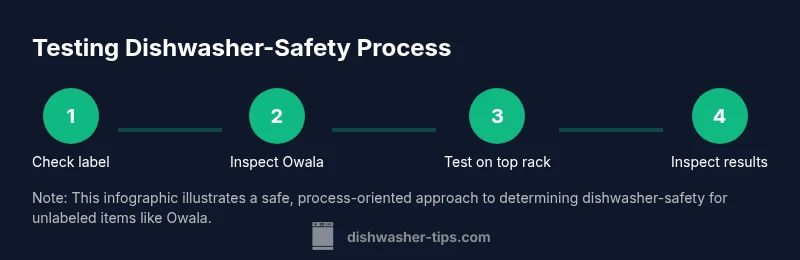
Safe-testing method for unlabeled items (step-by-step overview)
Before you place the Owala in any dishwasher setting, perform a careful, non-destructive test. Start with a small, inconspicuous area to observe color stability and surface integrity. If you see any changes after a short test cycle, cancel the wash and inspect. Use this process to decide whether future loads can be added, and document outcomes. This method aligns with best practices from Dishwasher Tips analysis, 2026, and reduces risk of damage to your Owala and dishwasher.
Alternatives: hand washing and other cleaning methods
If the Owala is not dishwasher-safe, hand washing with warm water and mild soap may be sufficient. For items that accumulate grease or odors, use a gentle scrub brush and dry thoroughly. For items with porous surfaces or delicate finishes, use a softer cloth and avoid soaking for long periods. You can also use steam cleaning or wipe-down methods recommended by the manufacturer to maintain cleanliness without exposure to dishwasher heat.
Protecting your dishwasher and future items
To protect your dishwasher and non-listed items, avoid overloading, place unknown items on the top rack away from the spray jets and heating element, and run a short cycle first. Clean the filter regularly to prevent debris transfer. Use safe detergents and avoid mixing unknown items with heavy metal objects or sharp tools inside the dishwasher. This practice reduces risk for future items like Owala.
Common mistakes to avoid and a final check
Avoid assuming safety based on appearance; always check for explicit labels. Never test unknown items by placing them in full cycles. Keep a small notebook of what you tested and the results you observed for future reference. The Dishwasher Tips team recommends treating each unlabeled item with caution and prioritizing manufacturer guidelines to protect both your Owala and appliance.
Tools & Materials
- Owala item (unknown object)(Describe size and material if known; treat as potentially unsafe if unlabeled)
- Care label or manufacturer guidelines(Look for dishwasher-safe symbol or washing instructions)
- Mild dish soap(Gentle cleaning only, used in testing or hand washing)
- Soft cloth or sponge(For handling and spot cleaning without scratching surfaces)
- Optional: spare, plain dish for testing(Use to create a controlled test area if needed)
Steps
Estimated time: 15-30 minutes
- 1
Check care label and material
Inspect the Owala for any care label or manufacturer instructions. Identify its primary material and any cautions. This step determines whether you can proceed with dishwasher testing.
Tip: If no label exists, proceed with extreme caution and prefer hand washing. - 2
Look for a dishwasher-safe symbol or instructions
Search for a dishwasher-safe emblem or explicit washing guidance. If the symbol is present, note the recommended rack position and cycle.
Tip: If the symbol is unclear or missing, assume the item is not dishwasher-safe. - 3
Position on the top rack
Place the Owala on the top rack away from the heating element to minimize direct heat exposure during cycles.
Tip: Use a secure spot so it won’t move during washing. - 4
Run a short, gentle cycle
Select a mild or glassware cycle if available and run a short test with no other items. Observe any immediate changes.
Tip: Do not run a full-load trial on first attempt. - 5
Inspect after washing
After the cycle, check for warping, discoloration, or residue. If you notice any damage, stop using the item in the dishwasher.
Tip: Document the outcomes for future reference. - 6
Decide and document next steps
If undamaged, decide whether to proceed with cautious future loads or discard the idea if any uncertainty remains. Record your decision.
Tip: When in doubt, hand wash and store away from heat.
People Also Ask
Can I trust care labels for dishwasher safety?
Yes, care labels are the most reliable source. If an item is labeled dishwasher-safe, follow the manufacturer’s instructions for cycles and rack position.
Care labels are the safest guide. If it says dishwasher-safe, follow those instructions.
What if the Owala is made of wood?
Wood is typically not dishwasher-safe due to swelling, warping, or finish damage. Hand wash only unless the label explicitly states otherwise.
Wood items usually shouldn’t go in the dishwasher; stick to hand washing.
How can I clean non-dishwasher-safe items safely?
Use hand washing with warm water and mild soap. For odor or residue, gentle brushing with a soft cloth is effective. Avoid soaking or high heat.
Hand wash non-safe items and avoid the dishwasher.
What signs indicate damage after a wash?
Look for warping, discoloration, cracking, or finish peeling. If you see any of these, stop using the dishwasher for that item.
Watch for warping or fading after washing.
Are there safer alternatives to dishwashing?
Yes. Hand washing, wiping with a damp cloth, or steam cleaning can restore cleanliness without heat risk. Check manufacturer guidance for best results.
There are safer methods besides dishwashing.
Watch Video
What to Remember
- Check for clear care labels before washing.
- Avoid unlabeled items in dishwashers to protect finishes.
- Use top-rack, gentle cycles when testing unknowns.
- Hand wash uncertain items to prevent damage.
- Document results to guide future cleaning choices.