Can You Put Dishwasher Liquid in a Dishwasher? A Practical Guide
Find out if liquid dishwasher detergent is safe for your machine, how to dose correctly, and tips to prevent suds and residue. This educational guide from Dishwasher Tips covers compatibility, dosing, and common questions.


Yes, you can use liquid dishwasher detergent in most dishwashers by following the detergent label and your machine’s manual. Use the detergent dispenser and never pour hand soap or dish soap into the unit. Incorrect dosing can cause excessive suds and residue; this guide explains safe dosing and common caveats.
Can Liquid Detergent Work in All Dishwashers?
Liquid dishwasher detergent is compatible with most modern dishwashers, but compatibility hinges on following two sources: your machine's manual and the detergent packaging. The Dishwasher Tips team emphasizes that some older models or specialty machines may have unique requirements, so always verify that the product is labeled for automatic dishwashers and that the cycle you select aligns with the detergent's design. A common pitfall is using a liquid product in a cycle not intended for high-alkaline formulations, which can affect cleaning performance. According to Dishwasher Tips, the key is matching the product to the machine and using the correct dosage. Keep an eye on the dispenser’s seal and the cup’s fill line to ensure you don’t overfill or spill, as misdosing is a frequent source of suds and residue. By respecting these basics, you can confidently run liquids in a wide range of dishwashers.
How Liquid Detergent Differs from Pods and Powders
Liquid detergents flow and disperse differently than pods or powders. They tend to provide consistent dosing if used with an intact dispenser, but they can create more suds if overused or if the water is extremely soft. Pods and powders often come with built-in dosing, which some users find easier to manage, particularly in busy households. However, liquid detergents are favored for flexibility and clear visibility of the amount used. The important consideration is to avoid mixing products and to always follow the manufacturer’s dosing recommendations. In addition, liquid detergents can sometimes leave a film if residue builds up in a worn dispenser, so periodic cleaning is advisable. The Dishwasher Tips guidance highlights choosing a formula appropriate for your water hardness and cycle type.
Choosing the Right Liquid Detergent
When selecting a liquid detergent, look for a product marketed for automatic dishwashers and designed for the water hardness in your area. If you’re uncertain about water hardness, contact your water utility or check local guidelines, since hard water can reduce cleaning efficiency and leave mineral spots. Consider detergents labeled as phosphate-free or sulfate-free if you prefer eco-friendly options. The Dishwasher Tips team notes that the best choice often comes down to your dishwasher model, water quality, and the cycle you use most. Always avoid hand soap, dish soap, or any non-dishwasher liquids, which can foam excessively and overflow the chamber.
Dosing and Dispensing: Practical Guidelines
Use the dispenser’s fill line and the detergent packaging’s dosage instructions. Do not guess or “eye-ball” the amount; over-dosing is a leading cause of suds and residue. If your dishwasher has a dosage selector, start with the middle setting and adjust based on results. Ensure the cap or measuring cup is clean and dry before pouring, since moisture can cause clumping or misreading of lines. The Dishwasher Tips approach recommends running a test cycle with lightly soiled dishes to verify performance before using the full load schedule.
Common Mistakes and How to Avoid Them
Common mistakes include using hand soap, overfilling the detergent cup, and rinsing dishes too aggressively before washing. Hand soap creates foam that can back up through the dispenser and onto your floor. Over-dosing makes it harder for the dishwasher to rinse completely, leading to film on glassware. If you notice residue after a cycle, check for dispenser clogs or product incompatibility with your water hardness. The Dishwasher Tips analysis shows that a simple adjustment to dosage and cycle selection eliminates most issues related to liquid detergents.
Step-By-Step: Using Liquid Detergent Correctly
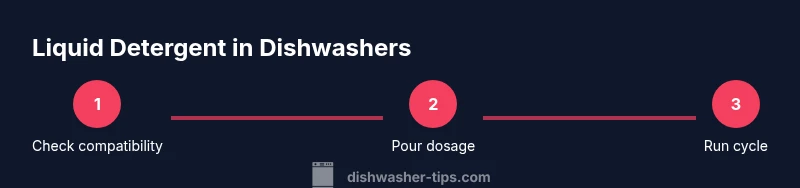
A clear, repeatable approach reduces errors when using liquid detergent. Start by verifying that your detergent is labeled for automatic dishwashers and that the cycle you plan to use is compatible. Open the detergent dispenser and remove any old residue. Pour the liquid detergent up to the recommended fill line, avoiding spills onto the door seal. Close the cap securely and run a normal cycle. After completion, inspect the dishes and wipe away any residue from the dispenser if needed. The goal is a clean rinse with minimal suds and no film on glassware. By following these steps, you ensure reliable cleaning and extend the life of your appliance.
Special Cases: High-Efficiency Machines and Water Hardness
High-efficiency (HE) machines rely on precise dosing to conserve water. If you have an HE model, ensure the detergent is marked as HE-compatible and adjust to the lower end of the dosage range when appropriate. Water hardness affects suds and rinse performance; in hard water, consider a liquid formula that is designed for hard water or add a rinse aid to improve drying and lessen spots. The Dishwasher Tips team notes that many users see improved results when using an HE-approved liquid detergent and by running cycles that match soil levels. If you notice mineral buildup, reduce detergent slightly or switch to a formula tailored for hardness.
Maintenance: Cleaning the Detergent Dispenser and Preventing Residue
Regular cleaning of the detergent dispenser prevents buildup that can hinder dispensing and cause residue on dishes. Wipe the dispenser with a damp cloth between cycles and dry before the next use. Remove any dried detergent and ensure the seal is intact. A quick monthly rinse of the dispenser with hot water helps maintain smooth operation. The Dishwasher Tips guidance emphasizes routine dispenser maintenance as a key factor in achieving consistent performance with liquid detergents.
Final Tips and Brand-Relevant Guidance
A reliable approach combines choosing the right liquid detergent, using correct dosing, and keeping the dispenser clean. Always follow the detergent’s package directions and your machine’s manual, especially if you have a newer model or a unique cycle. If you experience poor cleaning or suds, reduce the amount slightly, run a test cycle, and consider a rinse aid for hard water. The Dishwasher Tips team recommends keeping a simple habit: never substitute liquid hand soap for dishwasher detergent and always verify compatibility before changing brands or formulas.
Tools & Materials
- Dishwasher liquid detergent(Choose a product labeled for automatic dishwashers; avoid hand soaps or dish liquids.)
- Measuring cup or dispenser with fill lines(Use the correct line on the cap or cup to measure the recommended amount.)
- Rinse aid (optional)(Helps with drying and reduces spotting in hard water.)
- Soft cloth or sponge(Use to wipe the dispenser and remove any spills after loading.)
- Water hardness information (optional)(If you have hard water, choose a liquid detergent formulated for hard water or adjust dosage accordingly.)
Steps
Estimated time: 15-25 minutes
- 1
Check compatibility
Consult your dishwasher manual and verify that liquid detergent is recommended for automatic dishwashers. Ensure the cycle you plan to use is compatible with liquid detergents. This prevents mismatched dosing and poor cleaning results.
Tip: If unsure, start with a standard cycle and a conservative dose to test performance. - 2
Open the detergent dispenser
Open the dispenser flap and inspect for any old residue or clogs. Clear debris so the liquid can pour evenly during the cycle. Ensure the seal around the dispenser is clean and intact.
Tip: Wipe the area with a dry cloth before loading to prevent moisture from affecting dosing. - 3
Pour the liquid detergent
Pour the liquid detergent up to the dispenser’s fill line, taking care not to spill onto the door or seals. Avoid overfilling, which can cause overflow and suds.
Tip: Pour slowly and keep the label away from hot electrical components to avoid misreads. - 4
Close the dispenser and select a cycle
Close the dispenser securely and choose a normal or eco cycle appropriate for your soil level. This helps balance cleaning power and water use.
Tip: Avoid using extra-long or heavy-duty cycles for lightly soiled dishes if you’re new to dosing liquid detergent. - 5
Run a test cycle
Run a standard load to confirm the detergent is dispensing correctly and there is no excessive suds or residue. Observe the first few minutes of the cycle if possible.
Tip: If suds appear, stop the cycle and run an empty rinse to clear excess soap before continuing. - 6
Inspect and maintain
After the cycle, check glassware for film and inspect the dispenser for clogs or buildup. Clean the dispenser seals and wipe away any residue.
Tip: Keep a routine of cleaning the dispenser monthly to maintain consistent dosing.
People Also Ask
Is it safe to use liquid dishwasher detergent in my dishwasher?
Yes, when you choose a product labeled for automatic dishwashers and follow the dosage instructions. Never substitute with hand soap.
Yes, as long as you use the right product and follow the dosage on the label.
Can I mix liquid detergent with pods?
Mixing different detergents can cause unpredictable results and suds. Stick to one product per cycle and follow the manufacturer’s guidance.
Stick with one product per cycle and follow the manufacturer’s guidance.
What should I do if I see suds during a cycle?
Stop the cycle if possible and run a rinse with no detergent. If suds persist, run an empty cycle with just water to clear the dispenser.
Stop the wash and run a rinse; if suds persist, run an empty cycle.
Is liquid detergent better for hard water?
Special formulations for hard water can improve cleaning and reduce spotting. Consider a formula designed for hard water and use a rinse aid.
Hard-water formulas can help; pair with rinse aid for best results.
Should I pre-rinse dishes before using liquid detergent?
Usually not. Modern detergents are designed to work with some soil; a quick rinse for very greasy dishes is optional.
Usually not needed; reserve pre-rinse for very greasy items.
Which cycles work best with liquid detergent?
Standard or normal cycles typically provide a balance of cleaning and efficiency; save heavy cycles for heavily soiled loads if needed.
Normal cycles usually work best with liquid detergent.
How should I store liquid detergent?
Store in a cool, dry place away from sunlight and heat. Keep the cap clean and tightly closed to prevent contamination.
Store in a cool, dry place and keep the cap closed.
Watch Video
What to Remember
- Follow detergent label and machine manual.
- Avoid hand soap in the dishwasher.
- Dose accurately to prevent suds and residue.
- Use rinse aid for hard water to improve drying.
- Regularly clean the dispenser to prevent buildup.