GE Dishwasher Filter Cleaning: A Step-by-Step Guide
Discover how to clean the GE dishwasher filter safely and effectively. This guide covers locating the filter, removing debris, rinsing thoroughly, and keeping your GE dishwasher performing at its best.


This guide shows you how to clean the GE dishwasher filter to restore optimal cleaning performance. You’ll locate the filter, safely remove debris, rinse it thoroughly, and reassemble the unit. No special tools are required beyond common household items, and you should plan about 15–25 minutes for the cleaning process.
Why the GE dishwasher filter matters
A clean filter is essential for a GE dishwasher to function efficiently. The filter captures food particles and prevents them from circulating through the spray arms, which helps avoid clogs and poor washing results. When the filter becomes clogged or coated with grease, water flow can slow, cycles can take longer, and dishes may come out with residue or odors. Understanding ge dishwasher how to clean filter is part of basic maintenance that keeps performance consistent. According to Dishwasher Tips, regular filter care is a simple, high-impact maintenance habit that homeowners can perform without calling a technician. This section explains why the filter matters, how it affects wash quality, and what you gain by keeping it clean.
Note: Model variations exist within GE dishwashers, so the exact filter layout may differ. Always consult your user manual for model-specific instructions, but the general cleaning principles remain the same. An adequately cleaned filter not only improves cleanliness but also prolongs the life of spray arms, seals, and pumps.
Tools & Materials
- Dishwasher-safe gloves(Protect hands from sharp edges and hot water.)
- Soft-bristle brush(Use for gentle scrubbing of mesh and crevices.)
- Non-abrasive sponge(Light scrubbing for stubborn grime without scratching plastic.)
- Old toothbrush(Target small nooks, corners, and mesh screens.)
- Towel or microfiber cloth(Dry surfaces and wipe away moisture after cleaning.)
- Mild dish soap(Diluted soap is enough; avoid harsh degreasers.)
- Small container or bowl(Contain removed debris and any loose parts.)
- Camera or note pad(Optional for documenting filter orientation before removal.)
Steps
Estimated time: 15-25 minutes
- 1
Power down and prep the area
Begin by turning off power to the dishwasher at the circuit or unplugging it from the outlet. Clear the area around the machine and lay a towel to catch any drips. This protects you and prevents water from spreading during the cleaning process.
Tip: Safety first: never start cleaning with the unit connected to power. - 2
Remove the lower rack for access
Slide out the lower rack to expose the filter housing at the bottom of the tub. This gives you a clear view of the filter and makes removal straightforward without forcing components.
Tip: Keep the rack handy so it doesn’t slip back into place while you work. - 3
Remove the filter assembly
Grip the filter cup or basket and lift straight up to detach it from the housing. If your model has multiple pieces, separate them gently and place them in your bowl for cleaning. Remember the orientation for correct reassembly.
Tip: Take a quick photo or note which way the cup sits before removal. - 4
Rinse debris under running water
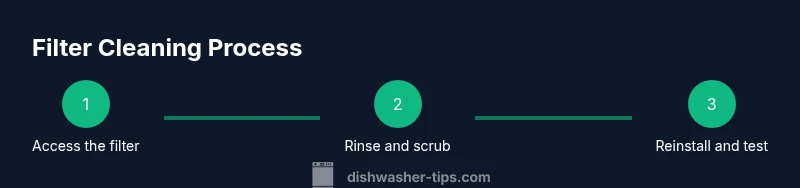
Hold the filter under warm running water and rinse away loose debris. Use a soft brush or toothbrush to dislodge stuck particles from mesh screens and crevices.
Tip: Avoid hot water that can warp plastic and frustrate debris removal. - 5
Scrub with gentle detergents
If residue persists, use a small amount of mild dish soap on your brush or sponge to lift grease. Rinse again until water runs clear and there’s no soapy film on the filter pieces.
Tip: Rinse thoroughly to prevent soap residue from affecting dishwasher performance. - 6
Inspect for damage and wear
Check the filter, seal, and plastic housing for cracks, warping, or excessive wear. If you notice damage, replace the affected part per GE’s replacement guidelines rather than attempting a risky repair.
Tip: Damage often signals the need for a replacement rather than a fix. - 7
Reinstall and test
Place the cleaned filter back into its orientation and reseat the rack. Run a short hot-water cycle without dishes to flush the system and confirm normal drainage.
Tip: Listen for smooth flow and look for any leftover debris in the sump during the test.
People Also Ask
Why isn’t my GE dishwasher draining even after cleaning the filter?
A clogged drain pump, kinked hose, or blocked impeller can still prevent drainage. If cleaning the filter doesn’t resolve the issue, inspect the drainage hose for kinks and check the pump for debris.
If the filter is clean but draining is slow, check the drain hose and pump for obstructions and consider professional service if needed.
Can I use bleach to clean the filter?
Bleach can damage plastic components and should be avoided on filter housings. Use warm water with a mild dish soap for cleaning, then rinse thoroughly.
Bleach isn’t recommended for GE filters; stick with warm water and mild soap, then rinse well.
How often should I clean the GE dishwasher filter?
Most households benefit from a monthly check-in, with more frequent cleaning if you notice residue or slow draining. Adjust based on usage and water hardness.
Clean the filter about once a month, or sooner if you notice buildup or reduced cleaning performance.
What if the filter looks damaged but still fits?
Even if it fits, a warped or cracked filter can fail during operation. Replace damaged parts promptly to protect the pump and seals.
If you see cracks or warping, replace the filter rather than risk a leak or poor performance.
Is the filter the same as the spray arms?
No. The filter traps debris, while spray arms distribute water. If you’re unsure, consult your GE model manual for component diagrams.
They’re different parts; the filter collects debris, the spray arms spray water for cleaning.
Watch Video
What to Remember
- Clean filters improve wash performance
- Inspect for damage and replace if needed
- Reinstall orientation is critical for proper function
- Use mild cleaners and avoid harsh chemicals
- Run a flush cycle to verify proper drainage