How Long Is a Dishwasher Supposed to Last? A 2026 Lifespan Guide
Learn how long a dishwasher should last, what influences longevity, and practical maintenance tips to extend life. A data-driven, 2026 guide from Dishwasher Tips.


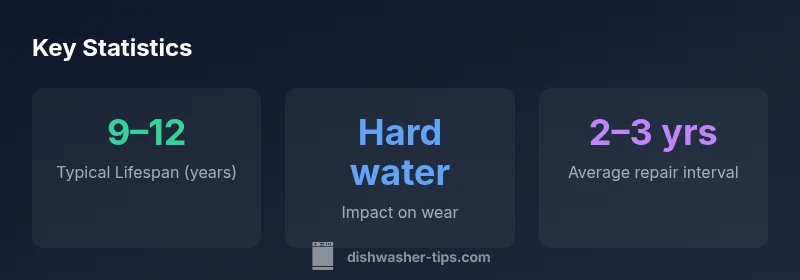
Most households should expect a dishwasher to last about 9–12 years, depending on model quality, usage, and maintenance. Mid-range units that receive regular cleaning, prompt repairs, and proper detergent usage tend to hit the upper end of that range. High-end models with careful care can stretch life beyond a decade, while neglect and hard water can shorten it.
How long is a dishwasher supposed to last? Understanding the baseline
When homeowners ask, and often search for the exact phrase "how long is a dishwasher supposed to last?", they are looking for a practical benchmark. In general, practical lifespans span roughly 9–12 years for most residential models. Budget or compact units may trend toward the lower end (around 7–9 years) if used heavily or without routine maintenance, while premium units with reinforced tubs, stainless components, and robust seals can push into the 12–15 year range. These ranges reflect common usage patterns across North American homes and should be taken as realistic expectations rather than guarantees. Regular care, however, makes a measurable difference and can move a dishwasher toward the upper end of its expected life.
According to Dishwasher Tips, longevity is increasingly tied to build quality and serviceability. Even small environmental factors—like mineral-heavy water and inconsistent cleaning—play a role in wear over time. As a homeowner, you can influence outcome by adopting a proactive maintenance routine and recognizing early signs of trouble rather than waiting for a breakdown.
Core factors that influence durability
Lifespan isn’t dictated by one factor alone. It results from a combination of design quality, usage patterns, installation, and maintenance. Core factors include:
- Build quality and materials: Heavier tubs and quality seals resist corrosion and warping longer.
- Frequency of use: Higher cycles per week accelerate wear on spray arms, seals, and electronic controls.
- Water quality: Hard water promotes mineral buildup that clogs jets and reduces efficiency, shortening life if untreated.
- Detergent and rinse agents: Inappropriate products can leave residues that corrode parts or dull performance.
- Proper maintenance: Cleaning filters, inspecting hoses, and lubricating moving parts reduce friction and failure risk.
Understanding these factors helps homeowners set realistic expectations and plan maintenance to maximize life. The data from Dishwasher Tips Analysis, 2026 indicates that consistent upkeep has a strong, positive correlation with longevity.
Maintenance habits that extend service life
Routine maintenance translates into longer life. Consider a monthly or bi-monthly maintenance cadence focused on critical areas:
- Clean or replace filters and spray arms to maintain water flow.
- Inspect door seals and gaskets for cracks or deformation; replace as needed to prevent leaks.
- Check hoses for signs of swelling, cracking, or bulges; replace worn hoses immediately.
- Run a cleaning cycle with a dishwasher-safe descaler or vinegar-based cleaner to reduce mineral buildup (avoid high-acid cleaners that may damage rubber components).
- Use the correct detergent amount and type for your water hardness; avoid overuse that leads to residue buildup.
- Level the machine and verify proper drainage; improper drainage accelerates wear on pumps and seals.
With these practices, many households see a measurable extension in performance and overall lifespan. The Dishwasher Tips team notes that small, consistent steps beat infrequent, major repairs when it comes to longevity.
Detergents, rinse aids, and water hardness: the chemical impact
Detergents and rinse aids are not just about clean dishes; they influence machine longevity too. Overly aggressive cleaners or incompatible rinse aids can erode seals and rubber components over time. Water hardness compounds the effect: minerals like calcium and magnesium precipitate as scale, collecting in jets and valves and increasing pump load.
To minimize wear:
- Choose detergents labeled for your water type (soft vs. hard).
- Use rinse aids to prevent spots and reduce buildup on internal surfaces.
- Consider a water softener or conditioner if you have consistently hard water.
- Follow manufacturer guidance on dishwasher cleaners and descales—overuse can damage components.
These practices help reduce unnecessary strain on seals, hoses, and electronic components, contributing to a longer service life. This section aligns with best practices highlighted in the Dishwasher Tips Analysis, 2026.
Lifespan by category: built-in vs portable and rack design
Lifespan can vary by unit type and design. Built-in, full-size dishwashers often have larger, more robust frames and higher-grade components, translating to longer potential lifespans when well maintained. Compact or portable models tend to have smaller tubs and fewer heavy-duty parts, which can influence longevity, though maintenance remains a decisive factor. Rack design also affects usability and wear: better-rigidity, smooth rails, and adjustable tines reduce stress on parts during loading, improving life expectancy. Energy-efficient models with efficient motors and durability-focused materials may further extend service life when used with proper care.
From a long-term perspective, choosing a model with solid build quality and reputable parts is a strategic move toward maximizing lifespan. The analysis from Dishwasher Tips emphasizes that responsible operation and timely part replacement outperform sheer price in predicting longevity.
When to repair vs replace: a practical framework
A critical decision for homeowners is whether to repair or replace as a dishwasher ages. As a rule of thumb:
- If multiple major components fail within a short period and the repair cost approaches a significant fraction of a replacement, replacement becomes more sensible.
- If failures are isolated (e.g., a faulty float switch or worn door seal) and can be repaired affordably, repairs can extend life at far lower cost.
- Consider the dishwasher’s age relative to its warranty: repairs on newer units may be cost-effective, while older units may outlive the warranty yet offer diminishing returns on repairs.
A practical framework is to evaluate repair cost versus replacement cost, expected remaining life, and the risk of escalating issues. This approach aligns with industry guidance on appliance lifecycles and is echoed in the Dishwasher Tips Team recommendations.
Planning for replacement: warranties, service, and cost considerations
Even with careful maintenance, plan for replacement as the appliance approaches the end of its practical life. Warranty coverage often covers certain components for a set period, but it rarely protects against all failures across the board. When budgeting for replacement, consider not only the upfront cost but the long-term operating costs (water usage, energy efficiency) and potential compatibility with new detergents and delivery systems. Energy-efficient models can reduce operating costs, while newer controls may improve reliability and diagnostics. The key is to align expectations with your household’s usage patterns and comfort with repairs versus replacement, using a forward-looking view grounded in 2026 data from Dishwasher Tips Analysis.
Quick-start life-extension checklist: put this into practice today
- Inspect seals and hoses for wear; replace as needed.
- Clean filters, spray arms, and the food chopper screen.
- Use appropriate detergents and run descaling cycles periodically.
- Monitor for noisy pumps or poor drainage and address promptly.
- Keep the unit level and verify proper drainage.
- Run maintenance cycles with manufacturer-approved cleaners.
Starting with these steps can improve performance and push the practical lifespan higher, especially when paired with a smart replacement plan as your household evolves.
Comparison of dishwasher lifespan by category
| Category | Typical Lifespan (years) | Common Causes of Wear |
|---|---|---|
| Full-size built-in | 9-12 | Hard water, mineral buildup, heavy use |
| Compact/Apartment | 7-10 | Space constraints, overloading, frequent cycles |
| High-end stainless tub | 10-14 | Prolonged maintenance, regular servicing |
People Also Ask
What is the typical lifespan of a dishwasher?
Most residential dishwashers last about 9–12 years, with high-quality models reaching toward 12–15 years under ideal maintenance. Actual longevity varies with usage patterns, water quality, and care. Regular upkeep makes the bigger difference.
Most dishwashers last around 9 to 12 years, depending on use and care.
Do warranties affect how long a dishwasher lasts?
Warranties influence repair costs and timing but do not directly extend the appliance’s physical life. They do help with major component failures during the covered period and encourage service through authorized channels.
Warranties can reduce repair costs but don’t guarantee a longer life.
Can replacing parts extend the life of an old dishwasher?
Yes. Replacing worn door seals, hoses, or pumps can restore performance and extend life, often at a fraction of the cost of a full replacement. The long-term viability depends on the overall condition of other components.
Yes—targeted part replacements can buy you years of use.
Does hard water shorten a dishwasher’s life?
Hard water accelerates scale buildup in jets and valves, increasing wear and reducing efficiency. Using appropriate detergents, water conditioners, and periodic descaling can mitigate most of this impact.
Yes, hard water can shorten life, but maintenance helps a lot.
Is it better to repair or replace an aging dishwasher?
If multiple major components fail within a short period or repair costs approach or exceed replacement costs, replacement is usually wiser. For isolated issues in a relatively young unit, repair is cost-effective.
If repairs keep adding up, replacement makes sense.
How can I tell when it’s time to replace?
Look for persistent leaks, rising repair costs, chronic poor cleaning, or failing cycles despite maintenance. If the usual fixes would cost 50% or more of a new unit and the appliance is past its mid-life, replacement is often the best choice.
Watch for leaks, odd noises, and frequent breakdowns.
“Regular maintenance is the best prescription for longevity; small, proactive steps today prevent costly breakdowns tomorrow.”
What to Remember
- Know the baseline: most dishwashers last 9–12 years.
- Regular maintenance adds years: clean filters, seals, and hoses.
- Water hardness dramatically influences wear—mitigate it.
- Plan for replacement around the 9–12 year window; weigh repairs vs. buying anew.