How to Clean a Dishwasher When It Stinks
Learn a proven, step-by-step method to remove dishwasher odors. This guide covers diagnosis, deep cleaning, maintenance, and expert tips to keep your dishwasher smelling fresh.


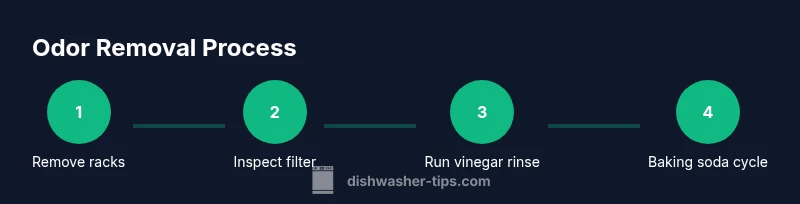
According to Dishwasher Tips, to eliminate odors, follow a practical 3-step routine: clear debris and remove and clean the filter, run a hot empty cycle with a dishwasher-safe cleaner or white vinegar, then run a second cycle with baking soda to neutralize remaining smells. Finish with a quick wipe-down and a monthly maintenance routine to prevent future stink.
Why a stinky dishwasher happens
Odors in dishwashers typically stem from buildup on filters, seals, and spray arms, plus damp interior surfaces that harbor bacteria and mold. Food particles can get trapped in the filter, while mineral deposits from water can create a stale, sulfur-like stench. Over time, standing water or soap residue can feed odor-causing microbes, especially if cycles end with a damp interior. Regular attention prevents odors from becoming persistent problems. According to Dishwasher Tips Analysis, 2026, odor-causing buildup often originates in the filter and seals, not the walls themselves, so targeting those areas yields the best results. A routine cleaning habit reduces energy use and extends the life of the machine, making this a smart DIY project for homeowners and renters alike.
Quick checks before cleaning
Before diving into deep cleaning, perform a quick diagnostic sweep. Remove both racks to access the interior and inspect the filter, drain, spray arms, and door gasket. Look for visible food particles, hair, or mineral crusting. A clogged filter and restricted drain are common odor sources and should be cleared first. Check spray arms for clogged holes; mineral buildup here can prevent proper spraying and lead to lingering smells. If you find mold or slime on the door gasket, wipe it away with hot water and dish soap, then sanitize with a mild vinegar solution. Document what you find so you can compare results after cleaning. These quick checks save time and help you pinpoint the odor’s source, ensuring you address the root cause rather than masking the smell.
Deep cleaning methods: vinegar, baking soda, and cleaners
There isn’t one universal fix for every dishwasher odor, but a few proven approaches consistently deliver results. An empty hot-cycle with plain white vinegar can help dissolve mineral deposits and kill surface bacteria, followed by a second hot cycle with baking soda to neutralize odors and brighten the interior. Never mix cleaners, especially vinegar and bleach, as hazardous fumes can form. If you prefer commercial cleaners, choose a dishwasher-safe product and follow the label instructions. For a chemical-free option, place a cup of white vinegar on the top rack and a half cup of baking soda on the bottom, then run a hot cycle. Results vary by model and water hardness, so tailor the routine to your machine. The aim is to flush out residues and reset the interior environment for long-term odor control. In practice, many households notice best results when combining both vinegar and baking soda in staged cycles, rather than relying on a single method.
Cleaning the filter, seals, and spray arms
A thorough cleaning of the filter, seals, and spray arms makes a big impact on odor control. Remove the filter and rinse under hot water, using a soft brush to dislodge stubborn residue. Wipe the door gasket with warm, soapy water, paying close attention to any mold or slimy buildup. If you can, remove the spray arms and rinse their holes with a fine brush to clear mineral deposits. Reassemble everything and wipe the interior with a microfiber cloth, then dry thoroughly to prevent mildew. Drying completely helps prevent future odor formation and keeps the interior ready for your next cycle.
Maintenance to prevent future odors
Prevention is easier than remediation. Establish a monthly cleaning routine that includes a hot empty cycle with a dishwasher cleaner or vinegar rinse, plus a quick post-cycle wipe-down. Load dishes properly to avoid food particles ending up in the filter, and avoid storage of spoiled or strongly scented items inside the unit. Leave the door ajar after cycles on non-scented days to promote air circulation and drying. Consider using a rinse aid if your water is hard, as it helps reduce mineral buildup and improves drying. Adopting these habits minimizes odor buildup and keeps your dishwasher ready for daily use.
Authority sources
For credible guidance, see: https://www.cdc.gov/mold/dampness_fungi.html, https://extension.illinois.edu/, https://www.mayoclinic.org/
Tools & Materials
- Dishwasher-safe cleaner(Follow label directions for dosage and cycle settings)
- White vinegar (5-8% acidity)(Use plain white vinegar, avoid scented variants)
- Baking soda(Powder form for the second cycle)
- Dish soap(Mild formula for cleaning gasket and interior)
- Microfiber cloth(For wiping interior and gasket; dries quickly)
- Soft-bristled brush(Scrubs filter and spray arms gently)
- Non-abrasive sponge(Light scrubbing on stubborn spots)
- Gloves(Protect hands during cleaning)
Steps
Estimated time: 60-75 minutes
- 1
Remove racks and debris
Take out both racks to expose the interior. Inspect for trapped food, hair, and mineral buildup. Clear visible debris with hands or a damp cloth before deeper cleaning.
Tip: If you drop small parts, keep a tray handy to avoid losing them. - 2
Inspect and rinse the filter
Remove the filter and rinse under hot water. Use a soft brush to dislodge stubborn residue. Reinsert only when completely clean.
Tip: If the filter is damaged, replace it to prevent future clogs. - 3
Check spray arms for clogs
Remove spray arms if possible and inspect the nozzle holes for mineral deposits. Use the brush to clear debris and rinse thoroughly.
Tip: Always reattach arms securely to avoid spray misalignment. - 4
Wipe seals and gasket
Wipe the door gasket and surrounding seals with warm, soapy water. Look for mold or slime and remove with a microfiber cloth.
Tip: Dry seals completely to prevent mold growth between cycles. - 5
First cleaning cycle: vinegar rinse
Place a cup of white vinegar on the top rack and run a hot empty cycle. This loosens mineral buildup and reduces odors.
Tip: Avoid using vinegar with metal components that may corrode over time. - 6
Second cycle: baking soda neutralization
Sprinkle baking soda on the bottom and run another hot empty cycle. Baking soda neutralizes odors and freshens the interior.
Tip: Do not add any dishes during this cycle to maximize cleaning effectiveness. - 7
Final wipe and dry
Wipe all interior surfaces again and leave the door slightly ajar to air dry. This prevents mildew and ensures a lasting fresh scent.
Tip: Keep a damp-free interior by allowing quick air-drying after each cycle.
People Also Ask
What causes a dishwasher to stink?
Odors usually stem from trapped food, mold in seals, and bacteria growth on damp surfaces. Regular cleaning targeting filters and seals helps prevent recurrence.
Odors usually come from trapped food, mold in seals, or bacteria on damp surfaces.
Can I use bleach to clean my dishwasher?
Bleach can degrade rubber seals and release fumes in enclosed spaces. Use vinegar or commercially labeled dishwasher cleaners instead, following label directions.
Bleach can harm seals and release fumes; use vinegar or specialized cleaners instead.
How often should I clean a dishwasher?
Aim for a thorough interior clean every 1-2 months, plus quick post-cycle wipes after heavy usage. Check the filter monthly.
Clean every one to two months, plus quick post-cycle wipes and monthly filter checks.
Why does the smell return after cleaning?
If odors recur, it may be due to mold in the door gasket, stagnant water, or mineral buildup in hard water. Address these areas and maintain a cleaning schedule.
Odors can return if mold, stagnant water, or mineral buildup come back; fix those areas and keep a schedule.
Is it safe to run vinegar through my dishwasher?
Yes, in moderation, vinegar is a natural odor eliminator. Do not mix with bleach; avoid concentrated amounts on metal racks.
Vinegar is generally safe in moderation, but don't mix with bleach and avoid strong amounts on metal parts.
What maintenance helps prevent odors long-term?
Regularly clean the filter and gasket, run hot empty cycles, and keep the interior dry after cycles. A simple monthly routine reduces odor buildup.
Regular filter and gasket cleaning plus hot empty cycles prevents odors over time.
Watch Video
What to Remember
- Remove debris and inspect the filter first.
- Use hot cycles with vinegar and baking soda for odor neutralization.
- Clean seals, filters, and spray arms to prevent recurrence.
- Maintain a monthly cleaning schedule to keep odors away.