How to Get Dishwasher Smell Out: A Complete DIY Guide
Learn proven steps to remove dishwasher odors, prevent future smells, and keep your appliance fresh with practical cleaners, routines, and maintenance tips from Dishwasher Tips.


To get dishwasher smell out, start with a thorough interior clean, then address the drain and gasket. Run a hot cleaning cycle with a deodorizing agent, and finish with a rinse to remove residue. Regular maintenance—filters, seals, and racks—prevents future odors, as explained by Dishwasher Tips. This quick overview gives you the essential steps before diving into the full guide.
Why dishwasher smells happen
According to Dishwasher Tips, most dishwasher odors originate from residue that sticks to the tub, filter, spray arms, and door gasket, creating a damp, bacteria-friendly environment. Food particles trapped in the filter can decay during cycles, releasing sour or sulfurous notes. Mold and mildew thrive where moisture lingers after a cycle, especially in warm kitchens or with hard water. Understanding these root causes helps you target cleaning steps rather than masking the smell with air fresheners. This section outlines common culprits, debunks myths, and sets the stage for a practical odor-removal routine.
Odors can also stem from mineral buildup in hard water, clogged spray arms, or a drain line that isn’t evacuating water efficiently. By identifying the likely source, you’ll choose the right tools and cleaners and avoid wasting time on ineffective methods. The Dishwasher Tips analysis highlights that a consistent cleaning routine reduces odor recurrence and extends the life of seals and gaskets. Treating the problem at its source yields longer-lasting results than quick, surface-level sprays.
Quick wins to neutralize odors
When a smell hits, you want fast results. Start by removing the bottom rack to access the filter and drain area. Rinse out visible debris under warm running water and inspect the filter for clogs or fibers. Wipe the door gasket, the interior walls, and any crevices with a mild, non-abrasive cleaner. For an immediate deodorizing effect, run a hot water cycle with a deodorizing agent—commercial dishwasher cleaners are fine, but a cup of baking soda dissolved in water can work as a gentler alternative. After the cycle, leave the door slightly open for air-drying to prevent lingering moisture. These quick actions often neutralize odors before deep cleaning is needed.
Deep-clean the interior and components
A thorough interior cleaning targets hidden reservoirs where smells hide. Remove the lower rack, take out the filter, and rinse each part under warm, soapy water. Scrub the filter with a soft brush until all debris is dislodged, then inspect spray arms for clogs by popping off the nozzle tips and clearing them with a thin tool. Wipe interior walls, especially behind the door seal, with a non-abrasive sponge. Reassemble and run a short rinse to flush residues. When reloading, space dishes to improve rinsing and airflow, which reduces moisture and odor growth. This deep clean eliminates the odor’s source rather than masking it.
Cleaning the drain, gasket, and hard-to-reach areas
Odors often originate in the drain line, pump housing, or gasket channel where dampness and debris accumulate. Use a flashlight to inspect the drain and remove visible gunk. Clean the door gasket with a soft brush or cloth, lifting folds to reveal trapped grime. For stubborn spots, dampen an old toothbrush with soapy water and gently scrub the seam. After cleaning, run a hot water cycle with no dishes to rinse away loosened particles. Dry the seal with a towel to prevent future mold growth and re-sealing issues.
Odor prevention routines you can adopt
Prevention is easier than repeat cleaning. Establish a weekly routine: quick wipe-down of the tub, gasket, and filter; a monthly deep clean using a mild cleaner or vinegar/baking soda; and the regular use of rinse aid if your water is hard. Use proper detergent amounts and avoid overloading the machine to ensure thorough rinsing. Maintain good air circulation by leaving the door slightly open after cycles for a few hours. A small habit like this can dramatically cut down on future smells, as highlighted by Dishwasher Tips's analysis of typical odor sources and remedies.
Safe cleaners and safety considerations
Safe kitchen cleaners work best for dishwasher odor removal. White vinegar and baking soda are common at-home options, but never mix vinegar with bleach or hydrogen peroxide, which can produce hazardous gases. If you have sensitive countertops or metal components, test any cleaner in a hidden area first. Citric acid tablets or dissolved citric acid powder can help dissolve mineral buildup in hard water. Always unplug or switch off power when performing any disassembly and wear gloves to protect your hands. These precautions keep odor-removal effective and safe, reducing risk while improving results.
When to call a professional
If odors persist after a full cleaning and routine maintenance, there may be a deeper issue such as a failing drain pump, persistent mold growth, or a hidden leak. A professional technician can inspect components and test drainage to pinpoint the source. Document the steps you’ve already tried so the technician can tailor the remedy. In many cases, a targeted part replacement or system flush resolves stubborn smells and restores proper operation.
A practical 60-minute odor-fighting routine
If you're short on time, follow this compact routine: Empty the dishwasher and inspect the filter (3 minutes); clean gasket and interior walls with warm soapy water (6 minutes); remove and rinse the filter, then clear spray arm holes (8 minutes); run a hot cycle with a cup of white vinegar (20 minutes); run a second hot cycle with baking soda on the bottom (15 minutes); wipe dry and air out for 5-8 minutes. This quick plan targets the most common odor sources in a single session and can be completed over a weekend if needed.
Tools & Materials
- Dishwasher-safe cleaning brushes(Nylon brush for gaskets and tight corners)
- White vinegar(Use 1 cup for cleaning cycle)
- Baking soda(1 cup for bottom cleansing or cycle option)
- Warm water(For rinsing and soaking parts)
- Soft sponge(Non-abrasive for walls and gasket)
- Old toothbrush(Detail cleaning around seams)
- Dish soap(Gentle formulation to avoid residue)
- Cloth towels(Drying and wipe-down after cycles)
- Citric acid (optional)(Helpful for mineral buildup in hard water)
Steps
Estimated time: 60-90 minutes
- 1
Remove racks and inspect components
Take out the lower rack and reach behind the door to locate the filter and drain area. Rinse visible debris with warm water, then remove the filter for a closer look. Check the spray arms for clogs and ensure all holes are clear. Reassemble loosely to test fit before running cycles.
Tip: Take a quick photo of disassembly to simplify reassembly later. - 2
Clean the filter and spray arms
Rinse the filter under hot running water and scrub with a soft brush until all grime is gone. Inspect spray arms; remove any lodged particles from the nozzle holes using a thin tool or toothpick. Rinse parts thoroughly and set them aside to air-dry.
Tip: Clear each nozzle hole individually to ensure even water distribution. - 3
Wipe gasket and interior walls
Use warm soapy water and a soft sponge to wipe the door gasket and the interior walls, focusing on folds where mold hides. Gently scrub curved surfaces and corners. Rinse with clean water and dry with a microfiber cloth.
Tip: Don’t use harsh abrasives that could damage the gasket surface. - 4
Choose a deodorizing cycle (vinegar or baking soda)
If you opt for vinegar, place a cup of white vinegar on the top rack and run the hottest cycle without dishes. If you prefer baking soda, sprinkle it on the bottom and run a hot cycle. Do not mix vinegar and baking soda in the same cycle to avoid unnecessary fizz.
Tip: Avoid mixing cleaners with chlorine bleach to prevent hazardous fumes. - 5
Rinse cycle and air-dry
Run a final hot water rinse with no dishes to flush leftover residues. Wipe the tub interior dry and keep the door ajar for 15-30 minutes to promote airflow and dry surfaces fully.
Tip: Air-drying reduces residual moisture that invites mold growth. - 6
Set up a weekly maintenance plan
Create a simple routine: quick wipe-down after each use, weekly filter check, and monthly deep clean. Use rinse aid if you have hard water and avoid overloading the dishwasher to ensure complete rinsing.
Tip: Keep a small cleaning kit in the kitchen for easy access.
People Also Ask
Why does my dishwasher smell even after cleaning?
Odors may recur if moisture remains, if the drain is clogged, or if mold persists in seals and corners. A targeted, repeated cleaning of the gasket, drain, and filter often resolves the issue. If odors persist, a professional inspection may be needed.
Odors can come back if moisture lingers or the drain is blocked; try a targeted deeper clean before calling a pro.
Is vinegar safe to use in a dishwasher?
Yes, in moderation, vinegar can help break down residues and odors. Do not mix vinegar with bleach, and avoid using vinegar on metal parts too frequently if you notice any corrosion risk.
Vinegar is generally safe in small amounts, but never mix it with bleach.
How often should I clean my dishwasher to prevent smells?
Do a quick wipe-down after each use, a weekly check of the filter, and a more thorough deep clean monthly. More frequent cleaning is advised in households with hard water or heavy dish loads.
Wipe weekly, clean monthly, adjust for water hardness and load.
Can strong odors be completely removed with DIY methods?
In many cases yes, if you address both surface residues and hidden sources. If odors persist after a thorough clean, there may be a drain issue or mold growth that requires professional assessment.
DIY often works, but persistent smells may need a pro.
Does hard water contribute to dishwasher smells?
Hard water can leave mineral films that trap odors. Use a descaler or citric acid periodically and ensure rinse aid is used to prevent mineral buildup that fosters odor.
Mineral buildup from hard water can trap smells; descalers help.
What are safe cleaners to use for odor removal?
Safe options include white vinegar, baking soda, and citric acid. Avoid mixing cleaners that could release fumes (like bleach with vinegar) and always test in a hidden area first.
Vinegar, baking soda, and citric acid are safe when used properly; never mix with bleach.
What should I do if the smell is still there after cleaning?
If odors persist after deep cleaning and maintenance, there may be a failed component or hidden mold. Schedule a professional diagnostic to identify a root cause and prevent further odor issues.
If the smell remains after cleaning, consider a professional diagnostic.
What to Remember
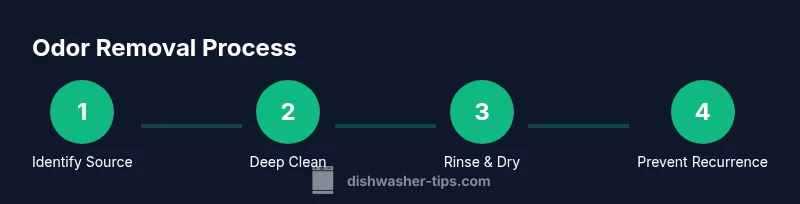
- Identify odor sources (drain, gasket, filter).
- Clean interior and components thoroughly.
- Deodorize with safe cleaners (vinegar or baking soda).
- Rinse, dry, and improve ventilation after cycles.
- Maintain a regular cleaning schedule to prevent recurrence.