How to Clean a Dishwasher When You Have Hard Water
Learn step-by-step how to clean and prevent mineral buildup in dishwashers affected by hard water. Safe cleaners, essential tools, and a maintenance routine keep dishes sparkling and your machine running efficiently.


Here’s how to clean dishwasher when you have hard water. You’ll learn safe descaling methods, the right tools, and a practical maintenance routine to prevent mineral buildup, protect seals, and restore cleaning performance. This guide helps homeowners fix challenges and keep dishes sparkling by addressing mineral deposits that hard water leaves behind.
How hard water damages dishwasher performance and why scale matters
According to Dishwasher Tips, hard water leaves behind mineral deposits—primarily calcium and magnesium—that can clog spray arms, coat filters, and obscure the pathways water must travel. Over time, scale forms on the interior surfaces, around seals, and inside small crevices. This buildup diminishes spray efficiency, reduces drying performance, and can lead to more frequent service calls. Understanding the mechanics helps you target the right areas during cleaning and maintenance. When mineral scales accumulate in the spray holes, water can’t reach dishes evenly, resulting in spots and dull finishes. A proactive approach minimizes clogging, keeps cycles efficient, and extends the life of pumps and gaskets.
Key takeaway: scale acts like a protective film for some parts but blocks water flow, so early intervention matters.
Signs of hard-water buildup: quick diagnosis and what to look for
Early warning signs include cloudy glassware, white crust around the door gasket, spots on utensils, and longer drying times. The dishwasher may run louder or retain a faint mineral odor as deposits accumulate. If you notice food residues despite full cycles, examine the filter and spray arms for hairline clogs and mineral crust. In high-mineral areas, these symptoms appear sooner and intensify after several cycles. Regular inspection helps you decide when to perform a deeper descaling.
Dishwasher Tips’s team observes that homeowners who clean on a monthly or bi-monthly basis report fewer clog-related issues and better drying outcomes in hard-water environments.
Safety, prep, and planning: setting up for a successful clean
Before you start, unplug the unit or switch off the circuit at the breaker to avoid any electrical hazards. Remove the racks to gain clear access to spray arms and filters. Gather gloves, microfiber cloths, a soft brush, a spray bottle, citric acid or a dishwasher-safe descaler, and a few cups of hot water. Ventilate the area if you’re using descalers that emit fumes. Read your manual for any model-specific cautions about cleaners and cycle selections. Having a plan reduces trial-and-error and protects gaskets and seals during cleaning.
Pro tip: keep a dedicated hard-water cleaning kit on hand so you’re ready for routine maintenance and annual deep-clean sessions.
Cleaning agents for hard water: what works, what to avoid, and why
Citric acid is a popular descaler because it dissolves mineral deposits without harsh chemical reactions. For routine cleaning, dissolve 1–2 tablespoons of citric acid in hot water and apply to interior surfaces with a spray bottle, then run a hot cycle. Baking soda offers gentle scrubbing but can create a foaming mess if used mid-cycle; use sparingly as a pre-clean scrub. Vinegar can help with build-up on the interior walls when used cautiously; however, avoid long-term use or mixing it with bleach or other cleaners. In some models, vinegar can degrade rubber seals over time, so limit its use to occasional treatments. Always flush with a plain hot rinse afterward.
Pro tip: use citric acid-based descalers for regular maintenance and reserve vinegar for spot cleaning only; never mix cleaners inside the dishwasher.
Step-wise plan for tackling stubborn mineral buildup (high-level overview)
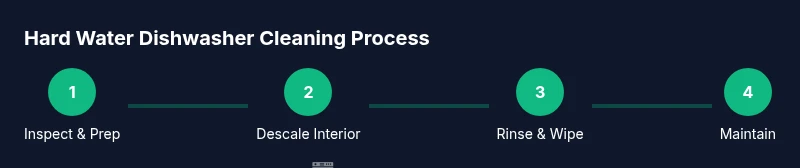
Begin with a thorough inspection of filters and spray arms, then apply a descaling treatment to the interior. Run a hot wash cycle with the dishwasher empty to maximize mineral removal. Finish by wiping seals and the door gasket, flushing the drain, and performing a final rinse with a rinse aid if you use one. This approach targets scale on multiple fronts: mechanical blockages, chemical buildup, and performance recovery.
Tip: document your cleaning date and any observed changes in performance so you can track improvements over time.
Maintenance routines to prevent future buildup in hard-water homes
Establish a monthly quick-clean that includes inspecting filters, cleaning spray arms, and running a short, hot cycle with a descaler or citric acid solution. Every 3–6 months, perform a deeper descaling session and replace or clean the filter if needed. Use a rinse aid designed for hard water to improve drying and reduce spots. Keep mineral deposits at bay by pairing cleaning with water-softener maintenance if your home uses a whole-house system. A predictable routine reduces surprise breakdowns and keeps cycles efficient.
Troubleshooting persistent issues after cleaning
If spots persist or cycles still feel extended, re-check the spray arms for partial blockages and verify the water inlet screen isn’t clogged. Consider upgrading to a rinse aid with stronger anti-spot performance or increasing the wash temperature setting if the model allows. In some cases, hard water can overwhelm standard detergents; in those situations, a dedicated descaler introduced into the wash can help. If problems continue after two attempts, it may be time to call a professional to inspect internal seals and hoses for mineral damage.
Quick-start checklist and getting the most from hard-water cleaning
- Inspect filters and spray arms for scale and debris.
- Prepare citric acid or a dishwasher-safe descaler.
- Run a hot cycle with the dishwasher empty.
- Wipe seals and door gasket after the cycle.
- Refill rinse aid and monitor drying performance.
- Schedule monthly quick-clean and quarterly deep-clean sessions.
Tools & Materials
- Rubber gloves(Protect hands from cleaning solutions and hot water.)
- Microfiber cloths(For wiping gaskets, seals, and interior surfaces.)
- Soft-bristle brush(Clean spray arms and filters without scratching metal.)
- Spray bottle(Apply descaling solution and cleaners precisely.)
- Citric acid or dishwasher-safe descaler(Primary descaler for mineral buildup.)
- Hot water (as hot as you can safely handle)(Helps dissolve minerals and rinse residues.)
- Measuring spoon or tablespoon(Accurate measuring for descalers.)
- Spray nozzle cleaner (optional)(Clean the spray holes more effectively.)
Steps
Estimated time: 60-90 minutes
- 1
Power down and access the interior
Unplug the dishwasher or switch off the circuit at the breaker. Remove the racks to expose the interior, making it easier to reach filters and spray arms. This initial access reduces spill risk and prepares you for thorough cleaning.
Tip: Wear gloves and keep the area dry to prevent slips. - 2
Inspect and clear filters and spray arms
Remove the filter assembly and detach spray arms if possible. Rinse under warm water, using a soft brush to dislodge mineral crust and loose debris. Reinstall once clean.
Tip: Check for cracked seals or worn gaskets while you’re there. - 3
Prepare descaler and apply
Dissolve citric acid or use a dishwasher-safe descaler as directed on the package. Apply to interior surfaces with a spray bottle, focusing on corners, around the door seal, and near the filter housing.
Tip: Avoid pouring directly into the drain as it may splash. - 4
Run a hot cycle with no dishes
Select the hottest wash setting available and run the cycle to flush minerals from the interior. The heat helps dissolve residues and carry them out with the rinse water.
Tip: If your water is very hard, consider a second hot rinse after descaling. - 5
Wipe seals and flush the drain
After the cycle, wipe the door gasket and edges with a microfiber cloth. Rinse the drain area to ensure no chemical residue remains.
Tip: Never use sharp tools on gaskets; you can damage them. - 6
Final rinse and maintenance plan
Run a final rinse with a plain hot water cycle. Reinstall racks and refill rinse aid if used. Document the cleaning date and plan your next maintenance session.
Tip: A consistent routine reduces stubborn buildup.
People Also Ask
Can I use vinegar to clean my dishwasher if I have hard water?
Vinegar can help dissolve mineral buildup, but frequent use may degrade rubber seals. Use sparingly and avoid mixing with bleach. Check your model’s guidance before using vinegar regularly.
Vinegar can help with buildup, but don’t use it too often or with bleach; check your manual before regular use.
How often should I clean a dishwasher in a hard-water area?
Aim for a quick monthly wipe-down and filter check, plus a quarterly deep clean with a descaler if mineral buildup is noticeable.
Clean monthly, deep-clean quarterly if you see buildup.
Will hard water affect my dishwasher’s efficiency long-term?
Yes. Mineral deposits can reduce cleaning efficiency and increase energy use if not addressed regularly.
Yes, minerals can hamper performance over time if not cleaned.
Is citric acid safe for seals and hoses?
Citric acid is generally safe for seals and hoses when used as directed. Rinse after descaling to remove any residue.
Citric acid is usually safe if used correctly; rinse well afterward.
What about rinse aids for hard water?
Rinse aids help prevent water spots and improve drying in hard water areas. Use a brand-recommended rinse aid compatible with your dishwasher.
Rinse aids help with drying and spotting in hard water.
What should I do if spots persist after cleaning?
If spots remain, re-check spray arms, run an additional hot rinse, and consider upgrading to a more robust descaler routine or adding a soft water solution if available.
If spots don’t disappear, run another hot rinse and check for clogged arms.
Watch Video
What to Remember
- Identify hard-water signs early and address scale promptly.
- Choose citric acid-based cleaners for safe descaling.
- Rinse aid improves drying and reduces spots in hard water.
- Maintain filters and spray arms for best cleaning results.