How to Dishwasher Filter: Clean, Inspect, and Replace
Master how to dishwasher filter maintenance with our step-by-step guide to locate, clean, and replace filters, extend life, and improve performance.


To ensure spotless dishes, learn how to dishwasher filter maintenance step by step. This guide covers how to locate, remove, clean, and replace your filter, plus when to service the housing seal and how often to perform checks. According to Dishwasher Tips, regular filter maintenance can noticeably improve performance and extend pump life.
Why filter maintenance matters
A clean dishwasher filter is the unsung hero of a spotless load. The filter traps food particles and prevents them from circling through spray arms and jets. When the filter gets clogged, water can't circulate as efficiently, leading to dull or dirty dishes and longer wash cycles. According to Dishwasher Tips Team, regular filter maintenance is a simple, high-impact habit that preserves cleaning performance, reduces energy consumption, and extends the life of critical components. This is especially true for households that frequently run full loads or cook with starchy foods that shed more debris. By inspecting the filter, you can catch buildup early and avoid more extensive repairs later. In practice, you should check the filter as part of a regular cleaning routine and perform a quick rinse after each heavy-use cycle if you notice residue. The aim is not just cleaner plates, but a more efficient machine that uses water and electricity more predictably. A well-maintained filter also helps protect gaskets and seals by reducing strain on the pump and motor. In short, filter maintenance is a small, proactive step with outsized benefits for your dishwasher’s performance and longevity. Dishwasher Tips Team emphasizes that consistent care translates into fewer service calls and a longer appliance life.
Types of dishwasher filters
Dishwashers use several styles of filters, and knowing yours helps you clean it correctly. The most common designs are basket filters that sit at the bottom of the tub and fixed, reusable screens integrated into the base. Some models have a two-part system: a detachable filter basket plus a fine-mesh screen that covers the pump outlet. Others use flat, cartridge-style filters that twist or pull out of a housing. The location of the filter can vary by brand and model, but it is usually near the bottom of the tub, behind or under the spray arm. Understanding the design matters because it dictates how you remove it, how you clean it, and how you reinsert it. If you’re unsure, consult your user manual or search the model number online for a parts diagram. In many cases, filters are washable and self-contained, while some require replacement when worn. The key takeaway is to identify your filter before attempting maintenance, because attempting to clean a damaged filter can push debris into the pump or clog the discharge path. Dishwasher Tips Analysis, 2026 highlights that model-specific care yields the best results and supports homeowners in choosing the right approach for their unit.
Tools and safety you should prepare
Before you begin, power down the dishwasher and gather your supplies. Turn off the circuit breaker or unplug the unit if accessible, and remove dishes from the rack to give yourself clear access. Use nitrile gloves to keep hands clean and dry, and have a microfiber cloth handy to wipe up splashes. A soft brush or old toothbrush helps remove stubborn gunk, while a small bucket can catch residual water. If your model has screws securing the filter housing, have a Phillips head screwdriver ready. For delicate components, a plastic spatula or wooden popsicle stick can help lift out the filter without bending it. Finally, lay a towel on the floor in case of leaks, and work in a well-lit area so you don’t miss buildup around seals. Avoid using harsh chemicals inside the dishwasher; stick to mild soap and warm water. This preparatory step reduces the risk of damage and makes the entire process smoother. Dishwasher Tips Team notes that proper preparation minimizes mistakes and helps you complete the task efficiently.
Step-by-step: locate and remove the filter
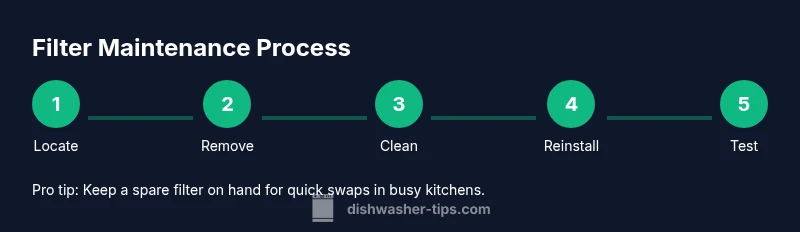
- Power down and prepare the workspace to prevent electric shock or water spills. 2) Locate the filter housing at the bottom of the tub; you may need to remove the lower rack to access it. 3) Open or unlock the housing and pull out the filter assembly. 4) Inspect the filter for trapped food and debris; note whether it’s a basket or cassette type. 5) If your model has screws, keep them in a safe place to avoid losing them. 6) Place the filter on a clean towel so you can clean it thoroughly. Tip: Use the flashlight to get a better look into corners where gunk hides. If the filter is damaged, don’t force it back into place; replace it. Dishwasher Tips Team suggests keeping screws organized to speed future maintenance.
Clean the filter: methods and best practices
Rinse the filter under running warm water to remove loose debris. For stubborn buildup, soak the filter in warm water with a drop of mild detergent for 5-10 minutes, then scrub with a soft brush. Be careful not to bend or tear the mesh; damaged filters can fail to trap particles and cause clogs. Rinse until all soap residue is gone and the water runs clear. While cleaning, wipe the filter housing and seals with a damp cloth to remove any residues. If your dishwasher uses a two-part filter system, clean both parts and ensure each piece seats properly. Let the filter air-dry on a clean towel before reinstalling. Reinsert the assembly by aligning tabs and pressing until it clicks. This prevents debris from entering the pump and keeps spray arms free of obstructions. High-quality filters last longer when you maintain them regularly. Dishwasher Tips Team reiterates that gentle cleaning preserves filter integrity and performance.
When to replace the filter and seal checks
Filters have a finite lifespan, especially in households with hard water or heavy debris. If you notice persistent clogs, unusually dirty residue after cleaning, or if the filter is torn or deformed, replacement is the right choice. Also inspect the seals around the filter housing for cracks or warping, which can cause leaks. After replacing, reassemble and run a quick cycle with dishes to verify proper flow. If you detect leaks, stop the cycle and reseat the filter or check the gasket alignment. Keeping a spare filter on hand can reduce downtime. Dishwasher Tips Team reminds readers that model-specific guidance matters, so consult the manual for replacement part numbers and recommended intervals.
Troubleshooting common filter problems
Common issues include a clogged filter causing longer cycles, reduced cleaning performance, and visible white residue on dishes. If you see odd odors, it may indicate trapped food decomposing in the filter area; clean or replace the filter and run a clean cycle. Leaks around the housing after maintenance often mean the seal isn’t seated correctly, or the gasket is damaged. For stubborn odors, a quick hot-water run with a dishwasher cleaner can help; avoid strong acids that might damage seals. For models with a recessed filter, ensure the basket is fully dry before reinserting to prevent mold. Always unplug or switch off power before inspecting the interior. This approach minimizes the risk of shock and keeps your dishwasher functioning reliably. Dishwasher Tips Team emphasizes that proactive troubleshooting saves time and prevents minor issues from becoming major repairs.
Maintenance schedule and long-term care
Create a simple maintenance cadence that fits your use pattern. Check and clean the filter every few cycles or monthly in high-use kitchens, and replace the filter at the first sign of wear. Keep a small calendar or reminder to track maintenance; this reduces the chance of forgotten service. Periodically inspect the spray arms and seals for signs of residue and wear, and replace worn components as needed. When you keep up with maintenance, you typically see more consistent cleaning results, less energy waste, and fewer breakdowns. In addition, consider using a quality detergent and water conditioner if your water hardness is high. This proactive approach saves time and money over the appliance’s lifetime. Dishwasher Tips Team notes that routine care materially improves performance and longevity.
Tools & Materials
- Disposable nitrile gloves(Wash hands after handling dirty filter)
- Soft-bristled brush(Old toothbrush works too)
- Microfiber cloth or sponge(For drying and wiping gunk)
- Bucket or shallow tray(To catch water during filter removal)
- Dish soap or mild detergent(Non-abrasive soap)
- Screwdriver (Phillips or flat-head)(Some models have screws securing the filter housing)
- Towels or absorbent mats(Protect countertop)
- Flashlight or phone light(See inside filter housing)
Steps
Estimated time: Estimated total time: 45-60 minutes
- 1
Power down and prep area
Turn off the dishwasher at the control panel and unplug if possible. Remove dishes nearby to create a clear workspace. This reduces the risk of shocks or accidental sprays while handling the filter.
Tip: Verify power is off before opening the door; never rely on residual power. - 2
Locate the filter housing
Look under the lower rack at the bottom of the tub. The filter housing is often a circular or rectangular chamber with a removable basket or screen.
Tip: If you can't see it, consult the user manual or search the model number online. - 3
Remove the filter assembly
Unlock or lift out the filter basket or cartridge. Place it on a towel so debris doesn’t fall onto the interior. Note how the parts fit together for proper reassembly.
Tip: Keep screws in a small container to avoid losing them. - 4
Inspect the filter
Check for tears, holes, or heavy buildup. If the filter is damaged, replace it. If intact, assess whether debris is trapped and blockages are visible in the mesh.
Tip: Use a flashlight to inspect hard-to-see corners. - 5
Clean the filter
Rinse under warm running water. For stubborn residue, soak briefly in warm water with a drop of mild detergent, then gently scrub with a brush. Rinse until the water runs clear.
Tip: Avoid harsh abrasives that could damage the mesh. - 6
Clean the housing and seals
Wipe the housing interior and seals with a damp cloth to remove remaining gunk. Dry completely before reassembling to prevent mold growth.
Tip: Leave seals dry and check for signs of wear. - 7
Dry and reinstall the filter
Allow the filter to air-dry fully, then reinsert aligning all tabs. Press until you hear a click to ensure a proper seal.
Tip: Don’t force the filter into place; misalignment can cause leaks. - 8
Test run and confirm
Run a short cycle without dishes to verify water flows correctly and there are no leaks. If leaks appear, reseat the filter or replace the gasket as needed.
Tip: Keep an eye on the first full-load test for any signs of trouble.
People Also Ask
What happens if I don’t clean the dishwasher filter?
Neglecting the filter can lead to poorer cleaning results, longer wash cycles, and more strain on the pump. Debris can distribute back onto dishes or clog spray arms. Regular cleaning helps maintain performance and prevent bigger repairs.
If you skip cleaning the filter, your dishes may not come out clean and the dishwasher may work harder, wasting water and energy.
How often should I clean the dishwasher filter?
Clean the filter as part of a regular maintenance routine and more often if you notice reduced cleaning performance or gritty residue on dishes. Factor in usage, water hardness, and debris load when deciding frequency.
Regular maintenance is best; only clean more often if you notice a drop in performance.
Do all dishwashers have a removable filter?
Most newer models feature a removable filter, but some compact or older units use fixed or hidden filters. Check your manual or manufacturer site for your model’s filter design and replacement parts.
Many dishwashers have removable filters, but some designs don’t. Check your manual to be sure.
Where is the filter located in most dishwashers?
In most machines, the filter sits at the bottom of the tub, sometimes behind the spray arm or integrated into a housing. You may need to remove the lower rack or a panel to access it.
Usually at the bottom of the tub, behind the spray arm or in a housing.
Can I use bleach or harsh cleaners on the filter?
Avoid bleach or strong cleaners inside the dishwasher. Use mild detergent and warm water to clean the filter and housing to protect seals and prolong life.
No harsh cleaners inside the dishwasher; stick to mild detergent.
Watch Video
What to Remember
- Identify filter type and location before cleaning.
- Clean filters and housing regularly to maintain performance.
- Inspect seals and replace worn parts to prevent leaks.
- Create a maintenance schedule that fits your usage.
- Always follow model-specific guidance for best results.