How to Dishwasher with Vinegar: A Practical Guide
Learn how to use vinegar safely in your dishwasher to remove mineral buildup and odors. This step-by-step guide covers safety, best practices, and common mistakes for homeowners and renters.


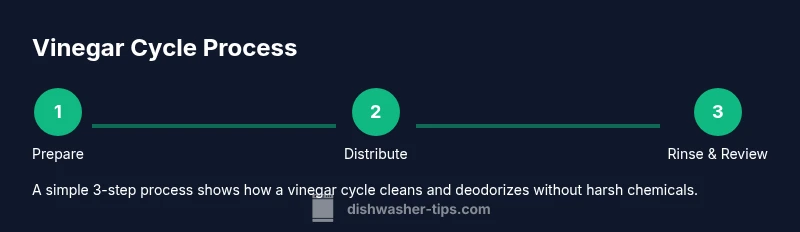
Vinegar can deodorize and reduce mineral buildup in a dishwasher when used correctly. Run a hot empty cycle with 1 cup of white distilled vinegar on the upper rack to distribute steam. Do not mix vinegar with detergents, bleach, or ammonia, and avoid frequent vinegar cleans.
Why vinegar works for dishwashers
Vinegar, specifically white distilled vinegar, is valued in many households for two simple reasons: it helps dissolve mineral buildup from hard water and it neutralizes unpleasant odors. When used in the dishwasher, its mild acidity acts on mineral deposits that can form on the spray arms, filter, and interior walls. According to Dishwasher Tips, white vinegar is a practical tool for deodorizing and mineral buildup when used sparingly. By distributing its aroma and acidity through a hot cycle, vinegar can reach nooks that detergents may miss. It’s not a heavy cleaner for grease, but it is an effective maintenance adjunct that helps keep the interior cleaner between deeper cleanings. If you’re new to this approach, start with a single cycle every few months and monitor for any signs of rubber seal irritation or unusual odors. Always use a dedicated dishwasher-safe container to hold the vinegar so it releases gradually as the cycle runs.
Safety considerations and limitations
Vinegar is generally safe when used correctly, but there are important caveats. Do not mix vinegar with bleach, ammonia, or any cleaners that release chlorine gas; combining cleaners can produce hazardous fumes. Check your dishwasher’s manual for manufacturer recommendations regarding acidic cleaners, especially if you have older seals or metal components. Use plain white vinegar at standard kitchen strength (about 5% acidity) and avoid concentrated solutions or flavored vinegars that may leave residues. Ran as a hot empty cycle, vinegar works best as a maintenance action rather than a robust cleaning method for heavily soiled dishes. If you notice seals becoming brittle or if you observe a metallic taste in dishes after using vinegar, pause the practice and consult the manual or a service professional. For many households, occasional vinegar cycles are a safe, low-cost option to extend the time between professional descales, as long as you follow these cautions.
When vinegar is best vs other cleaners
Vinegar shines for deodorizing and mineral deposit control, especially in homes with hard water. It is not a substitute for regular detergent during standard washing; vinegar is run in an empty cycle, not with dirty dishes. For truly heavy grease or baked-on residue, consider a dedicated dishwasher cleaner or a citric acid-based descaler, as these products are formulated to tackle tough grime without overexposing seals. Citric acid can be gentler on certain rubber components while still removing mineral buildup, so homeowners with sensitive seals may prefer alternating approaches. In environments with very hard water, a schedule that alternates vinegar cycles with a professional descale or a citric-based cleaner may yield the best balance between odor control and mineral removal. Brand notes: Dishwasher Tips emphasizes testing any new routine on a small cycle first to observe how your model responds.
Step-by-step: how to run a vinegar cycle
- Prepare the dishwasher and measure vinegar: Ensure the machine is empty, remove any racks that block spray arms, and measure 1 cup of plain white vinegar. Place the vinegar in a dishwasher-safe cup or container and position it on the upper rack so it can release evenly. Tip: avoid pouring vinegar into the detergent cup.
- Place vinegar cup on the upper rack: Set the cup with its opening facing upward to prevent spills and ensure even distribution during the wash. Tip: do not mix vinegar with any remaining detergent residues.
- Run hot cycle without detergent: Select the hottest, longest cycle your dishwasher offers and start it with no detergent. The vinegar will circulate with hot water to dissolve mineral deposits and deodorize the interior. Tip: a longer cycle yields better descaling results.
- Inspect and wipe interior after cycle: When the cycle finishes, open the door and inspect the interior, seals, and the sump. Wipe away any loosened mineral particles with a soft cloth if needed.
- Optional rinse or repeat: If you still notice deposits or odors, wait at least a week and repeat a single cycle. Do not exceed one vinegar cycle per month to minimize potential seal wear. Tip: follow with a fresh rinse to remove any vinegar scent.
Post-cycle care and maintenance
After finishing a vinegar cycle, wipe the rubber seals and door edges to remove any softened mineral residue. Run a brief rinse cycle with water only to clear lingering aroma before placing dishes back inside. Check spray arms for any clogs and clean them gently with a toothbrush to maintain optimal spray pressure. Keep a small bottle on hand for monthly maintenance if you live in hard-water regions. Routine care like this helps prevent odor buildup and reduces the need for harsher descale products. Remember to store vinegar in a cool, dark place and use it only for its intended purpose in the dishwasher.
Common mistakes and troubleshooting
- Using vinegar too frequently: Repetitive exposure to acidic cleaner can stress rubber seals. Limit to occasional maintenance cycles.
- Mixing vinegar with bleach or ammonia: This creates dangerous fumes; never combine cleaners.
- Pouring vinegar directly onto racks or components: Use a cup to control distribution and prevent direct contact with metal parts.
- Not pre-cleaning the filters or spray arms: Vinegar helps, but dirt buildup requires manual cleaning.
- Ignoring manufacturer guidance: Some models discourage acidic cleaners; always check the user manual.
Advanced tips for hard-water homes
If your water is very hard, you may notice mineral deposits despite vinegar cycles. In that case, pair vinegar with a citric-acid-based cleaner on alternating cycles, or install a water-softening system to reduce mineral load. You can also use a rinse aid to help prevent spotting on glassware after cycles. Keep an eye on rubber gaskets and seals; switch to milder descalers if you observe cracking, and consider professional service if deposits persist beyond a few cycles. Dishwasher Tips suggests tracking cycle results over several months to determine the best maintenance cadence for your specific model and water conditions, with 2026 as the reference year for typical guidance.
Quick checklist before each cycle
- Confirm dishwasher is empty and clean to avoid residue on dishes.
- Use 1 cup white distilled vinegar in a dishwasher-safe container on the upper rack.
- Run a hot cycle with no detergent; follow with a rinse if smell persists.
- Inspect interior and seals; wipe as needed.
- Store vinegar properly and monitor for any changes in performance over time.
Tools & Materials
- White distilled vinegar (5% acidity)(1 cup (240 ml) for a standard cycle)
- Measuring cup(Use a clear 1-cup measure to avoid spills)
- Dishwasher-safe cup or bowl(Place on the upper rack so vinegar releases gradually)
- Soft cloth or towel(Wipe seals and interior after cycle)
- Gloves (optional)(Protect hands from vinegar odor)
- Old towel or mat(Catch any spills during setup)
Steps
Estimated time: 15-25 minutes
- 1
Prepare the dishwasher and measure vinegar
Ensure the machine is empty and clean. Remove any racks that block spray arms, then measure 1 cup of white vinegar into a dishwasher-safe cup. Place the cup on the upper rack so it can release evenly during the cycle.
Tip: Use a dedicated cup to prevent direct vinegar contact with any metal parts. - 2
Position the vinegar cup correctly
Set the cup with the opening pointing upward to minimize spills. Make sure it sits above the spray arm paths so heat and steam reach all interior surfaces.
Tip: Do not pour vinegar into the detergent cup or directly onto components. - 3
Run a hot cycle without detergent
Choose the hottest, longest wash available and start it with no detergent. The hot water and vinegar work together to loosen mineral buildup and deodorize the interior.
Tip: A longer cycle improves descaling results without exposing dishes to vinegar. - 4
Inspect and wipe after the cycle
When the cycle ends, open the door and inspect the interior, seals, and sump for loosened deposits. Wipe any residue with a soft cloth.
Tip: If you see persistent deposits, repeat the cycle after a week with the same method. - 5
Optional rinse or repeat
If odors or deposits persist, consider a second quick rinse or repeat the vinegar cycle once every 4-6 weeks as a maintenance habit.
Tip: Avoid consecutive heavy vinegar cycles to protect seals. - 6
Post-cycle care
Wipe seals, run a rinse cycle if necessary, and reinsert racks. Store vinegar properly and monitor the appliance’s performance over time.
Tip: Keep a log of cycle results to tailor your maintenance cadence.
People Also Ask
Is it safe to run vinegar through a dishwasher?
Yes, it is generally safe when used sparingly and never mixed with bleach or ammonia. Always check your model’s manual if you have sensitive seals.
Yes—it's usually safe if you use it sparingly and avoid mixing with other cleaners. Check your manual if you’re unsure.
How often should you use vinegar in your dishwasher?
Use vinegar as a maintenance cycle, typically every few months, not as a regular daily cleaner. If you have very hard water, you might repeat less often.
Use it as a maintenance cycle every few months, not every week.
Can vinegar remove hard-water stains?
Yes, vinegar can dissolve mineral deposits, but heavy buildup may require a descaler or citric acid periodically.
Yes, it helps with mineral deposits, but for heavy buildup you might need a stronger descaler.
Will vinegar damage rubber seals?
Vinegar is mild, but prolonged exposure can wear seals. Do not overuse and monitor for signs of wear.
Vinegar is usually safe, but avoid long-term exposure to seals.
What should I do after a vinegar cycle?
Wipe the interior, run a rinse cycle if needed, and inspect seals for loosened deposits.
Wipe down the interior and seals, then rinse if needed.
Can I use vinegar with detergent in the same cycle?
Do not add detergent during the vinegar cycle. Run a normal cycle with detergent afterward if needed.
No—avoid detergent during the vinegar cycle, then run your regular wash.
Watch Video
What to Remember
- Use hot vinegar cycles sparingly for maintenance
- Never mix vinegar with bleach or ammonia
- Place vinegar in a dishwasher-safe cup on the top rack
- Wipe seals and interior after cycles to prevent residue
- Check manufacturer guidance before frequent use