How to Wash a Dishwasher with Vinegar: An Easy Guide
Learn how to clean your dishwasher with vinegar safely, including step-by-step instructions, safety tips, and practical alternatives for a fresh, efficient appliance. This guide from Dishwasher Tips helps you maintain a clean dishwasher without harsh chemicals.


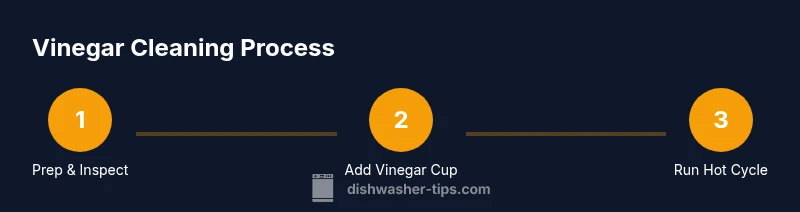
You can clean a dishwasher using vinegar by running a hot, empty cycle with a cup of distilled white vinegar placed on the upper rack. This eco-friendly method helps dissolve buildup and deodorize. For best results, avoid mixing vinegar with other cleaners and follow up with a wipe-down of seals.
Why vinegar is a popular choice for dishwasher cleaning
Vinegar is favored for its acidity, which helps dissolve mineral deposits and soap scum that can accumulate on racks, filters, and spray arms. A standard household supply like distilled white vinegar is inexpensive, widely available, and environmentally friendlier than many chemical cleaners. In the Dishwasher Tips analysis, readers report relief from musty odors and improved rinse performance after a vinegar cleaning. However, vinegar is not a cure-all; it’s most effective for routine maintenance and light buildup, not heavy scale or clogged spray arms. Always refer to your appliance manual before using vinegar, as some models have cautions about acidic cleaners near rubber seals. According to Dishwasher Tips, vinegar is best used as a routine maintenance tool rather than a deep descaler, and results improve when paired with regular wipe-downs.
- Use vinegar as a lightweight maintenance tool between deeper cleanings
- Check your manual for any model-specific cautions about acidic cleaners
- Pair the cycle with a quick interior wipe for best results
},
Tools & Materials
- White distilled vinegar(Standard grocery vinegar, 5-8% acidity preferred)
- Dishwasher-safe cup or bowl(Heat-resistant; place on the top rack)
- Microfiber cloth(For wiping seals and interior after the cycle)
- Soft brush or old toothbrush(Clean spray arms and filters if needed)
- Baking soda (optional)(Use on the bottom rack after the vinegar cycle for deodorizing)
- Gloves (optional)(Protect hands during cleaning)
Steps
Estimated time: 60-90 minutes
- 1
Prepare the dishwasher
Empty the dishwasher completely and remove any debris from the filter area. Inspect the door gasket and spray arms for visible buildup. A clean starting point increases the effectiveness of the vinegar cycle.
Tip: Clear debris from the filter first so the vinegar can circulate freely. - 2
Check seals and gaskets
Wipe the door seals with a damp microfiber cloth to remove grime. Damaged seals can leak or trap odors, undermining the cleaning effort.
Tip: A quick seal wipe prevents recontamination after the cycle. - 3
Position the vinegar cup
Pour distilled white vinegar into a dishwasher-safe cup or bowl. Place it securely on the top rack to distribute vapor during the wash.
Tip: Using a cup helps release vinegar gradually rather than dumping it all at once. - 4
Run a hot wash cycle
Close the dishwasher and run the hottest, longest cycle available. The heat helps dissolve mineral buildup and deodorize internal surfaces.
Tip: Avoid loading dishes to prevent vinegar from contacting residues on dishes. - 5
Wipe interior after cycle
When the cycle finishes, open the door and wipe down the interior with a dry microfiber cloth. Focus on corners, seams, and around the door gasket.
Tip: Dry surfaces to prevent new mineral deposits from forming. - 6
Optional second cycle with baking soda
If you detect persistent odors or stubborn stains, sprinkle baking soda on the bottom rack and run a short cycle. Do not mix baking soda with vinegar in the same cycle.
Tip: Baking soda provides a deodorizing boost when used separately. - 7
Deep-clean spray arms and filter
Remove and scrub the spray arms and filter with a brush to clear any clogs. Rinse thoroughly before reassembling.
Tip: Stubborn nozzle holes may need a toothpick or pin to clear. - 8
Final check and maintenance
Run a quick rinse to ensure no vinegar residue remains on surfaces. Schedule regular maintenance cleanings every 1-3 months based on usage and water hardness.
Tip: Keeping a maintenance calendar helps sustain performance.
People Also Ask
Is it safe to run a vinegar cleaning cycle with dishes inside the dishwasher?
For best results and to avoid residues, run the vinegar cleaning cycle on an empty dishwasher. If you must clean with dishes, ensure the items are dishwasher-safe and do not absorb odors from the vinegar.
Run the vinegar cycle empty to avoid residues and odors on dishes.
Will vinegar remove hard water deposits from my dishwasher?
Vinegar helps dissolve mineral buildup on interior surfaces, seals, and spray arms, especially with hard water. For heavy scaling, a dedicated descaler may be needed in combination with regular maintenance.
Vinegar helps with mineral buildup, but extreme scale may require a stronger descaler.
Can vinegar damage rubber seals or parts of the dishwasher?
Acidic cleaners can degrade rubber seals with repeated exposure. Use vinegar sparingly and follow with a thorough rinse to minimize risk.
Use vinegar sparingly and rinse well to protect seals.
How often should I clean my dishwasher with vinegar?
Use vinegar for routine maintenance every 1-3 months, depending on usage and water hardness. For heavy buildup, combine with other cleaning methods as needed.
Most people do a maintenance cleaning every few months, depending on use.
What should I do if my dishwasher still smells after cleaning with vinegar?
Wipe interior again, run a short cycle with nothing on top, and ensure the drain is clear. If odors persist, consider a deeper cleaning or consult the manual.
If odors persist, re-clean critical areas and check the drain.
Is vinegar safe for all dishwasher models?
Most models tolerate vinegar cleaning, but always check your user manual for model-specific cautions about acidic cleaners.
Most models are fine with vinegar, but check your manual first.
Watch Video
What to Remember
- Clean with vinegar as routine maintenance, not a deep descaler
- Run an empty hot cycle with a vinegar cup on the top rack
- Never mix vinegar with bleach or hydrogen peroxide
- Wipe seals and interior after cleaning for best results