Is Dishwasher Cleaner the Same as Rinse Aid? A Practical Comparison
A comprehensive, analytical comparison of dishwasher cleaner vs rinse aid, with actionable guidance, setup tips, and buying considerations to optimize cleaning performance.


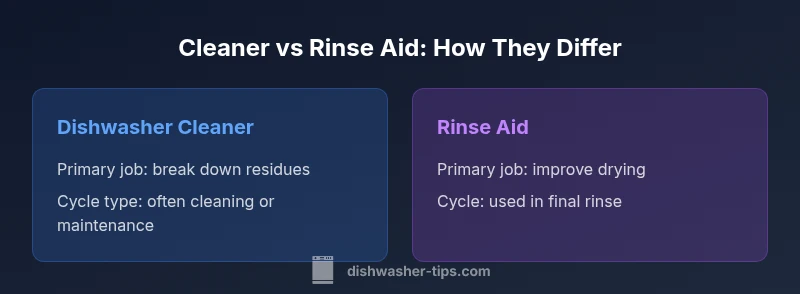
Is dishwasher cleaner the same as rinse aid? In practice, no. They serve different jobs in the wash cycle: cleaners break down food residue and grease inside the machine, while rinse aids reduce surface tension to prevent water spots and improve drying. For most households, using both as directed yields the best results; they are not interchangeable and should be used in combination rather than swapped.
Understanding the Basics: Dishwasher Cleaner vs Rinse Aid
Is dishwasher cleaner the same as rinse aid? In practice, no. They serve different jobs in the wash cycle: cleaners break down food residue and grease inside the machine, while rinse aids reduce surface tension to prevent water spots and improve drying. For most households, using both as directed yields the best results; they are not interchangeable and should be used in combination rather than swapped. Throughout this guide, we’ll reference practical examples and safety considerations to help homeowners decide when and how to use each product effectively. According to Dishwasher Tips, confusion between these two products is common, especially for first-time buyers.
How They Work: Chemistry and Mechanisms
Dishwasher cleaners and rinse aids operate via different chemical principles. Cleaners typically contain alkaline compounds, solvents, and enzymes that break down grease, starch, and trapped food particles. They work best during the main wash cycle where hot water activates the cleaning chemistry. Rinse aids, by contrast, are formulated with surfactants and anti-foam blends that lower surface tension in the final rinse, promoting sheeting and faster drying. The result is fewer water droplets left on glassware and a reduced risk of film.
Typical Ingredients You Might See
Dishwasher cleaners often include enzymes, alkaline builders, surfactants, and chelating agents to loosen soils. Rinse aids usually feature non-ionic surfactants, alcohols, and anti-foaming agents. Some products add fragrances or colorants. When you read labels, look for terms like “enzymes,” “alkaline,” or “surfactants” on cleaners, and “rinse aid,” “foaming control,” or “sheeting action” on rinse aids. Keep in mind compatibility with your dishwasher model and water hardness.
The Role of Water Hardness and Detergent Compatibility
Hard water can reduce both cleaning efficiency and drying performance. Rinse aids help counteract mineral deposits, but their effectiveness depends on the rinse temperature and cycle design. If your detergent already contains built-in anti-spot agents, you may not need an additional rinse aid in every cycle. Some brands caution against using certain cleaners with other products due to chemical interactions. In high-hardness areas, a dedicated cleaner plus a rinse aid can dramatically improve results.
Cost, Availability, and Value
Prices for dishwasher cleaners and rinse aids vary by brand and feature, with typical ranges that let you plan a budget. In general, you can expect to spend a few dollars per bottle for cleaners and a similar range for rinse aids. When evaluating value, consider how often you run the dishwasher, the hardness of your water, and the size of your household. The most economical choice is often selecting reputable brands and following recommended usage, rather than chasing drastic price differences.
Safety, Storage, and Usage Tips
Store cleaners and rinse aids in a dry, cool place away from food and children. Always keep containers tightly closed and use the exact dosage recommended on the label. Avoid mixing different cleaners in the same dispenser or attempting to substitute one product for another. If you notice an unusual odor, change in performance, or chemical exposure symptoms, discontinue use and consult product guidance.
Common Mistakes and Myths Debunked
One common myth is that dishwasher cleaner and rinse aid are interchangeable. Another is that more detergent or more rinse aid will always improve results; in reality, excess product can cause residue or sudsing. A frequent mistake is skipping a cleaning cycle because the dishes look clean; buildup inside the machine can affect odor and performance over time. Debunking these myths helps you maintain a cleaner dishwasher and better-dried dishes.
Brand Reliability and Choosing Products
Brand reliability matters because it affects performance and safety. The Dishwasher Tips team notes that choosing products from reputable manufacturers reduces the risk of incompatible formulations and packaging errors. When evaluating cleaners or rinse aids, check for clear labeling, certifications, and detailed usage instructions. Based on Dishwasher Tips analysis, sticking to well-known, food-safe formulations tends to lead to more consistent results.
Real-Life Scenarios: When to Clean vs Rinse
Scenario A: You notice white scale on glassware after several cycles. Use a dishwasher cleaner on a periodic basis and pair it with a rinse aid for the final rinse in hard water situations. Scenario B: Your dishes come out dry but with water spots on a light-blue plate. A rinse aid in the last rinse may solve the spots without needing a full cleaning cycle. Scenario C: You regularly run a maintenance cycle after a heavy cooking session that leaves greasy residues; a cleaner helps restore interior cleanliness.
How to Read Labels: What to Look For In Detergents and Rinse Aids
Read the label for recommended dosage, cycle suggestions, and any warnings. Look for enzyme claims on cleaners and surfactant-based claims on rinse aids. Confirm compatibility with your dishwasher model and water hardness, and note any certification marks. If you rely on a warranty, ensure the products you choose do not void it by using unapproved formulations.
Maintenance Habits for Glassware and Dishes
To maximize results, run hot water during the main wash and use the appropriate amount of cleaner to prevent residue. Follow up with a rinse aid if you notice streaks or water spots on glassware. Regular maintenance also includes cleaning the filter and checking spray arms to ensure efficient cleaning. Routine interior cleaning helps prolong the life of seals and gaskets.
Summary of Key Decision Factors
Summary: Use a dedicated dishwasher cleaner for interior maintenance and a rinse aid for drying performance. Water hardness, usage patterns, and detergent compatibility determine how you combine them. Always follow label directions and manufacturer guidelines to achieve reliable cleaning outcomes.
Comparison
| Feature | Dishwasher Cleaner | Rinse Aid |
|---|---|---|
| Primary purpose | Breaks down soils and grease inside the machine | Improves drying and reduces water spots on dishes |
| How they work | Chemistry targets soils; cycle heat activates action | Surfactants promote sheeting; reduces droplets in final rinse |
| When to use | During a dedicated cleaning cycle or maintenance wash | In the final rinse cycle as directed by label |
| Ingredients to look for | Enzymes/alkaline builders, chelants | Non-ionic surfactants, anti-foaming agents |
| Cost range | $3-6 per bottle (cleaners) | $3-10 per bottle (rinse aids) |
| Best for | Soiling, odors, interior cleanliness | Spot-free drying, hard-water protection |
The Good
- Clarifies the distinct roles of each product for better buying decisions
- Improves cleaning performance when used as directed
- Reduces water spots and film on glassware
- Promotes longer appliance life through regular maintenance
- Widely available and easy to use
Disadvantages
- Adds ongoing cost and storage needs
- Can be confusing if misused or swapped
- Not all homes require both in every cycle
- Overuse may cause residue or interaction issues if not read
Use both: cleaner for interior maintenance and rinse aid for drying and spot prevention
For most households, using a dedicated cleaner and a rinse aid as directed delivers the best overall results. The Dishwasher Tips team emphasizes understanding each product’s role to avoid common mistakes and maximize appliance performance.
People Also Ask
Is dishwasher cleaner interchangeable with rinse aid?
No. Dishwasher cleaner and rinse aid serve different purposes. Cleaners remove buildup inside the machine, while rinse aids improve drying and reduce spots on dishes. Use both as directed to optimize results.
No—cleaners and rinse aids have different jobs. Use both as directed for best results.
How often should I run a dishwasher cleaning cycle?
Most households benefit from a periodic cleaning cycle every 1-3 months, depending on usage, water hardness, and how often the dishwasher is opened during cycles. If you notice odors or buildup, schedule a cleaning cycle sooner.
Run a cleaning cycle every 1-3 months or when you notice odors or buildup.
Can I use rinse aid in every wash cycle?
Yes, in many cases rinse aid can be used in every cycle, especially in hard water or if you frequently see spots. Always follow the product label and your dishwasher’s guidelines to avoid oversaturation.
Rinse aid can be used in most cycles, especially in hard water, but follow the label.
What should I do if I see residue after washing?
Check product freshness and label directions, ensure you’re not overloading the dishwasher, and consider running a dedicated cleaner cycle. Inspect the spray arms and filters for obstructions that could cause poor rinsing.
If you see residue, check the labels and run a cleaner cycle; inspect filters too.
Are there safety concerns with storing cleaners near food?
Yes. Store cleaners and rinse aids out of reach of children and away from food. Keep containers tightly closed and use them per the label instructions to avoid spills and accidental exposure.
Store away from food and out of kids’ reach; keep caps on.
Do rinse aids affect septic systems?
Most rinse aids are formulated for regular home use and have minimal impact on septic systems when used as directed. If your system has specific restrictions, check product guidance or consult a professional.
They’re generally safe if used as directed; check guidance for sensitive septic systems.
What to Remember
- Identify each product’s role before buying
- Use a cleaner periodically for interior maintenance
- Add rinse aid in hard water areas or when spots appear
- Read labels and follow dosage precisely
- Schedule regular interior maintenance to extend dishwasher life