What to Clean Dishwasher With: A Practical 2026 Guide
Discover what to clean dishwasher with and how to do it safely. A practical, step-by-step guide with easy-to-find cleaners, routine maintenance, and tips to keep your dishwasher performing at its best.


Goal: clean and refresh your dishwasher using safe, readily available ingredients. This guide covers what to clean dishwasher with, step-by-step actions, essential tools, and maintenance routines to remove buildup, reduce odors, and keep dishes sparkling. You’ll learn to choose safe cleaners, how to clean the gasket, filter, spray arms, and interior, and how often to perform each task for best results.
Why maintenance matters for your dishwasher
A clean dishwasher runs more efficiently, uses less water, and keeps your dishes sparkling. Regular maintenance reduces odors, prevents food debris from becoming baked-on, and extends the life of seals and hoses. If you’re wondering what to clean dishwasher with, the answer isn’t a single magic product. The safest approach uses mild, non-abrasive cleaners and common kitchen staples such as white vinegar and baking soda. These agents break down grease, neutralize odors, and won’t corrode chrome, plastic, or rubber components when used as directed. According to Dishwasher Tips, the best results come from a simple routine that combines wiping, soaking, and periodic deep-cleaning rather than heavy scrubbing with abrasive tools. Start with a quick wipe of the door gasket and inner tub to remove loose grime, then inspect the spray arms for clogs. By establishing a predictable cleaning cadence, you’ll avoid surprises like standing water, scummy residue, and reduced drying performance.
This initial assessment sets the stage for a safe, effective cleaning routine. The Dishwasher Tips team found that small, consistent actions deliver better long-term results than sporadic, aggressive scrubbing. Keeping to a plan helps you prevent mold, mineral buildup, and greasy film that can transfer to dishes during cycles. A well-maintained dishwasher also operates more quietly and uses less energy over time.
What to clean dishwasher with: safe agents and why
Choosing the right cleaners is essential for preserving seals and filters. The goal is to break up food debris, dissolve mineral buildup, and deodorize without leaving residues. The safest and most versatile trio is white vinegar, baking soda, and a mild dish soap for manual cleaning. White vinegar helps dissolve mineral deposits and acts as a mild disinfectant when used in a hot rinse cycle. Baking soda gently foams to lift stuck-on grime and neutralize odors. A small amount of mild dish soap applied to a damp cloth is useful for wipe-downs of the door seal and interior surfaces. Avoid harsh bleach, ammonia-based cleaners, or abrasive pads that can scratch or degrade rubber gaskets. If you have hard water, consider a dedicated dishwasher cleaner designed for mineral buildup. Always check your manufacturer’s manual for any specific restrictions. Throughout this guide, you’ll see practical recipes and timing that balance effectiveness with safety, so you can perform regular cleanings without risking damage to hoses or electronics.
Choosing the right cleaners also helps protect the environment and reduces exposure to harsh chemicals in your kitchen. The Dishwasher Tips analysis shows that simple, well-chosen products are often enough to keep the interior clean and odor-free without requiring expensive specialty solutions. For best results, use cleaners exactly as directed and avoid mixing different agents, which can create dangerous fumes or residues.
Daily and weekly maintenance routines
Incorporating quick habits daily and weekly keeps your dishwasher functioning at peak. Daily, after a load, wipe the door edge and interior seal with a damp cloth to remove food particles and moisture. This prevents mold and mildew from taking hold. Weekly, remove and rinse the filter, then scrub it with a soft brush and mild soap. Inspect spray arms for clogs by removing them (if your model allows) and flushing with warm water. Run a brief hot-water rinse with a cup of white vinegar placed in the upper rack to boost mineral removal. If your water is hard, you may want to run a full cycle with baking soda on an empty load to refresh the interior. The Dishwasher Tips analysis shows that regular routine cleaning reduces service calls and keeps drying performance consistent over time. A simple checklist can help you stay on track and avoid neglect.
Deep-clean methods for stubborn residues
Some buildup clings stubbornly to the tub, filter, or spray arms. For these cases, apply a paste of baking soda and water to the tub corners, let it sit for 10-15 minutes, then scrub with a non-abrasive sponge. For mineral deposits around the spray arms or nozzles, fill a cup with white vinegar and place it in the dishwasher, then run a hot cycle. If you notice white film on dishes, run an empty hot cycle with two cups of vinegar to flush out minerals. For metal discoloration or rust stains, avoid abrasive cleaners; instead, use a specialized rust remover made for cookware or consult the manufacturer. Always perform a test on a small area first. After deep-cleaning, run a full hot cycle with nothing in the dishwasher to rinse away loosened debris. Consistent deep cleans prevent stubborn gunk from forming and ensure the next load comes out spotless.
Cleaning components: filter, spray arms, seals
The filter, spray arms, and door seals are the most important parts for efficient cleaning. Start by removing the filter; rinse under warm running water and use a soft brush to remove trapped particles. Check the spray arms for clogs by inspecting the small holes; remove debris with a pin or thin brush and rinse thoroughly. Clean the door seals by wiping with a damp cloth; check for cracks or stiff areas and apply a silicone-based conditioner if recommended by the manufacturer. After any disassembly, reassemble according to your model’s instructions. A clean interior means better water circulation and more consistent results. Regularly inspect for wear, which can indicate when a seal or hose needs replacement rather than cleaning.
Common mistakes and how to avoid them
Common mistakes include using bleach or oven cleaner, which can corrode rubber seals; using abrasive pads that scratch the tub; and running hot cycles with leftover cookware bits that clog the spray arms. Another pitfall is skipping the filter clean-out, which reduces water flow and leaves residue on dishes. Finally, overusing rinse aids or cleaners can leave a film or sticky residue. To avoid these, follow manufacturer guidelines, use the recommended cleaners, and perform regular inspections of gaskets, filters, and spray arms. If you notice persistent odors despite cleaning, it’s often a sign of mold growth behind seals or in hidden crevices that require targeted attention.
Choosing cleaners and DIY options
When selecting cleaners, prefer
When to call a pro
Most routine cleaning can be done by homeowners or renters with basic tools. If you notice persistent leaks, not draining, unusual noises, or frequent cycles that end prematurely, it's time to consult a professional. A technician can check seals, hoses, and the pump for wear or damage that DIY cleaning cannot repair. Keep a log of maintenance to help diagnose recurring issues and share it with the service tech. The Dishwasher Tips team recommends seeking professional help when the problem involves leaks behind panels or electrical components that are not accessible to routine cleaning.
Tools & Materials
- Soft cloth or microfiber towel(For wiping gaskets, door edges, exterior)
- Non-abrasive sponge(Gentle scrubbing of interior surfaces)
- Old toothbrush or small brush(Clean around seals, hinges, and grooves)
- Dishwasher-safe mild cleaner or dish soap(Use sparingly on interior; avoid dishwasher detergents in manual clean)
- White vinegar(For vinegar rinse and mineral dissolution)
- Baking soda(For deodorizing and gentle scrubbing)
- Gloves(Protect skin from cleaners)
- Optional: dedicated dishwasher cleaner(For heavy mineral buildup; follow label directions)
Steps
Estimated time: 30-40 minutes
- 1
Prep and inspect
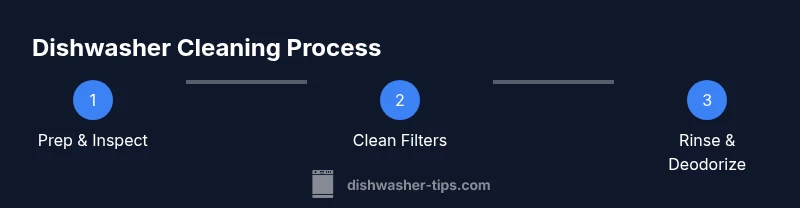
Begin by emptying the dishwasher and removing any food debris from the tub. Inspect the door seals and gasket for cracks or stiffness. Remove the lower rack to access the filter and spray arms, noting any clogs or misalignment. This step reduces the risk of pushing debris into the wash during cleaning and sets a baseline for effectiveness.
Tip: Check the filter for almost-worn screens and use a gentle brush to remove gunk before washing. - 2
Wipe interior and gasket
Wipe the door edge, gasket, and interior surfaces with a damp cloth and mild cleaner. Use circular motions along the gasket to dislodge trapped grime. Avoid saturating electronic components or controls. This prevents mold and prepares surfaces for deeper cleaning.
Tip: Keep a small microfiber cloth dedicated to the gasket to avoid cross-contamination from other tasks. - 3
Clean filter and spray arms
Remove the filter and rinse under warm water. Scrub away trapped particles with a soft brush. Inspect spray arms for clogged nozzles and clear them with a pin or thin brush. Reinstall once fully clean.
Tip: If you can, run warm water through the spray arms after clearing holes to ensure complete clearance. - 4
Vinegar rinse cycle
Place a cup of white vinegar on the upper rack and run the hottest, empty cycle. This helps dissolve mineral buildup and deodorize the interior. Do not mix vinegar with bleach or any chlorine-based cleaners.
Tip: Do not add detergent to this cycle; it defeats the purpose of a rinse and can foam excessively. - 5
Baking soda deodorize
Sprinkle baking soda in the tub and run another hot cycle with nothing in the machine. This neutralizes odors and lifts remaining grime. Allow the interior to dry completely after the cycle to prevent moisture-related odors.
Tip: If you have hard water, a light sprinkle may be enough; avoid overusing baking soda, which can leave white residues. - 6
Final wipe and dry
Once cycles complete, wipe the interior with a dry cloth and leave the door ajar to air-dry. Reinsert the rack and run a quick test cycle with dishes to confirm normal operation. This ensures any residual moisture evaporates and seals stay pliable.
Tip: Keep a routine schedule—a quick wipe after every few loads keeps buildup at bay.
People Also Ask
What should I clean my dishwasher with?
Use a combination of white vinegar, baking soda, and mild dish soap for routine cleaning. Avoid bleach and abrasive cleaners that can damage seals.
Use safe cleaners like vinegar and baking soda for routine cleaning.
Can I use bleach in a dishwasher?
Bleach can corrode rubber seals and components; do not use. Use vinegar and baking soda instead for deodorizing and mineral buildup.
Bleach is not safe for your dishwasher.
Is vinegar safe for dishwasher seals?
When used in moderation and rinsed away, vinegar is generally safe for most seals. Avoid prolonged soaking and always follow manufacturer guidance.
Vinegar is safe in short, well-rinsed cycles.
How often should I clean the dishwasher?
Aim for a light wipe weekly, full clean monthly, and a deep clean every 3-6 months depending on water hardness and usage.
Do light weekly and deeper cleans every few months.
What about hard water buildup?
Use mineral-removing cleaners or vinegar cycles, and consider a rinse aid with citric acid if your water is very hard.
Hard water buildup needs mineral-removing cleaners and vinegar cycles.
If my dishwasher isn’t draining, is cleaning enough?
Cleaning helps, but not always. Check the filter, pump, and hoses; persistent drainage issues may require professional service.
If it won't drain, cleaning may help, but you may need a tech.
Watch Video
What to Remember
- Use safe, simple cleaners to protect seals.
- Clean filters and spray arms regularly for optimal water flow.
- Cycle vinegar and baking soda routines for mineral control.
- Follow manufacturer guidelines and avoid dangerous chemical mixes.