What to Clean Inside a Dishwasher With: A Practical Guide
Learn exactly what to clean inside a dishwasher with, plus safe cleaners, deodorizing methods, and a maintenance routine from Dishwasher Tips.


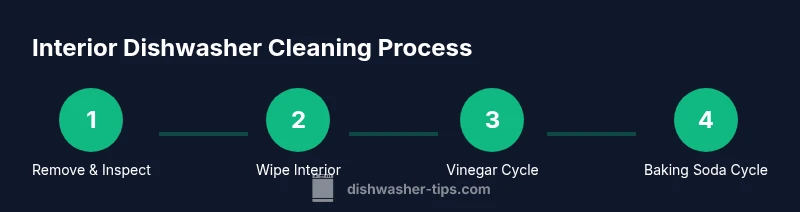
You can safely clean the inside of a dishwasher using common household items like white vinegar, baking soda, and a soft brush. Start by removing loose debris from the filter and spray arms, then wipe the door gasket and interior walls. Run a hot-water cycle with the cleaner and finish with a rinse to remove residues. This routine targets grease, mineral buildup, and odors to restore performance.
Why Cleaning Inside Your Dishwasher Matters
A clean interior matters for more than just sparkling dishes. Grease, mineral deposits, and food particles can accumulate on the walls, around the filter, and behind the spray arms. Over time, this buildup reduces cleaning performance, creates odors, and can hinder water circulation. Regular interior cleaning helps maintain efficiency and extend the life of seals and gaskets.
According to Dishwasher Tips, regular interior cleaning helps reduce odor buildup and keeps sensors and flow paths functioning as designed. The right routine uses safe cleaners and involves all critical parts: the filter, spray arms, door gasket, and interior surfaces. If you’re wondering what to clean inside of dishwasher with, focus on areas where debris collects, and use non-abrasive tools. A simple, repeatable process yields long-term benefits for renters and homeowners alike.
What to Clean Inside Your Dishwasher With
Knowing what to clean inside your dishwasher with begins with the main interior surfaces and moving parts. Start with the filter and spray arms, then inspect the door gasket for grime. For cleaning agents, white vinegar and baking soda are popular, gentle options that won’t damage most components. A non-abrasive brush and a microfiber cloth help lift buildup without scratching metal racks or plastic parts. Optional enzymatic dishwasher cleaners can tackle tough residues, but they should be used sparingly and according to label directions.
Always choose cleaners that are labeled safe for dishwashers, and avoid mixing cleaners or combining acidic products with bleach. Regular cleaning with the right supplies lowers mineral buildup, grease accumulation, and food particle caking around seals and rollers. If you’ve got hard water, consider a rinse aid as part of ongoing maintenance. This is a practical approach that many homeowners use to extend dishwasher life.
Cleaning the Filter, Spray Arms, and Door Gasket
Start by removing the filter and any accessible spray arms. Rinse these parts under warm water, using a soft brush to remove stuck particles. Wipe the door gasket with a damp cloth, paying attention to folds where residue tends to collect. Rinse the interior walls with a cloth, focusing on corners and beneath the spray paths. Reassemble once all parts are dry to prevent rust or mold formation.
Note: Recheck that spray arms rotate freely after reinstalling, and confirm the filter sits securely in its housing before running a cycle.
The Vinegar Method: Quick Clean Cycle
Pour white vinegar into a dishwasher-safe cup or bowl and place it on the upper rack. Run the hottest cycle your dishwasher offers, with nothing else loaded. The vinegar helps dissolve mineral deposits and grease, while steam loosens trapped grime. After the cycle completes, wipe down interior surfaces to remove loosened residue.
Tip: Do not mix vinegar with chlorine-based cleaners inside the machine, as this can release harmful fumes. This method is effective for a routine interior refresh.
The Baking Soda Method: Deodorize and Refresh
Sprinkle baking soda across the bottom of the empty dishwasher and run a hot water cycle. Baking soda neutralizes odors and lifts remaining residues from walls and corners. After the cycle, run a brief cold rinse to flush out any remaining powder. This method leaves a fresh scent without harsh chemicals.
Pro tip: For stubborn smells, repeat the baking soda cycle after a week or two, especially if the dishwasher runs on hard water.
Alternative Cleaners and Safety Tips
Enzymatic dishwasher cleaners can supplement routine cleaning by breaking down organic residues. If you use them, follow label directions and avoid overuse. Wear gloves to protect hands, ensure good ventilation, and keep cleaners away from food-contact surfaces during use. Some homeowners prefer a lemon juice or citric acid approach for odor control, but avoid prolonged contact with metal racks to prevent corrosion.
Safety note: Never use bleach or solvents inside a dishwasher, and never mix cleaners—this can produce dangerous gases or reactions.
Frequency and Maintenance Schedule
Adopt a simple schedule that fits your usage. As a general guideline, perform a deep interior clean monthly, with light wipe-downs of the door gasket weekly. If you have hard water, consider a quarterly mineral-cleaning cycle and regular rinse-aid use. Keeping a short maintenance log helps you stay consistent and catch issues early before they affect washing performance.
Common Mistakes and How to Avoid Them
- Using abrasive brushes that scratch the interior. Use a soft-bristle brush and microfiber cloth. - Running harsh cleaners without proper rinsing. Always finish with a clean rinse to remove residue. - Cleaning only the visible surfaces and neglecting the filter and spray arms. - Ignoring odor signs; address them promptly to prevent mold growth. - Overloading the dishwasher during maintenance runs; always run cycles with empty or appropriately loaded dishes.
Quick-Reference Interior Cleaning Checklist
- Disconnect power and empty the unit. - Remove and scrub the filter, then rinse it. - Clean spray arms and reattach securely. - Wipe the door gasket and seals. - Run a vinegar cycle empty. - Run a baking soda deodorizing cycle. - Do a final hot-water rinse and dry interior.
Tools & Materials
- Soft-bristle brush(Small, non-abrasive brush (1-2 inch head) to dislodge grime.)
- White vinegar (5% acidity)(Use plain household vinegar for cycles.)
- Baking soda(Room-temperature powder for deodorizing.)
- Microfiber cloth(Lint-free wipe for interior surfaces.)
- Dishwasher-safe bottle brush(For hard-to-reach spray arms.)
- Gloves(Protect hands from cleaners.)
- Enzymatic cleaner (optional)(Follow label directions if used.)
- Bucket or bowl(For pre-dampening cloths and tools.)
Steps
Estimated time: 45-60 minutes
- 1
Prepare and Inspect
Power off the dishwasher and remove all dishes. Check the filter and spray arms for clogs or damaged parts. This prepares you for safer, more effective cleaning and prevents debris from spreading during the process.
Tip: Have a towel handy to catch drips and wear gloves for protection. - 2
Remove and Rinse Removable Parts
Take out the filter and spray arms, rinse with warm water, and scrub away stuck debris. Let them air-dry before reassembling to avoid trapping moisture inside the unit.
Tip: A gentle spray rinse can loosen stubborn deposits without scratching surfaces. - 3
Wipe Gasket and Interior Walls
Wipe the door gasket and interior walls with a damp microfiber cloth. Pay attention to folds and crevices where mildew and soap scum can accumulate.
Tip: Dry the gasket after cleaning to prevent moisture retention. - 4
Run Vinegar Cleaning Cycle
Place a cup of white vinegar in a dishwasher-safe container on the top rack and run the hottest cycle empty. The vinegar helps dissolve mineral buildup and grease.
Tip: Do not mix vinegar with any other cleaners in the unit. - 5
Run Baking Soda Deodorizing Cycle
Sprinkle baking soda on the bottom and run a hot cycle with an empty dishwasher. This neutralizes odors and lifts remaining residues.
Tip: For strong odors, let the gasket area sit with baking soda for a few minutes before the cycle. - 6
Final Rinse and Dry
Run a brief hot-water rinse to flush out loosened residues and allow the interior to dry completely. Wipe any remaining moisture and reassemble parts.
Tip: Leave door ajar for 15-30 minutes to ensure complete drying.
People Also Ask
Can I use bleach to clean inside my dishwasher?
Bleach is generally not recommended for dishwashers. It can react with other cleaners and damage seals. Use vinegar or enzymatic cleaners as safer alternatives.
Bleach isn’t recommended for dishwashers; try vinegar or enzymatic cleaners instead.
Is it safe to run a vinegar cycle with dishes in the machine?
No. Run the vinegar cycle on an empty dishwasher to avoid chemical residues on dishes and to prevent reactions with food solids.
No—run vinegar cycles empty to keep dishes safe.
How often should I clean the dishwasher interior?
Most households benefit from a deep interior clean monthly, with minor wipe-downs weekly. Adjust based on usage and odor presence.
Most people clean the inside about once a month, more often if you notice odors.
What parts should I clean, and how?
Focus on the filter, spray arms, and door gasket. Wipe surfaces with a damp cloth, remove trapped debris, and rinse thoroughly.
Clean the filter, spray arms, and door gasket, then rinse well.
Can I use lemon juice or citric acid in the dishwasher?
Lemon juice or citric acid can help odors but may be harsh on metal components. Use sparingly and avoid prolonged contact with metal racks.
Lemon juice can help, but be careful with metal parts and don’t leave it on for long.
Why does my dishwasher still smell after cleaning?
lingering odors often come from trapped moisture, a dirty gasket, or residue in hard-to-reach areas. Recheck seals and consider a second cycle if needed.
If odors persist, check the gasket and hard-to-reach spots and re-clean if needed.
Watch Video
What to Remember
- Clean interior surfaces regularly for optimal performance
- Target the filter, spray arms, and gasket during every deep clean
- Vinegar and baking soda provide safe, effective cycles when used properly
- Always rinse thoroughly and dry parts before reassembly