What’s in Dishwasher Cleaner? A Practical Guide to Ingredients
Discover what's in dishwasher cleaner, including surfactants, oxidizers, and chelating agents. Learn how ingredients work, safety tips, and how to choose phosphate-free formulas.


According to Dishwasher Tips, dishwasher cleaners typically combine surfactants to lift grease with water-softening builders like citrate or carbonate, oxidizers such as sodium percarbonate to lift stains, and chelating agents to trap minerals. Some formulas include enzymes, fragrance, and colorants. Most modern cleaners are phosphate-free and rely on safer builders and non-chlorine oxidizers for safe, effective cleaning.
What's inside dishwasher cleaner: core ingredient families
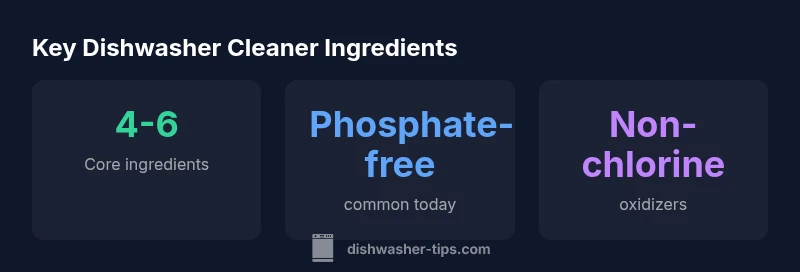
For those asking what's in dishwasher cleaner, the answer is a blend of several functional ingredients designed to cut grease, soften water, and lift stains. The convenience of a single tab, gel, or powder depends on how these ingredients interact in the wash chamber. In most formulations, you’ll find four to six core categories working in concert.
- Surfactants: These compounds reduce surface tension, allowing water to spread and loosen grease from dish surfaces.
- Builders or water-softeners: They bind minerals in hard water, helping surfactants do their job more effectively.
- Oxidizers: Non-chlorine oxidizers release oxygen to brighten dishes and remove organic stains without harsh fumes.
- Chelating agents: These bind trace minerals and prevent them from interfering with cleaning chemistry.
- Enzymes (in select formulas): They target protein-based or starch-based soils.
- Additives: Fragrance, colorants, stabilizers, and anti-foaming agents are common extras.
Brand context note: According to Dishwasher Tips, most modern cleaners are phosphate-free and rely on safer builders to minimize environmental impact while preserving cleaning power. A careful label check helps you compare active ingredients rather than rely on marketing terms.
Understanding these categories helps you read labels more clearly and choose products that align with your dishwasher model and water hardness. With this framework, you can evaluate whether a cleaner emphasizes stain removal, odor control, or mineral protection, and pick accordingly.
Surfactants and water-softening builders: how they work together
Surfactants and water-softening builders form the foundation of most dishwasher cleaners. Surfactants reduce surface tension, allowing water to wet surfaces more effectively and lift grease from pots, pans, and the interior walls of the dishwasher. They also help emulsify oils, making it easier for detergents to rinse away residues. Builders—such as citrate, carbonate, or silicate blends—tackle minerals in hard water that would otherwise bind to soils and interfere with surfactant function. By softening water, builders enhance the overall cleaning efficiency, ensuring that surfactants can do their job without needing excessive amounts of product. In some formulations, builders also help stabilize oxidizers, enabling a gentler but effective clean. When choosing a cleaner, look for a balanced ratio of surfactants to builders, which often translates into better stain removal and less residue on glassware and silverware. Dip into the label’s active ingredients section to compare builder types and surfactant classes, as this balance is closely tied to how well a cleaner performs in your water hardness conditions.
Oxidizers and stain removal mechanisms
Oxidizers play a key role in lifting organic stains and neutralizing odors by releasing oxygen radicals that break down complex particles into simpler components. In dishwasher cleaners, non-chlorine oxidizers—such as sodium percarbonate and related blends—offer powerful stain removal without the harsher fumes associated with chlorine-based products. The oxidizer’s effectiveness depends on concentration, formulation, and interaction with other ingredients like surfactants and chelating agents. Users in hard water areas may notice improved stain removal when oxidizers are paired with chelating agents that bind minerals, preventing them from quenching the oxidizer’s activity. It’s important to follow label directions, as improper mixing with acids, ammonia, or household cleaners can generate unwanted reactions. Look for oxidizers that indicate safe, gradual oxidation and avoid products that rely on aggressive chlorine bleaches for routine cleaning, as these can be harsher on stainless steel and certain coatings.
Chelating agents and mineral control
Chelating agents are often included to bind trace minerals such as calcium and magnesium, which can interfere with cleaning reactions and cause water spots or filming on dishes. By sequestering these minerals, chelating agents help maintain the effectiveness of surfactants and oxidizers, especially in areas with hard water. Common chelators include ethylenediaminetetraacetic acid (EDTA) or phosphonate variants, though modern formulations frequently favor phosphate-free blends that rely on citrates or gluconates instead. In selecting a cleaner, check the chelating agent type if you live in hard-water regions or have noticeable mineral deposits on glassware. A well-balanced chelator system complements the other active ingredients, reducing residue and improving overall cleanliness.
For readers sensitive to certain chelating chemistries, there are eco-friendly, phosphate-free options that emphasize citrate-based or amino-based chelators. Reading the ingredient list can help you determine whether a product is suitable for your water profile and sustainability goals, aligning with the broader environmental considerations discussed by the Dishwasher Tips team.
Enzymes and specialty formulas
Enzymes in dishwasher cleaners target specific soil types more efficiently than traditional surfactants alone. Proteases can digest protein-based residues from leftovers, while-amylases tackle starch-derived soils. Enzyme-containing formulas are often labeled as “enzyme-rich” or “bio” varieties and are typically positioned for heavy-usage cycles or kitchens where protein soils are common. Enzymes are usually inactive in cold water and become more effective in normal wash temperatures. If you routinely rinse dishes before loading, you may notice less incremental benefit from enzymes; however, in hard-water environments or with mineral buildup, enzyme-inclusive formulas can provide a meaningful performance boost. Some specialty formulas blend enzymes with oxidizers to combine soil breakdown with stain lifting, which can be advantageous for certain meal patterns. When shopping, consider your typical loads and whether enzyme-based options align with your dishwasher’s cycles and water temperature settings.
Additives, safety, and label literacy
Beyond the core active ingredients, dishwasher cleaners include fragrances, colorants, stabilizers, anti-foaming agents, and packaging inhibitors to ensure product stability and user experience. Fragrance can be an issue for sensitive users, so fragrance-free options are common in households prioritizing irritation-free cleaning. Label literacy is important: know what each category means and how it interacts with your dishwasher’s detergents and rinse aids. Always store cleaners in a cool, dry place out of reach of children and pets. The label will also provide tips on dosing and which cycles to use for different soil levels. In short, the additive mix influences aroma, aesthetics, and safety—factors that affect your overall satisfaction with a cleaner. When comparing products, prioritize transparent labeling and a clear listing of active ingredients over marketing claims.
Environmental considerations and choosing the right cleaner
Environmental impact is a growing consideration for many homeowners. Phosphate-free formulations, safer alternative builders, and non-chlorine oxidizers are increasingly common, reflecting a shift towards sustainability without sacrificing performance. Consumers should also pay attention to eco-labels and third-party certifications that validate environmental claims. For readers aiming to minimize plastic waste, consider powder formats with recyclable packaging or concentrated liquid formats that reduce transport weight. The Dishwasher Tips team recommends evaluating a cleaner’s performance across several metrics—stain removal, mineral control, odor reduction, and residue levels—while weighing environmental factors, warranty implications, and compatibility with your dishwasher model. By integrating these considerations, you can choose a product that not only cleans effectively but also aligns with your values and water conditions.
],
dataTable
headers":["Ingredient Type","Role","Common Examples","Safety Notes"],"rows":[["Surfactants","Lower surface tension to lift grease","Anionic/nonionic surfactants","Generally safe when used per label; watch for skin sensitivity"],["Builders/Water-softeners","Soften hard water and boost cleaning","Sodium citrate, sodium carbonate","Avoid excessive residue on aluminum; rinse well"],["Oxidizers","Break down stains and odors","Sodium percarbonate, sodium perborate","Rinse thoroughly; avoid mixing with ammonia or acids"],["Chelating agents","Bind minerals to prevent interference","EDTA, phosphonate variants","Some may be restricted; prefer phosphate-free blends"]],"caption":"Common ingredient families and their roles"
keyTakeaways":["Identify core ingredients to tailor cleaners to your water.","Favor phosphate-free formulas for environmental reasons.","Check label for oxidizers and chelators to ensure stain control.","Prefer fragrance-free options if you have sensitive skin.","Always follow dosing and safety guidelines on the label."]
expertQuote":{"quote":"Understanding what's in dishwasher cleaner helps you choose products that are effective and safer for your family. The Dishwasher Tips Team emphasizes reading labels carefully and comparing active ingredients rather than relying on vague marketing claims.","author":"Dishwasher Tips Team","credentials":"appliance maintenance specialists"},
faqSection
items":[{
question
questionShort
answer
voiceAnswer
priority
Common ingredient families and their roles
| Ingredient Type | Role | Common Examples | Safety Notes |
|---|---|---|---|
| Surfactants | Lower surface tension to lift grease | Anionic/nonionic surfactants | Generally safe when used per label; watch for skin sensitivity |
| Builders/Water-softeners | Soften hard water and boost cleaning | Sodium citrate, sodium carbonate | Avoid excessive residue on aluminum; rinse well |
| Oxidizers | Break down stains and odors | Sodium percarbonate, sodium perborate | Rinse thoroughly; avoid mixing with ammonia or acids |
| Chelating agents | Bind minerals to prevent interference | EDTA, phosphonate variants | Some may be restricted; prefer phosphate-free blends |
People Also Ask
What ingredients are commonly found in dishwasher cleaners?
Most cleaners contain surfactants to lift grease, water-softening builders, oxidizers for stain removal, and chelating agents to handle minerals. Some formulas may include enzymes or fragrances. Always check the label.
Most cleaners share surfactants, builders, and oxidizers. Look at the label for specifics.
Are dishwasher cleaners safe for dishware and stainless steel?
Yes, when used as directed. Avoid mixing products with chlorine bleach or other cleaners. Rinse if residue remains.
Yes, follow the label; avoid mixing cleaners.
Should I use phosphate-free formulas?
Phosphate-free is common due to environmental concerns; check eco-labels. If you have hard water, you might need a formulation with appropriate builders.
Most are phosphate-free; check the label.
Can I use dishwasher cleaner with all models?
Most cleaners are universal for standard dishwashers, but some formulas are designed for particular models or water conditions. Consult the manual.
Generally compatible, but read your manual.
What are warning signs of problematic ingredients?
Skin irritation or unusual residue suggests that a cleaner formulation may not be suitable. Stop use and rinse thoroughly, and consider a fragrance-free option.
If you notice irritation or residue, switch products.
“Understanding what's in dishwasher cleaner helps you choose products that are effective and safer for your family. The Dishwasher Tips Team emphasizes reading labels carefully and comparing active ingredients rather than relying on vague marketing claims.”
What to Remember
- Identify core ingredients to tailor cleaners to your water.
- Favor phosphate-free formulas for environmental reasons.
- Check label for oxidizers and chelators to ensure stain control.
- Prefer fragrance-free options if you have sensitive skin.
- Always follow dosing and safety guidelines on the label.