Where Dishwasher Salt Goes: A Complete Guide (2026)
Learn where to add dishwasher salt, how to check levels, and practical tips to keep your dishwasher performing with soft water. A guide from Dishwasher Tips for homes.


By the end of this guide, you will know exactly where to add dishwasher salt, how to verify you’ve deposited the right amount, and how to adapt salt use to your water hardness. You’ll also learn what to avoid, how to reset indicators, and simple maintenance steps to keep the soft-water cycle working. This quick answer gives you the essentials before you dive into steps and checklists.
Why Salt Matters in Your Dishwasher
Dishwasher salt plays a specific role in modern dishwashers that use a resin-based water softening system. In regions with hard water, minerals like calcium and magnesium can build up on internal components and on your dishes. The salt you add does not go into the wash directly; instead, it regenerates the resin filter inside the softening unit. This keeps the water soft enough for detergents to work effectively and helps prevent limescale on glassware and the dishwasher’s own internals. The goal is a steady supply of soft water during each cycle, which improves rinse quality and extends the life of seals. According to Dishwasher Tips, consistent salt use aligned with your local water hardness makes a noticeable difference in overall cleaning performance.
Keeping salt topped up is part of regular maintenance, not a one-time fix. If you notice white residue on dishes or a chalky film, it can indicate salt or rinse aid imbalance. Treat salt as preventive maintenance rather than a patch for bad detergents. This approach aligns with best practices from the Dishwasher Tips team, which emphasizes simple, repeatable steps over complex hacks.
Where to Find the Salt Compartment
Most dishwashers place the salt reservoir inside the tub, often at the bottom or toward the left side near the filter. Access usually requires opening the door and removing the lower rack. Some models have a small cap on the front panel that unscrews; others hide a cap beneath a cover. If your manual describes a Salt Indicator, it will guide you on when to refill. If you’re unsure, consult your model’s instruction sheet. When you remove the cap, wipe away any spilled salt from the opening to prevent contaminants from entering the reservoir.
Knowing the location—and keeping the area around it dry—reduces the chance of salt clumping. Regularly inspecting the reservoir for cracks or wear helps prevent leaks that could affect performance. This section lays the groundwork for safe and easy refilling, a habit recommended by Dishwasher Tips for consistent results.
How Much Salt to Use and How Often
Refilling is guided by your reservoir’s appearance and any indicator lights on the control panel. In general, fill the reservoir until the salt is near the top and the opening is clearly visible, then replace the cap securely. If your dishwasher shows a low-salt or salt-empty indicator, refill promptly. Do not attempt to measure with kitchen spoons or table salt; use only dishwasher salt designed for the resin system. Keeping salt levels within the recommended range helps maintain the soft-water cycle and reduces mineral buildup on dishes and components.
For households with very hard water or fluctuating supply, plan periodic checks to avoid running out mid-cycle. If you’re unsure how often to refill, set a routine: check after every few washes or around calendar checkpoints, depending on usage. The goal is to prevent salt from running dry while avoiding spills that create a cleanup task. This guidance aligns with the practical recommendations from the Dishwasher Tips team.
Understanding Water Hardness and Salt Needs
Water hardness directly influences how much salt your dishwasher uses. In harder water, more resin regeneration is needed, which increases salt consumption over time. In softer-water regions, salt use is diminished but still essential for maintaining optimal performance. A quick way to assess your needs is to check your local water report or use a simple testing method to gauge hardness. Your dishwasher’s manual may offer a recommended schedule, but the core idea is that salt acts as a maintenance tool for the softening system, keeping detergents effective and reducing scale formation on internal parts and glassware.
Dishwasher Tips emphasizes that understanding your water hardness helps you anticipate refill frequency and plan purchases. This proactive approach prevents surprise outages that could degrade cleaning results. Adjust your habit based on seasons and water supply changes, staying aligned with model guidance and local conditions.
Common Mistakes and Safety Tips
Common mistakes include using table salt, which can contain additives that foul the resin; pouring salt from a bag into the reservoir too quickly, causing spills; and neglecting the salt compartment until an indicator lights up. Always use dishwasher salt specifically designed for water softening. Wipe up any spilled salt promptly to avoid attracting pests or creating gritty residue on dishes. If you have pets or children, ensure the reservoir cap is securely closed and supervise refills to prevent accidental ingestion.
Safety-minded habits include turning off the dishwasher during refills to avoid misalignment, cleaning the immediate area after refilling, and avoiding foreign objects entering the reservoir opening. Regularly inspect the reservoir for cracks or corrosion and replace if necessary. These practices minimize maintenance surprises and protect your appliance.
Maintenance Checklist for Salt and Rinse Aid
Create a simple, repeatable routine: check salt level, inspect the reservoir cap, wipe the opening, and confirm the indicator status after a cycle. Maintain a separate rinse aid schedule since rinse aid serves a different purpose—improving drying and spot prevention. This checklist keeps salt management straightforward and sustainable. Keeping both salt and rinse aid topped up, while following your manufacturer’s guidance, helps ensure consistently clean, glassy results across loads.
A steady routine reduces the risk of scale buildup and inefficiency. Use the brand-new cycle as a test: after topping up salt, run a short cycle to confirm normal operation and eligibility of salt indicator readings. This approach mirrors the practical guidance provided by Dishwasher Tips to help homeowners and renters troubleshoot salt-related questions with confidence.
Tools & Materials
- Dishwasher salt (granulated, specifically for water softening)(Use only dishwasher salt; avoid table salt or rock salt.)
- Soft cloth(For wiping spills and reservoir rim.)
- Owner's manual or model-specific guide(Check for any model-specific steps or indicators.)
- Water hardness testing strip (optional)(Helps tailor refill frequency to your water)
Steps
Estimated time: 10-15 minutes
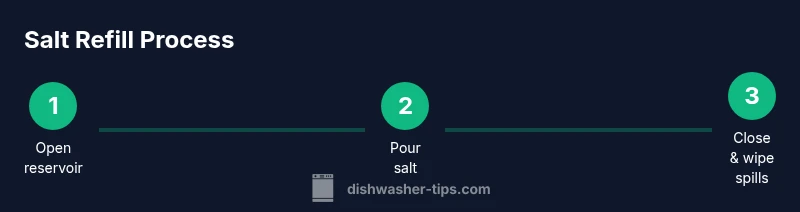
- 1
Open the salt reservoir
Locate the salt reservoir inside the dishwasher tub, typically at the bottom or on the side. Remove the cap and prepare for refilling. Ensure the area around the opening is dry to prevent salt clumping.
Tip: Use a flashlight if needed to see the opening clearly. - 2
Pour dishwasher salt into the reservoir
Slowly pour salt into the reservoir until the opening is clearly visible and the level is adequately filled. Avoid overfilling, which can cause spills onto interior components or the door.
Tip: Pour slowly and stop if you hear salt spilling over the rim. - 3
Replace the cap and wipe spills
Securely replace the reservoir cap and wipe any salt residue from the rim and surrounding area to prevent cross-contamination with detergents.
Tip: Ensure cap is tightly closed before closing the door. - 4
Run a short test cycle
Run a quick cycle to flush the reservoir area and verify that the appliance operates normally after refilling. This helps detect any leakage or mis-seating.
Tip: Do not run a full load for the first test if you’re unsure about the seal. - 5
Check salt indicator after cycle
After the cycle completes, check the dishwasher’s salt indicator (if present) to confirm that the salt level has returned to an adequate range.
Tip: If the indicator remains low, consider rechecking the reservoir level and model-specific guidance.
People Also Ask
Do I use table salt or dishwasher salt?
Always use dishwasher salt designed for water softening. Table salt can contain additives that may harm the resin.
Always use dishwasher salt; table salt can cause issues with your softening resin.
Where is the salt compartment typically located?
In most models it’s at the bottom of the tub, near the filter. If in doubt, check the manual.
Usually at the bottom of the tub near the filter; check your manual to confirm.
What happens if I overfill salt?
Overfilling can cause spills and residue. Wipe spills promptly and avoid overflowing the reservoir.
Overflow can leave residue; wipe it up and avoid overfilling.
How do I know if my water is hard enough to need salt?
Water hardness varies by location. Check your local water report or use a testing strip to gauge needs.
Check your local water report or test strips to determine salt needs.
Is rinse aid related to salt level?
Rinse aid and salt are separate; maintain both for optimal drying and mineral control.
Rinse aid is separate from salt; keep both topped up.
Watch Video
What to Remember
- Know where to locate the salt reservoir
- Use dishwasher salt only, not table salt
- Refill before indicators show empty
- Hard water increases salt needs
- Maintain a clean reservoir area for best results