How to Use Dishwasher Salt: A Step-by-Step Guide
A comprehensive, step-by-step guide on how to use dishwasher salt effectively, including when to refill, how to measure, and common mistakes to avoid for optimal dishwashing and appliance longevity.


According to Dishwasher Tips, today you’ll learn how to use dishwasher salt correctly in your water-softening dishwasher. You’ll know when to refill, how to measure salt, and how to avoid common mistakes that reduce cleaning performance. This guide follows Dishwasher Tips’ best practices for salt placement, monitoring, and maintenance to keep your appliance running efficiently.
Why dishwasher salt matters
Dishwasher salt is a dedicated product used specifically to soften hard water inside compatible dishwashers with built-in water-softening systems. The salt reacts with a resin in the appliance to remove calcium and magnesium ions, which reduces mineral buildup and improves detergent effectiveness. When you ask "how do you use dishwasher salt", the answer is simple: keep the reservoir filled with clean, pure dishwasher salt and monitor the indicator light as part of routine maintenance. The right salt helps prevent spotting, cloudy glassware, and crusty deposits on heating elements. According to Dishwasher Tips, consistent use of the correct salt type can extend the life of seals and reduce the need for descaling.
In practice, salt works in the background. You might not notice it every cycle, but it is essential for hardness control in regions with very hard water. If you skip salt or use non-dedicated salt, you may see more mineral residue on dishes or a higher frequency of maintenance cleaning. The Dishwasher Tips team found that households who maintain proper salt levels report fewer mineral-related issues and more reliable cleaning performance.
By understanding why salt matters, you can troubleshoot performance drops and keep your dishwasher operating at peak efficiency.
When to use dishwasher salt
Salt is not a weekly ritual; it’s a maintenance item that depends on your water hardness, the size of your household, and how often you run the dishwasher. Most machines equipped with a water-softening system use salt continuously, but the refill interval varies. The low-salt indicator on the control panel is your primary cue, but some models rely on dosage sensing. If you have very hard water, you may need to refill more often.
Dishwasher salt is particularly important in regions with high mineral content because it keeps the resin regenerated and prevents scale buildup on sprayer arms and filters. The effect is cleaner dishes, less film, and a longer-lasting pump. The Dishwasher Tips team notes that seasons with more dishwashing (like holidays) will increase salt consumption; plan ahead for those peaks while checking your indicator light regularly.
For renters, you may not be allowed to modify settings, but you can still monitor salt usage by paying attention to the indicator and periodic descaling if you notice white film on glassware. If you’re unsure about your water hardness, consider a quick test or ask your landlord or technician for guidance.
How to choose the right salt
Not all granules are created equal. Use only dishwasher salt designed for domestic machines; table salt or rock salt may contain impurities or additives that can clog the resin bed, corrode components, or void warranties. The salt should be pure granules that dissolve easily in the reservoir. When you shop, look for bags labeled 'dishwasher salt' or 'water-softening salt' and avoid generic coarse salts.
Dishwasher Tips analysis shows that selecting the correct salt type correlates with better descaling resistance and more consistent wash results across cycles. If you know your water hardness, you can estimate how much salt is needed; otherwise the machine’s indicator will guide you. In areas with very soft water, you might still benefit from maintaining a minimal salt level to ensure the resin stays active.
Remember to verify compatibility with your dishwasher model by checking the manual; some newer models use liquid salt or alternative regeneration methods, but the vast majority still rely on solid dishwasher salt in a dedicated reservoir.
Tools & Materials
- Granular dishwasher salt(Use salt designed for dishwashers; avoid table salt or iodized salt.)
- Funnel (optional)(Helps pour salt without spills.)
- Soft cloth(Wipe spills and wipe the reservoir exterior after filling.)
- Water hardness test kit (optional)(If you know your water hardness, you can tailor refills more precisely.)
Steps
Estimated time: 15-20 minutes
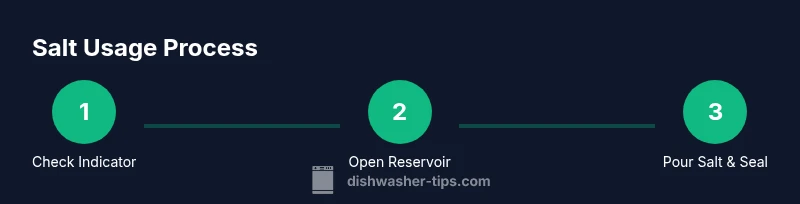
- 1
Check the salt indicator and reservoir
Locate the salt reservoir and verify the indicator or readout. If your model has no indicator, refer to the manual for refill guidance. This initial check prevents unnecessary fills and ensures you don’t waste salt.
Tip: If the reservoir is difficult to access, consult the manual or model-specific video first. - 2
Open the reservoir cap
Carefully open the reservoir cap, wipe away any loose residue around the opening, and prepare to pour. Keep the area clean to avoid contaminating the salt path.
Tip: Use a flashlight if the area is dim to see the fill line clearly. - 3
Pour in the dishwasher salt
Slowly pour the salt into the reservoir until you reach the fill line or until advised by your model’s indicator. Avoid overfilling, which can cause overflow and corrosion.
Tip: Pour with a funnel if you have it to minimize spills. - 4
Wipe spills and replace cap
Wipe any spilled salt from the door, gasket, or surrounding surfaces. Replace the cap securely to prevent moisture ingress.
Tip: Make sure the cap is fully tightened to prevent leakage. - 5
Run a short cycle and check
Run a quick rinse or light wash to dissolve the salt and confirm the reservoir is functioning. Check the indicator after the cycle is complete and re-fill if needed.
Tip: If you still see mineral residue after a cycle, recheck salt level and hardness settings.
People Also Ask
Do I really need dishwasher salt for my dishwasher?
If your dishwasher has a built-in water-softening system and your water is hard, salt is essential to keep resin functioning and prevent mineral buildup. If your water is soft, you may still want to maintain salt at a minimal level for optimal performance.
Yes, for most hard-water homes, salt helps keep the softening system in good shape and improves wash results.
How often should I refill dishwasher salt?
Refill frequency depends on water hardness and usage. Monitor the low-salt indicator and plan for regular checks, especially during holidays or heavy dishwashing periods.
Check the indicator regularly and refill when it shows you’re low, especially in hard water.
Can I use table salt in my dishwasher?
No. Table salt contains additives that can clog the resin bed and affect performance. Always use dishwasher salt.
Avoid table salt; use only dishwasher salt designed for the appliance.
What happens if I overfill the salt reservoir?
Overfilling can lead to salt spills, residue, and possible corrosion of seals if salt leaks onto metal components. Use the fill line as a guide.
Don’t exceed the fill line; spills can cause issues over time.
Is salt needed in soft water areas?
In very soft water, the resin bed is less taxed, but many models still benefit from maintaining a small amount of salt to ensure consistent performance.
If your water is soft, you may still want to keep salt at a minimal level.
How do I know which salt to buy for my model?
Check your dishwasher’s manual for salt recommendations and look for packaging labeled 'dishwasher salt' or 'water-softening salt' sized for your reservoir.
Refer to the manual and choose dishwasher salt labeled for dishwashers.
Watch Video
What to Remember
- Check the salt indicator monthly to avoid running dry.
- Use only dishwasher salt labeled for machines; avoid table salt.
- Refill when the indicator prompts or when you know your water is hard.
- Keep the area dry and clean to prevent salt buildup around the reservoir.