Can You Get a Dishwasher Serviced? How to Hire a Technician
Learn how to arrange professional dishwasher service, what to expect, and how to prepare your home. This guide covers hiring, safety, warranties, and post-service care.


Can you get a dishwasher serviced? Yes. This guide explains how to arrange professional service, what information to gather, and what to expect during a visit. You’ll learn when to call a technician, how to choose a qualified pro, and how to prepare your appliance and home for a safe, efficient repair.
Understanding when to service your dishwasher
Your dishwasher is a complex appliance that blends electrical, mechanical, and plumbing systems. If you notice persistent problems—poor cleaning, standing water at the bottom, loud noises, leaks, or drainage trouble—it's often time to consider professional service. According to Dishwasher Tips, a service visit can extend the life of the unit, fix recurring issues, and prevent costlier repairs later on. A technician can diagnose problems that aren’t obvious from DIY checks and suggest safe, effective parts replacements or reassembly. Acting early helps keep performance reliable, energy efficiency high, and safety intact. Servicing aims to restore core functions: cleaning power, proper drainage, quiet operation, and overall reliability, so your dishwasher continues to serve your household for years to come.
What a professional service covers
During a standard service visit, a technician will inspect electrical connections, motor function, water inlet and drain valves, and the pump. They may test spray arms, filtration, seals, and control boards, then diagnose root causes for symptoms like poor cleaning or not draining. Safe, manufacturer-approved parts replacement or reassembly may be recommended. A reputable service should provide a written assessment and a clear estimate before any work begins, along with warranty terms for labor and parts. The goal is to restore performance, prevent leaks, reduce energy usage, and extend the life of the dishwasher without compromising safety or code compliance. Remember that even if the unit is outside warranty, many pro services can still help with diagnosis and repair using approved parts and proper procedures.
DIY checks before you call a pro
Before scheduling a service, there are a few basic checks homeowners can perform safely. Start with cleaning the filter and body spray arms, removing trapped debris, and ensuring the spray nozzles are not clogged. Check for visible leaks around the door gasket, verify that the door latch seals properly, and confirm the drain hose is properly routed. If you hear grinding or buzzing, note when it occurs and any patterns in performance. While these checks don’t replace professional diagnosis, they can help you describe symptoms clearly and avoid unnecessary service calls.
How to choose and hire a technician
Selecting a qualified dishwasher technician requires checking credentials, experience with your brand, and transparency on pricing. Look for licensed professionals when required in your area and request written estimates. Read recent reviews focused on repairs and warranties. Ask about parts guarantees and labor warranty duration, and verify that the technician uses original or approved aftermarket parts. A good pro will explain findings in plain language and provide a realistic timeline for fixes.
Preparing for the service visit
Prepare a concise brief for the technician: model and serial number, a list of symptoms, when they began, and any prior repairs. Gather the user manual if available, keep the area around the machine clear, and ensure access to electrical outlets and the water shutoff. Have a central contact method and confirm the service window. If possible, do not run the dishwasher on the day of service so the technician can observe the issue directly and perform tests safely.
After the service: maintenance tips to extend life
Once repairs are completed, follow the technician’s guidance for care and maintenance. Run a test cycle with clean dishes to verify performance, and monitor for leaks or unusual noises. Schedule a routine maintenance interval and keep filters clean. Consider using manufacturer-approved detergents and rinse aids, and store tools and spare parts out of reach of children. Regular inspections help catch issues early and keep your dishwasher running efficiently.
Safety and warranty considerations
Professional service follows safety protocols to protect you and your home. If your unit is under warranty, confirm what services are covered and whether the work requires dealer authorization. Request a detailed, itemized invoice showing parts, labor, and warranty terms. Keep copies of all documents in case future repairs are needed; this can support warranty claims and resale value.
What to expect from a service visit
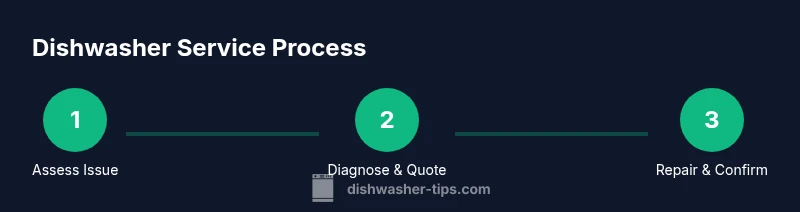
During a visit, expect a diagnostic assessment, identification of root causes, and a written estimate before any repair. The technician may replace parts, reorder components, or adjust settings. After work, you should receive an itemized invoice and a warranty statement for labor and parts.
Tools & Materials
- Smartphone or computer with internet(For requesting quotes and checking technician credentials)
- Dishwasher model and serial number(Usually found on the door rim or inside the tub)
- Owner's manual (if available)(Helpful for model-specific parts and troubleshooting steps)
- Clear access to the dishwasher and electrical outlet(Make room for service personnel; ensure the area is dry)
- Notebook or notes(Record symptoms and quotes)
- Water shutoff access(Some repairs require valve access; ensure you can reach it)
Steps
Estimated time: 1-3 hours for prep and scheduling; on-site visit typically 1-3 hours depending on issue
- 1
Gather essential information
Collect the dishwasher’s model and serial number, a detailed symptom description, and any error codes. This makes the diagnostic process faster and more accurate.
Tip: Have the exact cycle name and timing noted to help pinpoint issues. - 2
Check safety and prepare the area
Power down the unit at the outlet or breaker and ensure water supply is accessible but not running. Clear a safe workspace around the machine.
Tip: Remove appliances or clutter from the surrounding area to allow technicians to work safely. - 3
Research providers and request quotes
Identify two or three local dishwasher repair professionals and request written estimates that outline parts and labor.
Tip: Ask about warranty coverage on both parts and labor before agreeing to any service. - 4
Schedule the service
Choose a time window that allows you to be available for questions and decisions. Confirm arrival expectations and any potential fees.
Tip: Get a written quote confirming the anticipated scope and price range before work begins. - 5
Prepare for the visit and documentation
Have the model number handy, clear access, and the list of symptoms ready. Keep a contact method on hand for scheduling updates.
Tip: Ask the technician to explain findings in plain language and provide a written report. - 6
Review service report and follow-up care
Read the technician’s diagnosis and recommendations. Store the invoice and warranty details; schedule preventive maintenance as advised.
Tip: Record reminders for filter cleaning and performance checks after repairs.
People Also Ask
Can I get a dishwasher serviced under warranty?
Warranty coverage depends on terms and whether the service was performed by an authorized technician with approved parts. Review your warranty document and contact the manufacturer for specifics.
Most warranties cover factory repairs if a licensed technician uses approved parts, but check your contract for exact terms.
What should I expect during the service visit?
A diagnostic assessment, identification of root causes, and a written estimate before any repair. The technician may replace parts and provide an itemized invoice with warranty terms.
The tech will explain findings, outline options, and give you an upfront quote.
How long does a typical service call take?
Timing varies with issue complexity and parts availability. Most visits span a few hours from arrival to completion.
It depends on the problem, but plan for a few hours from start to finish.
How do I verify a technician's credentials?
Check local licensing requirements, ask for licenses, and read recent customer reviews. Request references if needed.
Ask to see their license and read what other customers say about repairs.
Should I try DIY fixes before calling a pro?
Limit yourself to basic checks that don’t involve electrical components. Avoid disassembly and hazardous tasks; safety first.
Only do safe, basic checks and don’t mess with electrical parts.
Is in-home service available everywhere?
Most technicians offer on-site service, but some issues may require off-site work or parts routing from a shop.
In-home service is common, but some repairs may require bringing the unit to a workshop.
Watch Video
What to Remember
- Schedule a licensed technician for persistent issues.
- Gather model, serial, and symptom details before the visit.
- Request written estimates and warranty terms.
- Prepare the space and follow safety guidance after service.