Bosch Dishwasher E19 Troubleshooting Guide
Urgent guide to diagnosing and fixing Bosch dishwasher E19 drain errors. Quick fixes, step-by-step repair, safety tips, and when to call a pro — Dishwasher Tips.


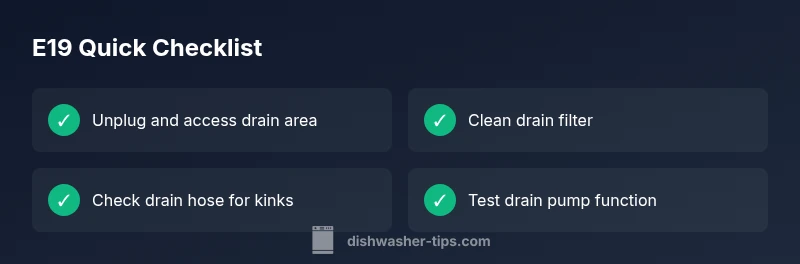
Bosch dishwasher E19 signals a drain fault, typically a clogged filter or faulty drain pump. The quickest path is to inspect and clear the drain filter, check the drain hose for kinks, and reset the control to run a test cycle. If the error persists, verify the drain pump operation and consider professional service. For safety, unplug the unit before any inspection.
What E19 Means on a Bosch Dishwasher
E19 is Bosch's diagnostic code indicating a drain fault that prevents the appliance from finishing the cycle properly. In practice, you’ll typically see water not draining, the cycle stalling, or the display flashing the E19 error. The root cause is usually related to drainage hardware, most often a clogged filter, a stopped drain pump, or a kinked drain hose. Because drainage issues can spill water and leave you with a flooded sump, treat E19 as urgent. According to Dishwasher Tips, early action minimizes water damage and avoids unnecessary parts replacements. Start with the simplest checks and progress to more involved tasks only if the basic steps don’t resolve the issue.
Before you dive in, confirm that the dishwasher is powered off and unplugged. If you have a built-in or under-counter model, you may need to access the kick panel or filter area by removing the lower spray arm and any protective panels. Drain issues almost always revolve around three components: the filter assembly, the drain hose, and the drain pump. If the dishwasher is still under warranty, consult Bosch support to avoid voiding coverage. If you notice visible leaks or pooling water around the base, address those first to prevent mold growth and damage to cabinetry.
Quick Fixes You Can Try Right Now
If E19 appears on your display, start with non-invasive, low-effort steps. These quick fixes often clear simple clogs and reset the machine without tools:
- Inspect and clean the drain filter: remove the bottom rack, locate the filter assembly, twist counterclockwise to unlock, rinse under warm water, and remove any debris.
- Check the drain hose for kinks or blockages: trace the hose from the tub to the sink connection; straighten any bends and remove any visible debris.
- Power cycle the unit: unplug for 60 seconds, then plug back in and run a diagnostic or test cycle to confirm whether the E19 code clears.
- Verify there’s adequate water supply and that the dishwasher is not overfilled, which can alter pump performance.
If these steps do not resolve E19, move to more involved checks. Safety is essential—do not pressurize hoses, avoid pulling on wiring, and never bypass safety interlocks. For homeowners, these remedies are commonly sufficient, but if you encounter resistance or unfamiliar parts, contact a professional.
Dishwasher Tips suggests keeping a small container and towels nearby when opening the lower access panel to manage any residual water and to prevent slip hazards. As you work, document which steps you performed; this will help if you need to explain the issue to a technician.
Diagnostic Flow for E19: Symptom to Cause
When E19 appears, the symptom set usually includes: water not draining, mid-cycle stoppage, or a cycle timeout. Based on Dishwasher Tips analysis, the most frequent causes are clogged filters, a stalled drain pump, or a damaged/drained hose. Less common culprits include kinks in the drain hose or a faulty control board. The diagnostic flow below helps prioritize checks by likelihood:
- Symptom: Water remains in the tub after a drain cycle. Likely cause: Clogged drain filter (high). Next check: Clean filter and re-run drain command.
- Symptom: E19 appears with no water draining after several minutes. Likely cause: Drain pump failure (medium). Next check: Listen for pump operation and inspect impeller access.
- Symptom: Hose looks clear but E19 persists. Likely cause: Kinked or trapped drain hose (low). Next check: Straighten and ensure free flow.
If you’ve ruled out the first two, consider a control board fault (low likelihood, but possible). A professional diagnosis should follow if the error persists after all basic checks.
Step-by-Step Plan Overview
This section outlines a practical plan for addressing E19 without diving into heavy tool usage. Use this as a map to organize your repair session. The steps emphasize safety, basic inspection, and progressive testing. Start with the simplest task (filter cleaning) and proceed to more complex checks (pump and wiring) only if necessary. Keep a log of each action and its result so you can relay accurate details to a technician if needed. Remember: if you smell burning, hear unusual noises, or see melted connectors, stop immediately and call a professional.
Other Causes and How to Address Them
Beyond the common drain filter blockage, E19 can be triggered by a range of issues. Address them in order of likelihood to minimize time and cost:
- Drain pump failure: A burned-out motor or jammed impeller may stop drainage. Fix by replacing the pump assembly; this is a moderate to hard task and often requires tools and specialty screws.
- Damaged or worn drain hose: Cracks or collapse reduce pump efficiency. Replace with the correct hose length and diameter.
- Control board or sensor fault: Electronics can misreport drain status. This cause is less common and usually requires professional testing with diagnostic tools.
For each potential cause, weigh the cost of replacement parts against the value of your appliance. Dishwasher Tips recommends you compare a full pump replacement versus a professional repair estimate before proceeding with part orders.
Safety Warnings and When to Call a Professional
Working on dishwashers involves electricity and water, which are a dangerous combination if mishandled. Always unplug the unit before inspecting any internal components. If you must operate or test while the panel is open, use insulated gloves and avoid contact with live wiring. Do not attempt to disassemble the pump housing or electronics without the right tools and model-specific guidance. If you are unsure about any step, or if water leaks persist after basic fixes, it is time to call a professional. Owners should also review their warranty status; many Bosch units are still protected. A pro can accurately diagnose and safely perform pump replacement or hose repairs, typically within a few hours depending on access and part availability.
Prevention Tips to Avoid E19 in the Future
Preventive maintenance can dramatically reduce drain-related errors. Schedule a routine cleaning of the filter every month, inspect hoses for wear, and run a test drain cycle occasionally to ensure the path remains clear. Use a recommended dishwasher detergent and avoid overloading the machine, which can place excessive strain on the drainage system. If your model supports a self-cleaning or automatic rinse aid feature, enable it to prevent mineral buildup around the pump and filter area. Regular maintenance, as recommended by Dishwasher Tips, keeps E19 from becoming a recurring headache.
Steps
Estimated time: 25-40 minutes
- 1
Power down and access the drain area
Unplug the dishwasher or switch off at the circuit, then remove the lower front panel or toe-kick to access the drain area. Ensure the area is dry before touching components. This initial safety check reduces the risk of electric shock and makes inspections easier.
Tip: Have a towel ready to catch escaping water. - 2
Remove and clean the drain filter
Take out the filter assembly, disassemble if needed according to your model, rinse all parts under warm water, and remove any stubborn debris with a soft brush. Reassemble and reinstall securely to restore proper water flow.
Tip: Avoid using sharp tools which may damage the filter housing. - 3
Inspect the drain hose for kinks and blockages
Trace the hose from the tub to the air gap or disposal connection. Straighten any bends and detach the hose to clear out any obstruction with a flexible brush or compressed air if available.
Tip: Be careful not to pull too hard on the hose clamp as you remove the hose. - 4
Check the drain pump operation
Listen for the pump when the machine attempts to drain. If you hear grinding, buzzing, or no sound at all, the pump may be blocked or failed. Access the impeller area and remove any obvious debris.
Tip: Do not operate the pump with debris inside; clear the area first. - 5
Reset and run a test drain cycle
Plug the unit back in, select a drain or test cycle, and observe. If the E19 code returns, the drain pump or control board may require replacement. If it passes, run a full normal cycle to verify stability.
Tip: Document the behavior during the test for future reference.
Diagnosis: Error code E19 on Bosch dishwasher; water remains in tub or drains slowly
Possible Causes
- highClogged drain filter
- mediumDrain pump failure
- lowKinked or blocked drain hose
Fixes
- easyClean the drain filter and re-test drainage
- mediumInspect the drain pump for obstruction or failure
- mediumInspect drain hose for kinks or blockages; replace if damaged
People Also Ask
What does E19 mean on a Bosch dishwasher?
E19 indicates a drain fault that prevents proper draining during a cycle. It often points to a clogged filter, a failing drain pump, or a blocked hose.
E19 means the dishwasher can't drain. Common causes are a clogged filter, a bad drain pump, or a blocked hose.
Is E19 usually caused by the filter or pump?
Both are common causes. Start with the filter, then inspect the drain pump if the issue remains after cleaning. Hose blockages are less frequent but possible.
Usually the filter or drain pump. Start with cleaning the filter, then check the pump if needed.
Can I fix E19 myself?
Yes, for simple tasks like cleaning the filter and hose. More complex fixes, such as pump replacement, may require professional service depending on your skill and tools.
You can handle basic cleaning yourself, but pump replacement is best left to a pro if you’re not comfortable.
How much does it cost to fix E19?
Costs vary by cause. Simple cleaning is often under $50 in parts. Pump or board replacement can range from $150 to $500, plus labor if hiring a technician.
Costs depend on the fix; simple cleaning is cheap, pumps or boards can be more expensive.
Will resetting the machine clear E19 permanently?
Resetting can clear a temporary fault, but if the drain problem persists, E19 will reappear after a cycle. Ongoing issues need repair or replacement.
Reset may clear it briefly, but if the drain issue remains, the code will come back.
When should I call Bosch support or a professional?
Call a professional if you hear grinding, smell burning, or if the code returns after basic fixes. They can diagnose pump, board, or wiring faults safely.
Call a technician if you hear unusual noises, smell burning, or the code keeps reappearing.
Watch Video
What to Remember
- Identify E19 as a drain fault and start with quick fixes.
- Clean the filter and hose before testing the pump.
- If the issue persists, consider professional service for safety and accuracy.
- Prevent future E19 with regular maintenance and careful loading.