What is Bosch Dishwasher Error Code E09? Urgent Troubleshooting Guide
Urgent guide to understanding Bosch dishwasher error code E09. Learn what it means, quick checks, step-by-step fixes, safety tips, cost ranges, and when to call a pro to prevent water damage and improve cleaning performance.


E09 on Bosch dishwashers signals a fault in the heater circuit or temperature-sensing system. It can cause cycles to abort or improper heating. The quick fix is to power down, inspect the heater and thermistor wiring, and run a basic diagnostic. If the fault persists, schedule service to avoid water damage or poor cleaning.
What E09 Means for Bosch Dishwashers
In Bosch dishwashers, E09 is a fault code that appears when the control board detects an abnormal condition in the heater circuit or temperature sensing. The Dishwasher Tips team found that this error frequently relates to heating performance, which can manifest as a wash cycle that runs without adequate heat or a cycle that aborts prematurely. Because improper heating can affect cleaning performance and increase energy use, addressing E09 promptly is essential.
This is urgent: you should understand both quick checks and deeper repairs. Start with a safety-first approach: unplug the unit, and avoid touching live components. Then, proceed to confirm whether the heater element, temperature sensor (thermistor), or related wiring is at fault. If a visible problem isn’t obvious, you’ll need to test components with basic tools and follow a structured repair plan.
Quick Diagnostic Checklist
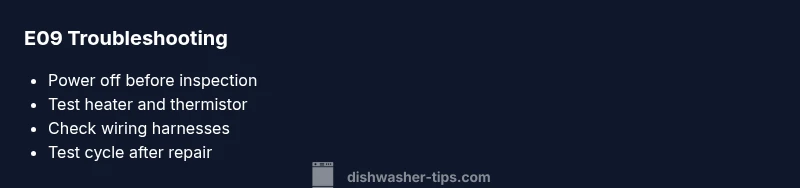
If you see E09, run these checks in order:
- Confirm the dishwasher is powered off and unplugged before opening access panels.
- Look for obvious signs of damage on the heater coil or heating element wiring (melting insulation, burnt smell, or loose connections).
- Inspect the thermistor and its wiring for kinks, corrosion, or loose connectors.
- Check for secure, undamaged wiring harnesses around the control board and heater assembly.
- Run a short diagnostic cycle after reconnection to see if the error reoccurs.
If you observe physical damage or the fault persists after these quick checks, closer testing or component replacement is likely required.
Most Common Causes (By Likelihood)
high likelihood
- Heating element or thermistor fault, or loose/damaged heater wiring. A degraded heater or faulty temperature sensor is the most frequent trigger for E09 and can explain poor heating or cycle aborts.
- Wiring harness issues around the control board or the heater that interrupt power to the heater circuit.
medium likelihood
- Control board glitch or failed relay that misreports temperature or heater status.
- Improper wiring during previous service or a partially detached connector.
low likelihood
- Sensor calibration drift or door latch-related issues that indirectly affect heating or cycle progression.
- Water inlet or rinse aid problems that cause ancillary faults but do not directly trigger E09.
What this means in practice: Prioritize inspection of the heater and thermistor first, then the control board and connectors if the heater tests show no fault.
Step-By-Step Fix for the Most Likely Cause
-
Power down completely and access the heater/thermistor area. Disconnect the power and unplug the unit. This eliminates shock risk while you inspect wiring.
- Tip: Photograph connector layouts before unplugging to aid reassembly.
-
Visually inspect the heater coil and thermistor for signs of damage or corrosion. Use a multimeter to check continuity on the heater element and resistance on the thermistor. If either component shows open/abnormal readings, replace the part.
- Tip: Replace both heater and thermistor if you find one failing; mismatched readings can cause intermittent errors.
-
Inspect all related wiring and connectors: reseat any loose plugs, clean corrosion if present, and apply dielectric grease to prevent future oxidation. Ensure the harness is firmly attached to the control board and heater.
- Tip: Work in a dry area and avoid over-tightening connectors.
-
Reassemble and run a short diagnostic cycle on a cold start. If E09 reappears, you may be facing a control-board fault and should plan a professional diagnosis.
- Tip: Keep a log of symptoms and cycle times to share with a technician.
-
If replacement parts are needed, budget for repair costs that typically include parts and labor. Heater or thermistor replacements often range in the lower to mid hundreds of dollars, while control-board repair can be higher. Always request a rough cost estimate before proceeding.
- Tip: Compare quotes from an authorized Bosch service provider versus independent appliance repair pros for best value.
Other Potential Causes and How to Address Them
Beyond the heater and thermistor, E09 can stem from a few additional sources. A firmware glitch on the control board might cause misreads; reseating the control board or performing a factory reset can help in some cases. Wiring harness damage or loose connectors elsewhere in the machine can also create heat-related fault conditions. If you’ve replaced the heater and thermistor but the code persists, a professional diagnostic of the control board and its firmware is warranted. In rare cases, a bad door switch or rattle-induced connector dislodgment can trigger intermittent errors; verify these components by testing door latch operation and looking for loose screws or panel gaps that stress plugs.
If any step seems risky or you’re uncomfortable with disassembly, avoid further attempts and call a pro.
Safety, Warnings, and When to Call a Professional
- Always unplug the dishwasher before any inspection of electrical components.
- Do not operate the appliance with exposed wiring or damaged insulation; risk of electric shock and potential fire.
- If you notice burnt smells, melted insulation, or visible damage to the heater, thermistor, or control board, stop immediately and contact a qualified technician.
- If the machine is under warranty, consult the manufacturer’s service policy before attempting parts replacement to avoid voiding coverage.
- Professional repair costs vary by region and model; expect ranges that cover parts and labor. A common heater/thermistor replacement may be in the low-to-mid hundreds, while control-board work can be higher. Always request a diagnostic fee estimate first.
Key Takeaways
- E09 usually signals a heating or temperature-sensing fault; start with the heater and thermistor checks.
- Use a methodical diagnostic flow: safety unplug → visual checks → component testing → reseating connectors → test run.
- If a fault persists after basic fixes, prepare for professional diagnosis and potential part replacements.
- Regular maintenance, including cleaning the heater area and checking connectors, can prevent recurrence.
Steps
Estimated time: 60-90 minutes
- 1
Power down and access the heater area
Unplug the machine and remove access panels to reach the heating element and thermistor. This reduces shock risk and allows safe inspection. Look for obvious damage or loose connectors.
Tip: Take photos of connector layouts before unplugging. - 2
Test heater and thermistor
Use a multimeter to check continuity on the heater coil and resistance on the thermistor. Replace if readings are outside manufacturer expectations or if you see physical damage.
Tip: Compare readings to the service manual or a known-good unit. - 3
Inspect wiring and connectors
Carefully inspect all wires to the heater and control board for wear, corrosion, or loose pins. Reseat connectors firmly and apply dielectric grease to prevent future oxidation.
Tip: Avoid forcing connectors—mild wiggling is enough. - 4
Run a diagnostic cycle and verify
Reconnect power and run a short diagnostic or test cycle to confirm heating behavior. If E09 persists, escalate to professional service.
Tip: Record cycle times and errors to share with a technician.
Diagnosis: Bosch dishwasher displays E09 error and/or fails to heat during cycles
Possible Causes
- highClogged or damaged heating element
- highFaulty thermistor or damaged wiring to heater
- mediumControl board fault or loose connector to heater circuit
Fixes
- easyTest heater continuity and thermistor resistance; replace if out of spec
- easyInspect and reseat heater and thermistor connectors; replace damaged wiring
- hardReplace control board or repair its connectors if tests show board fault
People Also Ask
What does Bosch E09 mean on my dishwasher?
E09 typically signals a heating or temperature-sensing fault. It interrupts cycles to prevent damage and poor cleaning. Start with a safety check, then inspect the heater, thermistor, and wiring before considering board-related issues.
E09 usually means a heating or temperature-sensing fault. Start by safely checking the heater and thermistor, then inspect the wiring before considering professional service.
Can I fix E09 myself?
You can perform basic diagnostics and component tests after turning off power, but more complex repairs, especially control-board work, should be done by a professional to avoid safety risks and warranty issues.
You can try basic diagnostics, but for complex repairs, call a professional.
What are common costs to fix E09?
Costs vary by component: heater or thermistor replacement is typically in the lower to mid hundreds, while control-board work can be higher. Always request a diagnostic quote before any replacement.
Expect several hundred dollars for heater or thermistor work, more for the control board. Get a quote first.
Should I replace parts if I’m unsure which is faulty?
Avoid blind replacements. Use component testing first and consult a professional if readings are inconclusive. Improper replacements can cause further damage.
Don't replace parts without testing. If in doubt, get a professional opinion.
Is there a preventative step to avoid E09?
Regular cleaning of the heater area, secure wiring, and periodic diagnostics help prevent heating faults. Keep the interior dry and tighten connections after any service.
Regular cleaning and checking connections can help prevent E09.
Watch Video
What to Remember
- Identify heater or thermistor fault first
- Test components with basic tools before replacing parts
- Secure all connectors and test cycles safely
- Know when to call a pro: persistent or high-cost faults