Bosch Dishwasher E24 Troubleshooting Guide
Urgent guide to Bosch dishwasher E24 drainage error. Quick fixes, diagnostic flow, step-by-step repair, safety tips, cost ranges, and prevention to get your machine draining again fast.


Bosch dishwasher E24 indicates a drainage fault preventing proper water evacuation. Most often, the fault lies with a blocked filter, clogged pump, or kinked drain hose. Start with a quick drain-check: clear the filter, inspect the pump area, and straighten any kinks. If the error persists, follow the diagnostic flow below.
Understanding the Bosch Dishwasher E24 Drainage Fault
The Bosch dishwasher E24 error code is a drainage fault that stops a wash cycle because water cannot drain properly. According to Dishwasher Tips, this code usually points to the drainage path rather than the electronics. The most common culprits are a blocked drain filter, a clogged drain pump, or a kinked drain hose. Debris buildup in the filter or pump impeller can create enough resistance to trigger the error. Inspect the filter basket and sump, remove visible debris, and confirm the hose is free of twists. If the drain path looks clear but the code persists, you’ll need to move to a structured diagnostic flow that covers pump operation, hose routing, and control signals. Safety first: unplug the unit before any disassembly, and wear eye protection when removing parts around the sump.
Quick Fixes You Can Try Right Now
If your Bosch dishwasher shows E24, you can perform several quick fixes that don’t require tools. First, unplug the machine and pull it out to access the lower panel. Remove the drain filter, then rinse it under running water to clear food particles or lime buildup. Reinsert the filter securely. Next, inspect the drain hose for kinks or blockages; straighten any bends and detach and flush the hose if possible. Check the pump area for trapped debris around the impeller. After these checks, run a short, empty cycle to observe drainage. If water still remains, perform a full power cycle (unplug for 1–2 minutes, then plug back in) and start a test wash with no dishes. If the light returns, move to the diagnostic flow.
Diagnostic Flow: From Symptoms to Likely Causes
This section describes how to translate symptoms into a probable cause and fix. If water stands in the sump after the final drain, suspect a clogged filter or pump obstruction. If a pump hums but won’t pump, the impeller could be jammed. If the hose shows visible kinks, drainage won’t occur. A proper diagnosis also checks for error codes that point to the control board or sensor faults. The goal is to order fixes from simplest to most complex, prioritizing quick fixes that restore drainage before moving to replacement parts.
Step-By-Step Fix for the Most Common Cause (Drain Filter / Pump)
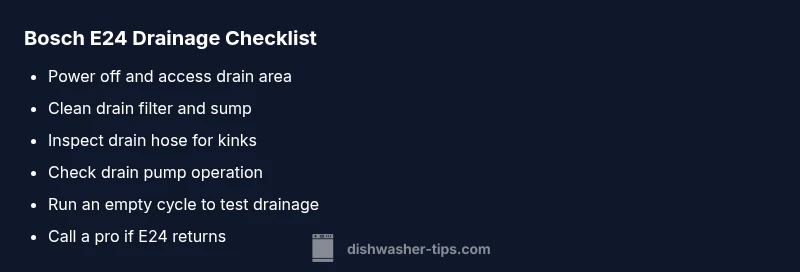
- Power down and access the bottom of the dishwasher. 2) Remove the lower kick panel or toe-kick to reach the drain filter and sump. 3) Take out the drain filter and clean it under warm water, removing any lodged debris. 4) Reinstall the filter firmly and run a rinse cycle to verify drainage. 5) If water remains, inspect the drain impeller area for debris and remove any obstruction. 6) Re-test with a short cycle; if the problem repeats, you may need to replace the pump or inspect the wiring to the pump.
Other Potential Causes and How to Address Them
Beyond the drain filter, several other issues can trigger E24. A failing drain pump or a loose impeller can block drainage. A kinked or blocked drain hose, or a blocked air gap/venting line, can also prevent proper drainage. Improper hose routing, a clogged garbage disposal connection, or a mis-seated filter assembly can mimic a drainage failure. For each potential cause, verify the fix by running a test cycle and watching the drainage flow.
Safety, Costs, and When to Call a Professional
Working on appliances involves water and electricity—always unplug and turn off the circuit before accessing internal components. If you are uncomfortable with opening panels or if the pump shows signs of wear or burning smell, stop and call a pro. Rough cost estimates for E24-related drainage repairs vary by region but generally fall in the range of a few dozen dollars for filter cleaning to several hundred dollars for pump replacement or control-board evaluation. Dishwasher Tips analysis, 2026, suggests budgeting roughly $100–$350 for common drainage fixes, depending on parts and labor.
Prevention: How to Keep E24 from Returning
Regular maintenance reduces E24 occurrences. Clean the drain filter weekly, check for debris in the sump area, and inspect the drain hose routing to prevent kinks. Use the correct detergent amount and avoid putting large food scraps in the disposal connection. Run an empty cycle every few weeks to keep the pump impeller free of obstruction. Keep the underside of the machine dry to limit rust and corrosion around the pump and hose connections. Dishwasher Tips recommends a quick monthly drain check as part of routine upkeep.
The Dishwasher Tips Verdict and Final Advice
The Dishwasher Tips team emphasizes that most E24 drainage problems are fixable without expensive parts, provided you follow a structured diagnostic flow and start with quick, safe fixes. If drainage remains poor after cleaning the filter, hose inspection, and pump check, professional service is advised to prevent further damage and ensure proper disposal of wastewater. The team’s approach combines careful mechanical checks with safety-minded steps to minimize risk and maximize the chance of a successful home repair.
Steps
Estimated time: 30-60 minutes
- 1
Power down and access drainage area
Unplug the dishwasher and remove the toe-kick panel to access the drain system. This reduces the risk of electric shock and makes it easier to inspect components.
Tip: Use a flashlight to view into the sump and hose areas. - 2
Remove and clean the drain filter
Take out the drain filter from the sump and rinse it under warm water. Use a soft brush to remove stuck debris but avoid damaging the filter seals.
Tip: Do not use harsh chemical cleaners that could degrade the seals. - 3
Inspect the drain hose for kinks
Trace the entire drain hose route; straighten any bends and ensure it slopes slightly downward toward the sink. Remove any blockages by flushing the hose.
Tip: Detaching the hose from the disposal connection can help flush stubborn clogs. - 4
Check the drain pump and impeller
Access the pump area and manually spin the impeller to ensure it turns freely. Remove any debris and re-seat the pump connections securely.
Tip: If the impeller doesn’t turn, the pump may need replacement. - 5
Run a test cycle without dishes
Power the unit back on and start a short wash with no load to observe drainage. Listen for the pump and watch for water exiting the tub.
Tip: If water remains, switch to a longer cycle to test repeated draining. - 6
Evaluate results and plan next steps
If the code returns, perform a deeper diagnosis or contact a technician for pump or board replacement.
Tip: Document any error codes and the steps you took for the technician.
Diagnosis: Error code E24 appears and water does not drain after the wash cycle
Possible Causes
- highClogged or dirty drain filter
- highKinked, blocked, or collapsed drain hose
- mediumDrain pump failure or impeller jam
- lowControl board or sensor fault
Fixes
- easyClean the drain filter and sump area
- easyInspect and straighten drain hose; flush if needed
- mediumTest drain pump operation; replace pump if it does not pump
- hardCheck wiring and control board for faults; call a pro if suspected
People Also Ask
What does E24 mean on a Bosch dishwasher?
E24 indicates a drainage fault. It typically means water isn’t draining effectively due to a filter, hose, or pump issue rather than a motor or control board failure. Always start with draining-related checks before investigating electronics.
E24 is a drainage fault. Start with filters, hoses, and pump, then proceed if needed.
Can I fix E24 myself?
Yes, many E24 causes are user-serviceable, such as cleaning the drain filter, straightening the drain hose, and inspecting the pump area. If the problem persists after these steps, consider professional service for pump replacement or board diagnostics.
Yes, you can try the basic fixes, but seek a pro for pump or board issues.
How much does it cost to fix E24?
Repair costs vary by cause and region. Simple filter cleaning may cost under $100 for parts, while pump or board replacements can range from about $100 to $350, not including labor in some areas.
Costs range from under $100 for cleaning to around several hundred dollars for pump or board work.
Should I reset the error code after fixes?
Yes. After completing fixes, reset the dishwasher by unplugging for 1–2 minutes and then powering back on. Run a short test cycle to confirm the code does not reappear.
Unplug for a minute, plug back in, then run a quick test cycle.
Can drainage issues cause E24 even with a new pump?
Yes. If the hose is kinked or the vent path is blocked, E24 can persist even with a new pump. Recheck hose routing and any air gaps in the drainage line.
Even with a new pump, routing and vents can still cause E24.
When should I call a professional?
Call a professional if you observe burning smells, if the pump does not run when powered, or if the control board shows signs of failure. A pro can safely diagnose and replace parts as needed.
Call a pro if the pump won't run or the control board looks faulty.
Watch Video
What to Remember
- Identify E24 as a drainage fault, not a control error
- Start with quick fixes: clean filter, inspect hose, verify pump
- Follow the diagnostic flow before replacing major parts
- Call a pro if the pump or control board is suspect
- Prevent future E24 by regular filter and hose maintenance