E15 Bosch Dishwasher: Urgent Troubleshooting Guide
Urgent guide to diagnosing and fixing the E15 drainage fault on Bosch dishwashers. Learn symptoms, quick fixes, step-by-step repairs, safety tips, and prevention to keep your e15 bosch dishwasher running.


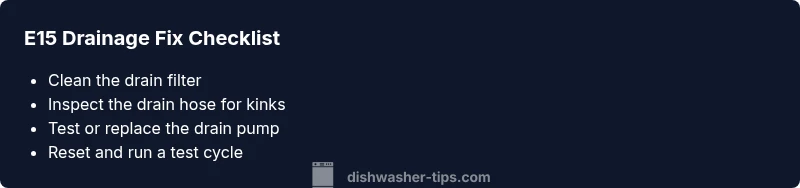
An E15 error on a Bosch dishwasher signals a drainage fault. The most common causes are a blocked drain filter, a kinked or clogged drain hose, a faulty drain pump, or a stuck water-level sensor. Start with the simplest fixes: clean the drain filter, inspect and straighten the drain hose, and reset the machine. If the code returns, proceed to deeper checks or call a professional.
What E15 Means on a Bosch Dishwasher
When you see the E15 code on a Bosch dishwasher, it is not a mystery you want to ignore. E15 signals a drainage fault, meaning the appliance believes water is not draining correctly or has already backed up. For homeowners and renters, this is an urgent warning that can lead to standing water, improper rinsing, or even overflow in extreme cases. According to Dishwasher Tips, the root causes are usually straightforward and DIY-friendly if addressed quickly. In Bosch dishwashers, E15 commonly points to a blocked or dirty drainage pathway — most often the drain filter or the drain hose — but it can also be triggered by a faulty drain pump or a stuck float switch. The key is to approach it in order: start with the least invasive checks, then move toward component replacements only if the code remains after you clean and re-seat everything. The goal is to restore proper drainage and avoid repeated leaks or a shoddy rinse quality—crucial for e15 bosch dishwasher health in 2026.
Quick Fix You Can Try Now
The quickest route to suppress the E15 error on your e15 bosch dishwasher is a careful, staged DIY check. First, unplug the unit and pull it out to access the bottom. Then remove the lower panel and inspect the drain area. Clean the drain filter thoroughly, removing all debris, and rinse it under running water. Check the drain hose for kinks, blockages, or crush points; straighten any bends and detach it briefly to flush. Reassemble and run a short rinse cycle to verify drainage. If E15 persists, perform a reset by cutting power for 2 minutes and then restarting. If the code reappears, consider flushing the hose with warm water or replacing the drain pump or float switch. Dishwasher Tips notes that many E15 cases resolve with cleaning, but if you smell burning components, see pooling water, or constant leaks, stop and call a professional immediately.
Diagnostic Flow for E15
When diagnosing E15 on a Bosch dishwasher, begin with symptoms and work toward causes and fixes. Symptoms include water not draining, standing water in the tub, or the machine stopping mid-cycle with the E15 display. Likely causes include: 1) Clogged drain filter – high likelihood; 2) Drain pump failure or impeller jam – medium likelihood; 3) Faulty float switch or faulty water level sensor – low likelihood. Fixes range from easy cleaning to hard part replacements. Start with quick wins like cleaning filters and hoses, then verify the pump operation by listening for the pump during a drain cycle. If the issue persists, test or replace the float switch or sensor. This flow aligns with the practical advice from Dishwasher Tips for e15 bosch dishwasher support in 2026.
Step-by-Step Fix: Most Common Cause — Clogged Drain Filter
To tackle the most frequent E15 trigger, a clogged drain filter, follow these steps. 1) Ensure the machine is unplugged and powered off. 2) Remove the lower panel to access the drain area. 3) Remove and inspect the drain filter; rinse under warm water and scrub with a soft brush. 4) Reinstall the filter correctly and ensure the sump is clear. 5) Check the sump for debris and reassemble. 6) Run a test cycle to confirm drainage. Pro tip: re-seat all clips firmly to prevent airlocks. If drainage still fails, move to hose inspection or pump testing. The expected outcome is clear drainage and a return to normal wash performance.
Other Potential Causes and Fixes
If cleaning the filter does not resolve E15, other causes may include issues with the drain pump, float switch, or the drain hose itself. 1) Drain pump: listen for a humming sound during drain cycles; if absent, the pump may be dead or blocked and may require replacement. 2) Drain hose: inspect for kinks or blockages near the connection to the air gap or sink; replace if crushed or blocked. 3) Float switch and water-level sensor: a stuck float can falsely signal a full tub; test by manually moving the float and observing drain function. 4) Control board or wiring: rare but possible, especially after prior repairs. Cost ranges for parts and labor typically vary by region; expect parts in the tens to hundreds and labor in a broader range; always factor in professional help if the unit is under warranty or if you are uncomfortable with electrical work.
Safety, Maintenance, and When to Call a Pro
E15 is not something to shrug off, especially if you notice water leakage or electrical smells. Always unplug the unit before any interior work and avoid using water near electrical components. If you cannot locate the source of E15 after cleaning the filter and hose or if replacing the pump or sensor exceeds your comfort level, contact a professional. Warranties may cover certain drainage faults depending on the model and service history; consult your Bosch warranty documentation. For a persistent E15 error after DIY fixes, Dishwasher Tips recommends scheduling a professional service call to prevent water damage and ensure code-free operation.
Maintenance to Prevent E15 Recurrence
Regular maintenance is your best defense against E15 on the e15 bosch dishwasher. Clean the drain filter monthly, inspect the drain hose for kinks every few months, and run an empty cycle with a calibrated rinse aid to prevent buildup. Keep the sink area nearby clear of debris that could travel into the dishwasher's drain. If you have hard water, consider a descaler or water-softening setup to prevent mineral buildup inside the drain components. A proactive maintenance routine reduces drainage problems and extends the life of the pump and float switch.
Steps
Estimated time: 1-2 hours
- 1
Power down and access the drain area
Unplug the dishwasher and pull out from the cabinet to reach the bottom panel. Remove the panel to expose the drain filter and sump. This initial access is critical for a safe and effective inspection.
Tip: Take a photo of hose connections before disassembly to aid reassembly - 2
Remove and inspect the drain filter
Take out the drain filter assembly, clear debris, and rinse under warm water. Inspect the sump for small particles that could flow into the drain path. A clean filter is essential for proper drainage.
Tip: Use a soft brush to remove stubborn buildup without scratching the plastic - 3
Check the drain hose and air gap
Follow the drain hose from the sump to the connection at the wall or disposal. Look for kinks, clogs, or crushed sections. Detach and flush the hose if you suspect a blockage.
Tip: Do not force-cleaning tools into the hose; use water flushes or a flexible brush - 4
Test the drain pump operation
With the hose clear, run a drain cycle to listen for pump activity. A silent or humming pump may indicate failure or obstruction; test by carefully removing the pump filter to inspect impellers.
Tip: Never remove power while the pump is connected; handle with dry hands - 5
Inspect the float switch and sensor
Locate the float assembly and verify it moves freely. A stuck float can trigger an E15. Gently move the float to ensure it drops and rises normally; reseat connectors if needed.
Tip: Ensure no mineral buildup around the float arm - 6
Reset and test the system
Reassemble the access panel, plug the unit back in, and run a short empty cycle to verify drainage. If E15 persists, proceed to component replacements as needed.
Tip: Record the test results to compare after any future service
Diagnosis: E15 error code appears and water fails to drain in a Bosch dishwasher
Possible Causes
- highClogged or dirty drain filter
- mediumDrain pump failure or impeller jam
- lowFloat switch or water-level sensor malfunction
Fixes
- easyClean the drain filter and sump; remove debris and rinse thoroughly; ensure proper seating
- easyInspect drain hose for kinks or blockages, disconnect and flush if needed
- hardReplace the drain pump or impeller if no drainage occurs during test run
- mediumTest or replace the float switch/water-level sensor; reseat wiring harness and re-test
People Also Ask
What does E15 mean on a Bosch dishwasher?
E15 is a drainage fault indicating the machine cannot drain properly. It often results from a blocked filter or hose, a failing pump, or a faulty sensor. Start with cleaning the drain path and hose before moving to parts replacement.
E15 means the dishwasher can't drain properly. Start by cleaning the drain path and hose, then check the pump if needed.
Can I fix E15 myself?
Yes, many E15 issues can be fixed with basic maintenance like cleaning the drain filter and inspecting the hose. If the error persists after DIY fixes, consider professional service to avoid water damage or warranty issues.
Yes, many E15 issues can be fixed by cleaning parts and inspecting hoses. If it keeps coming back, call a pro.
How long does a drain pump replacement take?
Replacing a drain pump typically takes 1-2 hours for a DIY-friendly repair, longer if you hire a professional. Costs vary by model and region, and parts pricing adds to labor.
A drain pump replacement usually takes about an hour or two, depending on access and skill.
Will E15 cause leaks or other damage?
Yes, drainage faults can lead to standing water and potential leaks if the problem is ongoing. Address the root cause promptly to prevent water damage or mold growth.
E15 can lead to leaks if not addressed, so fix the root cause quickly.
Is E15 ever covered by warranty?
Warranty coverage for E15 depends on model, age, and service history. Review your Bosch warranty terms or contact customer support to confirm eligibility.
Warranty depends on the model and service history; check your terms or contact support.
How do I reset the Bosch dishwasher after repairs?
To reset, unplug the unit or switch off the breaker for 2-3 minutes, then reconnect and run a test cycle to ensure drainage returns to normal.
Unplug it for a couple of minutes, then plug back in and test a cycle.
Watch Video
What to Remember
- Start with simple drain-filter cleaning for E15.
- Inspect and straighten the drain hose before hose replacement.
- If the code persists, test the pump and float switch.
- Call a pro for persistent E15 or apparent leaks.