Bosch Dishwasher Problem: Troubleshooting Guide for Homeowners
A practical, urgent troubleshooting guide for common Bosch dishwasher problems. Learn to diagnose power, drainage, and cleaning issues quickly with actionable steps and safety tips from Dishwasher Tips.


A Bosch dishwasher problem is most often caused by power, door latch, or drainage issues. Start with the basics: check the outlet or breaker, ensure the door is fully closed and latched, and clean the filter and spray arms. If these steps don’t fix it, follow a diagnostic flow and step-by-step fixes to identify the root cause.
Bosch Dishwasher Problem: Why It Happens and What It Means
A Bosch dishwasher problem can show up in several ways: it won’t start, it won’t drain, dishes come out dirty, or leaks appear. Understanding why helps you fix it quickly instead of guessing. According to Dishwasher Tips, many Bosch dishwasher problems share a few predictable patterns: electrical supply issues, worn door latches, clogged filters, and drain blockages. The Dishwasher Tips team found that the most frequent root causes are simple to test and fix, which is encouraging for homeowners and renters who want to avoid service calls. Start with the low-effort checks to confirm whether the issue is a loop in the electrical system, a mis-seated door, or a clogged path for water and waste.
In many cases, moisture or residue on the door seal points to a seal leak rather than a more serious component failure. Diagnosing early reduces the risk of damaged electronics or mold growth inside the cabinet. The goal is to rule out the easiest fixes first, then progress to targeted diagnostics.
Quick Checks You Can Do Before Calling a Tech
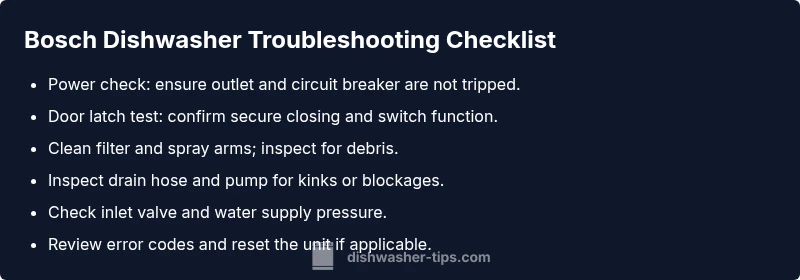
Before you pick up the phone, perform a quick triage to separate simple from serious Bosch dishwasher problem causes. Confirm the power source is reliable by testing the outlet with another device or using a GFCI, and verify the circuit breaker hasn’t tripped. Inspect the door latch; if the door doesn’t latch firmly or the switch feels loose, the unit may think it’s open and won’t start. If the machine runs but leaves dishes dirty, check the filter and spray arms for debris. Finally, inspect the drain hose for kinks or clogs that block water flow. These checks are fast, inexpensive, and often resolve common issues without a service call.
Symptoms and Immediate Responses
Different symptoms require different immediate responses. If the Bosch dishwasher problem is “won’t start,” start with power and door checks, then reset the control panel. If it runs but won’t drain, the drain pump or filter is a likely culprit. If dishes come out dirty, focus on spray arms, detergent compatibility, and rinse aid balance. If you notice water around the base, inspect seals and hoses for leaks. For each symptom, document the exact error codes shown on the display; these codes guide you toward the likely fault and whether you can fix it yourself.
Diagnostic Flow: Symptom to Diagnosis to Solution
A structured diagnostic flow helps you map symptoms to probable causes and appropriate fixes. Begin with the simplest checks (power, door, filter) and work toward more complex components (pump, valve, control board). Create a short checklist for each symptom, and test one fix at a time to confirm resolution before moving forward. If multiple symptoms appear, there is often a shared root cause (for example, drainage issues can cause both not draining and poor washing performance).
Step-By-Step Fixes for the Most Common Bosch Dishwasher Problem
The most common Bosch dishwasher problem is typically a combination of drainage or cleaning inefficiencies. This section outlines a practical, non-technical approach to restore performance. Start with cleaning and reseating components, then replace a failing part if needed. Remember to disconnect power before touching any internal parts and never bypass safety features. If your model displays error codes, use them to narrow down the fault. This guide assumes you have basic tools and can access the filter area, hoses, and pump.
Safety Tips and Prevention to Avoid Future Bosch Dishwasher Problems
Safety first. Always unplug the unit before inspecting electrical modules and wear gloves to protect your hands from sharp edges. Use a flashlight to inspect seals for cracks and check the splash zone for mold. Regular maintenance is the best prevention: clean the filter monthly, inspect spray arms for blockages, and use the right detergent and rinse aid. If you smell burning plastic or notice arcing, stop using the machine and call a professional immediately. Avoid using high-heat cycles on a leaky unit to prevent further damage.
When to Call a Professional and What to Expect
If you encounter persistent Bosch dishwasher problem signals after performing standard checks and the basic troubleshooting steps, it’s time to call a professional. A technician can test the control board, sensor circuits, and motor with specialized tools, and safely replace components like the inlet valve, pump, or seals. Having your error codes and a list of symptoms ready helps the technician diagnose faster and reduces the time and cost of the service visit.
Steps
Estimated time: 45-60 minutes
- 1
Power and Door Verification
Ensure the dishwasher is plugged in and the outlet works. Check the house circuit breaker. Confirm the door is fully closed and the latch engages firmly. A misaligned door can prevent startup.
Tip: Test the outlet with a known-working device to confirm power is live. - 2
Inspect and Clean the Filter
Remove the lower rack and locate the filter assembly. Rinse it under warm water, removing all debris. Use a soft brush to clear stubborn residue from the screen and sump area.
Tip: Run a short wash cycle with a vinegar-cleaning or dishwasher-safe cleaner afterward to dissolve mineral buildup. - 3
Check Spray Arms and Racks
Spin the spray arms by hand to ensure they move freely and aren’t blocked by dishes. Remove any debris blocking the holes. Ensure forks and items sit away from spray paths.
Tip: Place dishes to allow water to reach all spray arms for effective cleaning. - 4
Inspect Drain System
Examine the drain hose for kinks and ensure it isn’t crushed. Check the sink drain for backups and confirm the pump is operating during a drain cycle.
Tip: If you hear a humming but no water drainage, the pump may be blocked; do not run the unit repeatedly in a blocked state. - 5
Review Water Inlet and Detergent
Confirm the water supply valve is open and water flow is steady. Use recommended detergent and avoid adding extra detergent that can cause suds and cycling issues.
Tip: Too much detergent can create foam that interferes with proper draining. - 6
Reset and Test
Reset the dishwasher’s control panel using the proper method for your Bosch model. Run a short cycle to verify if the issue persists and note any error codes displayed.
Tip: Write down any codes to aid future troubleshooting or professional service.
Diagnosis: Machine won’t start, drains poorly, or leaves dishes dirty
Possible Causes
- highPower issue or tripped breaker
- highFaulty door latch or switch
- highClogged filter or pump
- mediumDrain hose kink or air gap
- lowControl board fault
Fixes
- easyCheck outlet, reset breaker, and ensure a constant power supply
- easyInspect door latch and door switch; reseat door if needed
- easyClean/replace filter and rinse arms; run a cleaning cycle
- easyInspect drain hose for kinks; clear clogs and test pump operation
- hardIf error codes point to electronics, consult a professional for control board service
People Also Ask
Why won’t my Bosch dishwasher start?
Common causes include a tripped breaker, a loose or damaged door latch, or a malfunctioning control panel. Begin with power and door checks, then reset the panel. If the problem persists, review error codes.
If it won’t start, check power and door latch, then reset the control panel. If it still won’t start, note any error codes and consult the troubleshooting guide.
Why doesn’t my Bosch dishwasher drain properly?
Drainage problems are usually caused by a clogged filter or pump, a kinked drain hose, or a blocked air gap. Clean the filter, inspect the pump, and straighten or replace the hose. If the issue persists, check for obstructions in the sink drain.
Most drainage problems come from clogs in the filter or pump or a kinked drain hose. Clean and inspect these parts, then retest.
Why are my dishes still dirty after a cycle?
Dirty dishes often indicate clogged spray arms, insufficient detergent, or improper loading. Clean spray arms, ensure correct detergent usage, and rearrange dishes for better water flow.
If dishes are still dirty, check the spray arms and detergent and adjust loading."
How often should I clean the dishwasher filter?
Most users should clean the filter at least monthly, more often in hard-water areas or with heavy use. This helps maintain optimal washing performance and reduces clogs.
Clean the filter about once a month, more often if you notice buildup or reduced cleaning power.
Is it safe to operate a Bosch dishwasher with a leak?
No. If you see water pooling, stop the cycle, unplug, and inspect seals and hoses. Leaks can indicate worn seals or cracked hoses needing professional service.
If there’s a leak, stop using it and have a technician check seals or hoses.
Watch Video
What to Remember
- Check basics first: power, latch, and filter.
- Clean and inspect drain components to fix drainage issues.
- Document error codes to speed up diagnosis.
- Call a pro if you identify electrical faults or persistent leaks.