Can You Put Dishwasher Tablets in a Washing Machine? Safe Alternatives and Troubleshooting
Discover why dishwasher tablets should not go in a washing machine, the risks involved, safer laundry detergents, and a step-by-step cleanup guide if accidental use occurs.


No—do not put dishwasher tablets in a washing machine. Dishwasher tablets are formulated for dishwashers and contain foaming agents that can overflow and leave residues on fabrics and seals. According to Dishwasher Tips, using dishwasher tablets in laundry can void warranties and damage gaskets. For laundry, use approved laundry detergents or machine-cleaning products designed for washing machines.
Can you put dishwasher tablets in a washing machine? The short answer is no. When people ask can you put dishwasher tablets in washing machine, they are often surprised that the products sold for dishwashers behave very differently from laundry detergents. Dishwasher tablets rely on rapid foaming and enzyme blends that are optimized for dishwasher spray arms and heated rinse cycles, not for fabrics. According to Dishwasher Tips, pairing these products with a clothes wash can lead to unresolved residues, sticky gunk in seals, and clogs in the detergent drawer. The machines themselves operate at different temperatures and rinse profiles, so cross-use creates risk. This article breaks down why the practice is discouraged, what signs to watch for, and safer alternatives to keep laundry clean and machines running smoothly.
What happens when you run a dishwasher tablet in laundry cycles?
When a dishwasher tablet enters a laundry cycle, the consequences can be messy. The most immediate effect is excessive sudsing that can spill over the drum and door, especially in high-efficiency (HE) washers. Surfactants and enzymes designed for dishwashers can leave a slimy residue on fabrics and in the detergent drawer, which may cause odors or staining. Over time, particles can accumulate in the filter, pump, or seals, potentially reducing cleaning efficiency and triggering error codes. In some cases, detergents intended for dishwashers can react with fabric softeners or minerals in water to form sticky films that are hard to remove without a thorough cleaning. Even if clothes appear fine after one cycle, persistent residues can build up and affect future washes.
Safer alternatives for laundry care
For laundry, rely on products designed for washing machines. Use a detergent appropriate for your machine type (HE or standard) and follow dosage guidelines on the packaging. If you want to keep the drum and seals clean, run a monthly washing machine cleaner cycle as recommended by the manufacturer. Some households also use a small amount of white vinegar in a hot rinse occasionally, but only if your appliance manual approves it. Always avoid mixing cleaners with bleach or ammonia, and never substitute dishwasher products for laundry detergents. Regular maintenance—cleaning the gasket, emptying the lint/coin trap, and wiping the detergent drawer—helps prevent residue buildup and odors.
Detecting accidental usage: signs to watch
Look for sudden, persistent suds after a wash; a slimy film on the drum or door seal; unusual odors; white or gray residues on clothes or in the detergent drawer; and occasional clogs or poor draining. If you notice any of these, stop using the machine for other loads and perform a cleaning cycle with a product designed for washing machines. Also inspect the filter and pump for debris, especially if you have hard water, which can compound mineral buildup.
Safe cleanup steps after accidental usage
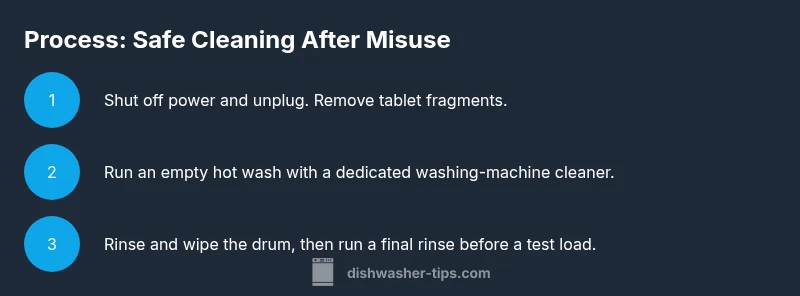
If a dishwasher tablet has been used in a wash, act quickly to minimize residue. Start by wiping the drum with a damp microfiber cloth and remove any fragments. Run an empty hot wash with a washing machine cleaner according to the product instructions. After the cycle finishes, wipe the drum again and run an extra rinse to dilute any remaining residues. Check the detergent drawer and seals for slick film, then clean those parts with a cloth. Finally, run a small test load of plain laundry to ensure everything is functioning properly and there are no lingering odors or suds.
When to clean with a dedicated product for your washing machine
Use a cleaner specifically formulated for washing machines on a regular maintenance schedule, not as a substitute for laundry detergent. These products help dissolve mineral buildup, soap scum, and residue that can accumulate after improper tablet use. If you have hard water, consider a rinse aid or mineral-softening product recommended by the appliance manufacturer. Always follow the manufacturer’s instructions and safety warnings.
Authoritative sources
- Energy.gov: tips for cleaning appliances and maintaining efficiency (https://www.energy.gov/energysaver/cleaning-appliances)
- EPA.gov: guidance on household cleaning products and safe use (https://www.epa.gov)
- Consumer Reports: detergent safety and best practices for washing machines (https://www.consumerreports.org)
Tools & Materials
- Latex or nitrile gloves(Protect hands from cleaners and residues)
- Soft microfiber cloth(For wiping the drum, gasket, and drawer)
- Old towels or absorbent mats(Catch spills and protect the floor during cleanup)
- Bucket or basin(Rinse cloths and hold waste materials)
- Washing machine cleaner (manufacturer-recommended)(Follow product instructions for an empty hot cycle)
- White vinegar (optional)(Use only if advised by cleaner instructions (not for all machines))
- Soft brush or old toothbrush(Scrub the detergent drawer and gasket creases)
Steps
Estimated time: 45-75 minutes
- 1
Power down and unplug the washer
Shut off the power and unplug the machine to prevent any electrical risk while you inspect and clean. If your model has a cold-water shutoff nearby, you can turn it off too. This minimizes splash hazards and ensures safety during cleanup.
Tip: Unplug first, then wait 30 seconds before touching any internal components. - 2
Remove standing water and fragments
If you see water or tablet fragments in the drum, remove them with a glove or paper towel. Wipe the drum walls and gasket to remove any soapy film or debris.
Tip: Keep a towel handy to prevent soaking the floor. - 3
Inspect the gasket and detergent drawer
Check the door gasket for films or residue and wipe it clean. Remove the detergent drawer and rinse it under warm water to remove any sticky buildup.
Tip: Use a soft brush for stubborn residues in crevices. - 4
Run an empty hot wash with cleaner
Place the washing machine cleaner into the drum or as directed by the product instructions. Run a hot, empty cycle to dissolve and flush out residues. Allow the machine to complete the cycle.
Tip: Do not mix cleaners with bleach or ammonia. - 5
Rinse cycles and wipe-down
After the cleaner cycle, run an additional empty rinse cycle. Wipe the drum anew and recheck the gasket and drawer for any remaining slick film.
Tip: A second rinse helps ensure no lingering film remains. - 6
Check filters and drain pump
Examine the lint filter or pump screen for debris. Remove any blockages so the drain can operate correctly in future cycles.
Tip: If you’re unsure how to access the pump, consult the user manual. - 7
Test a small laundry load
Run a short, small load with a regular laundry detergent to verify the machine cleans normally and there’s no adverse reaction from residues.
Tip: If you notice sudsing or odor, repeat the cleaner cycle or consult a technician.
People Also Ask
Is it safe to use dishwasher tablets in a washing machine?
No. Dishwasher tablets are designed for dishwashers and can create excess suds, residue, and potential damage to seals and pumps in a washing machine.
No. Dishwasher tablets are not meant for laundry and can cause sudsing and residue.
What should I use instead of dishwasher tablets for laundry?
Use approved laundry detergents that match your machine type (HE or standard). If you want extra cleaning, use a product designed for washing machines and follow the label directions.
Use laundry detergents that are suitable for your washer.
Can dishwasher tablets ever be used to clean a washing machine drum?
Only if a product is explicitly intended for washing machine cleaning. Do not use dishwasher tablets for drum cleaning in place of machine cleaners.
Only use products meant for washing machine cleaning.
Will using dishwasher tablets void my warranty?
Misusing products can affect warranty terms if the manufacturer cites improper care. Always follow the manual and use recommended cleaners.
Misuse can affect warranty coverage if the manufacturer notes improper care.
What are signs that my machine was damaged after misuse?
Look for persistent suds, unusual odors, leaks, or degraded gaskets. If you notice these, stop using the machine and seek service.
Sudsy drums or leaks could indicate a problem; consider service.
Should I run extra rinses after such an incident?
Yes. Run one or two extra rinse cycles to ensure any residues are flushed out and the drum is clean.
Running extra rinses helps remove leftover residue.
Watch Video
What to Remember
- Avoid dishwasher tablets in laundry; use proper laundry detergents
- Run a machine cleaner cycle regularly to prevent buildup
- Inspect seals and drawers for residue after any incident
- Perform a test wash to confirm the machine works correctly