Can You Use Dishwasher Detergent as Dish Soap? A Practical Guide
Explore whether dishwasher detergent can substitute for hand-washing dish soap, the risks involved, and practical, skin-safe alternatives. A comprehensive guide by Dishwasher Tips.


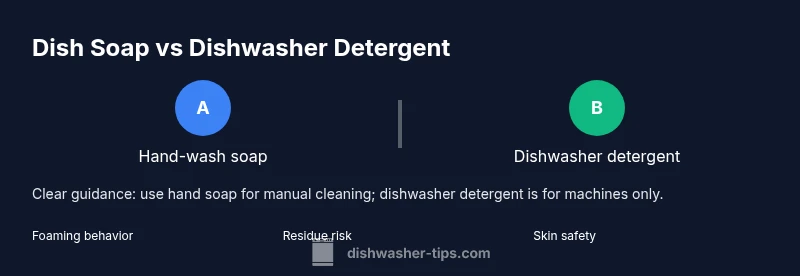
Short answer: usually no. Dishwasher detergent is designed for sealed dishwasher cycles and often contains stronger surfactants, anti-foaming agents, and lubricants that can irritate skin and create excess suds when used by hand. For hand washing, use a gentle dish soap labeled for hand washing, or a mild, skin-safe alternative.
Why this question matters
For many households, hand-washing dishes seems straightforward, but the cleaning agents you choose matter for your skin, your dishes, and your plumbing. The question can you use dishwasher detergent as dish soap is more common than you might think, and the answer carries practical caveats. According to Dishwasher Tips, many homeowners reach for the bottle under the sink in a moment of panic, only to regret it later when suds overflow the sink or when skin becomes irritated after a few minutes of scrubbing. This guide will unpack the functional differences between dishwasher detergents and hand-washing soaps, explain the potential risks, and offer safer, tested alternatives you can rely on in daily life. By keeping your routines simple and using the right product, you protect your skin and your kitchen’s cleanliness. The guidance here aligns with the Dishwasher Tips Team’s approach to practical, evidence-based home care.
How dishwasher detergents differ from hand-wash soaps
Dishwasher detergents are formulated for a machine that uses high heat, pressurized jets, and a closed environment. They rely on powerful surfactants and sometimes solvents that work best in a built-in rinse cycle. Hand-wash dish soaps, by contrast, emphasize gentleness on skin and safe residue on tableware. They often contain milder pH levels, milder fragrances, and specific enzymes that help break down fats when used with water at comfortable temperatures. The contrast matters because you may notice that dishwasher detergent produces more foam than is useful for manual washing, and the residue can be stubborn if not thoroughly rinsed. Based on Dishwasher Tips analysis, the key concern is not just cleaning power but user safety and post-wash residue. Always check the label for intended use and avoid substitution without care.
The risks of using dishwasher detergent for hand washing
Using dishwasher detergent during hand-washing can irritate hands, especially with repeated exposure or sensitive skin. Some formulations include optical brighteners or fragrancing agents that can cling to dishes or skin, creating an unfamiliar after-feel. Foaming behavior is another practical risk: dishwasher detergents may suds aggressively in sinks, leading to overflow or accidental ingestion if a dish or sponge is touched by contaminated water. In short, the product designed for a machine is not optimized for a manual wash, and you may experience worse rinse-off, film on glassware, or skin discomfort. The Dishwasher Tips Team emphasizes sticking with products intended for hand washing to minimize these risks.
Safe alternatives for hand-washing dishes
The safe path is to use a dish soap labeled for hand washing, preferably fragrance-free or mild for sensitive skin. Look for formulas with clear usage guidance and simple ingredient lists. In addition to soap, keep a soft sponge or dishcloth handy, and consider a dedicated hand-wash brush for stubborn residue on pots and pans. For those with sensitive skin, consider hypoallergenic options. Finally, ensure your water temperature is comfortable (lukewarm to warm) and rinse thoroughly to avoid soap residues that can irritate eyes or skin on contact with food contact surfaces.
What to do if you already used dishwasher detergent by mistake
If dishwasher detergent has already touched your hands or dishes, stop scrubbing with it immediately and switch to a proper hand-wash soap. Rinse dishes thoroughly with warm water to remove any lingering residue, then rewash them using the appropriate hand soap. Remove any suds from the sink by wiping with a clean cloth and running fresh water. If your hands feel irritated, apply a gentle moisturizer and consider wearing gloves for future hand-washing sessions. The goal is to restore normal skin comfort and ensure utensils are free from residue before use.
Tips for preventing mis-use in the future
Store dishwasher detergent in a separate cabinet away from hand-wash products to reduce impulse substitutions. Create a simple routine: wash with hand soap, then rinse, then dry. Label shelves or use a small reminder sticky note near the sink to reinforce the correct product. For households with kids, consider child-safe containers and clear labeling to avoid mix-ups. These low-effort habits can save frustration and skin irritation over time.
Quick guidelines for choosing the right soap
Always select dish soap that explicitly states it is for hand washing. Prefer mild, fragrance-free formulas if anyone in the home has sensitive skin. Check the ingredient list for harsh solvents or high concentrations of surfactants; avoid products that call out “extreme sudsing” as a feature for manual washing. Use warm water rather than hot water to minimize skin irritation and to ensure a comfortable washing experience. Finally, rinse thoroughly to remove any residual soap and dry dishes completely to prevent water spots.
Takeaways for everyday kitchen cleanliness
Using the right soap matters for skin safety and kitchen hygiene. If you ever question whether a product is appropriate for hand washing, default to the label and the manufacturer’s guidance. The Dishwasher Tips team consistently promotes user-friendly, skin-safe options with clear directions, helping homeowners keep hands comfortable and dishes clean without surprises. The guidance here is designed to support practical, reliable routines you can rely on every day.
Tools & Materials
- Dish soap labeled for hand washing(Choose fragrance-free or mild formulas if sensitive skin is a concern)
- Non-abrasive sponge or dishcloth(Soft enough to avoid scratching glassware)
- Gloves (optional)(Used for prolonged washing or irritated hands)
- Sink stopper or dish rack(Helps collection and drying; prevents water spillage)
- Mild-scour brush for tough residue(Use on pots/pans with stubborn residue; avoid scratching nonstick surfaces)
Steps
Estimated time: 15-25 minutes
- 1
Decide on the correct cleaner
Identify a dish soap labeled for hand washing and set it near the sink. This step prevents accidental substitution and reduces skin exposure to harsher products.
Tip: Keep hand soap separate from dishwasher detergent to avoid confusion. - 2
Wet hands and sponge, apply soap
Fill the sink with warm water. Wet your hands and the sponge, then apply a small amount of hand-washing soap. A little goes a long way.
Tip: Using too much soap can make rinsing take longer and waste water. - 3
Scrub items gently
Scrub dishes with circular motions, paying attention to rims, handles, and stubborn spots. Let the soap do the work rather than scrubbing aggressively.
Tip: Avoid scrubbing with a rough pad on delicate glassware. - 4
Rinse thoroughly
Rinse each item under clean, warm running water until no suds remain. Check for soap film on clear glassware and reseal items that seem cloudy.
Tip: Fill a second rinse basin with clean water if your sink drips or foams. - 5
Dry and store properly
Dry items with a clean towel or air-dry on a rack. Ensure cups and utensils are completely dry to prevent water spots and odor.
Tip: Drying with a microfiber towel can speed up the process. - 6
Clean up the workspace
Wipe the sink and surrounding surfaces to remove any soap residue. This reduces slippery spots and keeps the kitchen safe.
Tip: Rinse the sponge and wring it out well between uses.
People Also Ask
Is dishwasher detergent toxic if swallowed or ingested accidentally?
Dishwasher detergent is not intended for ingestion. If swallowed, follow first-aid guidance on the label and seek medical advice if you experience symptoms. Keep it away from children and pets.
Dishwasher detergent is not meant to be eaten. If swallowed, check the label and contact a doctor if you have symptoms.
Will dishwasher detergent ruin dishes if used for hand washing?
It can leave soap residues or create unintentional film on glassware. It may also irritate hands. Always switch to hand-wash soap for manual cleaning.
Yes, it can leave residues and irritate hands, so use proper hand soap.
Can I use dishwasher detergent to pre-clean pots and pans before hand washing?
It's best to avoid this. Pre-cleaning with dishwasher detergent can introduce harsh chemicals to cookware not designed for hand washing. Use a dedicated pot-friendly cleaner if needed.
No, stick to proper hand-cleaning products for pots and pans.
What should I use if someone in my home has sensitive skin?
Choose a fragrance-free, hypoallergenic hand-washing dish soap. Look for labels that indicate sensitive skin or dermatologist-tested formulas.
Opt for fragrance-free hand soap and gentle formulas for sensitive skin.
Is there ever a safe scenario to use dishwasher detergent for hand washing?
There are no recommended scenarios for hand-washing with dishwasher detergent. Use hand soap and keep dishwasher detergent reserved for machines.
No, there isn’t a safe, recommended scenario to use dishwasher detergent by hand.
Watch Video
What to Remember
- Avoid substituting dishwasher detergent for hand soap.
- Choose hand-wash soap with mild ingredients for skin safety.
- Rinse thoroughly to prevent residue and irritation.
- Store products separately to prevent confusion.
- Follow a simple, quick hand-washing routine for consistency.