Dishwasher and Garbage Disposal: A Practical Comparison
A data-informed comparison of dishwasher and garbage disposal setups, covering installation, maintenance, and troubleshooting for homeowners. Learn how these systems interact, common pitfalls, and setup strategies for different homes.


Together, a dishwasher and garbage disposal can streamline kitchen cleanup when properly installed, vented, and matched to your plumbing. This quick comparison explains when to pair them, how installation differs by home type, and the essential maintenance steps to prevent clogs, backups, and odors in a busy household. It also highlights common pitfalls and cost considerations to help you decide quickly.
Overview: Why the dishwasher and garbage disposal pairing matters
The dishwasher and garbage disposal share drainage routes, electrical considerations, and sometimes even mounting hardware in many homes. Understanding how these two appliances interact helps homeowners avoid misconfigurations that lead to clogs, leaks, or ineffective cleaning. For example, when you run a full sink load, the disposal can affect the dishwasher drainage rate and the dishwasher’s ability to rinse thoroughly. This is why the phrase dishwasher and garbage disposal matters more than either device alone. According to Dishwasher Tips, planning the plumbing layout before purchase saves time and reduces retrofit costs later.
In practice, the best approach is to map the sink area, verify the disposal knockout plug is removed where needed, and confirm that venting and air gaps meet local codes. In this article, we compare installation options, maintenance routines, and typical performance differences to help homeowners choose the setup that fits their kitchen workflow, budget, and reliability goals.
How they work together: plumbing, drainage, and venting
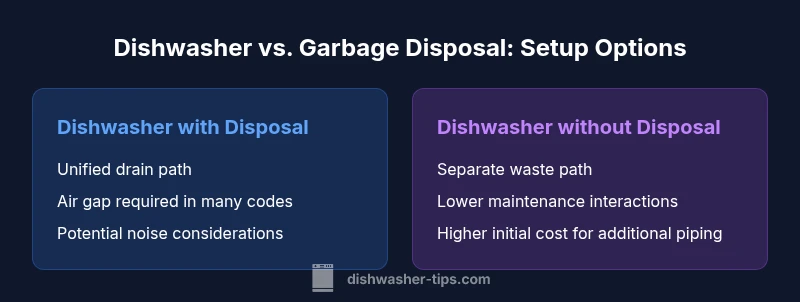
Both appliances rely on a shared drain line and a properly vented system to prevent backups. The disposal’s grind chamber can influence the flow rate seen by the dishwasher, especially if the drainage path is undersized or poorly vented. A well-designed setup uses a dedicated dishwasher drain line that meets code requirements, often with an air gap or high loop to prevent backflow. When configured correctly, waste is managed efficiently, odors stay under control, and cycles complete without interference. From the user perspective, the key is to ensure there is no air lock, that joints are secure, and that accessibility for cleaning and maintenance is clear. A properly vented system reduces the risk of gurgling noises and slow draining during busy cycles, which both appliances experience in composite loads.
Practical takeaway: plan the route from the sink to the disposal and to the dishwasher drain with future maintenance in mind, and verify that the disposal’s connection to the dishwasher is compatible with your model.
Installation considerations by home type
The right installation depends on your kitchen layout, local codes, and the age of your plumbing. In newer homes, installers commonly pair a standard garbage disposal with a built-in connection to the dishwasher line, using an air gap where required. In older homes with 1¼-inch or 1½-inch drain lines, you may need adjustments to prevent slow drainage or backups. Apartments and small kitchens often benefit from compact disposals and space-saving mounting options, but you must ensure the unit fits under the sink and does not conflict with plumbing hardware. For DIY enthusiasts, ensure you have a clear path to the electrical outlet and a safe, dry area to mount the unit; for renters, check your lease and local regulations before making changes. In all cases, hire a licensed professional if you are unsure about venting, electrical connections, or pipe sizing.
Branding note: planning ahead reduces the risk of removing or replacing parts later, which can quickly escalate costs.
Common failures and what they signal
Clogs, leaks, and odors are the primary signs that a dishwasher and garbage disposal setup needs attention. A slow-draining sink after a dishwasher cycle can indicate a partial clog in the trap or disposal, while backflow into the dishwasher may point to venting problems or an improper knockout plug left in place. A grinding or humming noise without grinding action often means a jam or a blockage in the disposal, which can affect dishwasher drainage if not addressed. Persistent leaks around the sink flange or under-sink connections indicate worn seals or loose fittings. Odors from the disposal typically result from trapped food particles or stagnant water in the grind chamber. Regular inspection of seals, traps, and the discharge lines helps prevent these issues from becoming expensive repairs.
Tip: keep an eye on humidity and moisture around the area to identify small leaks before they swell into plumbing problems.
Maintenance routines to extend life
Regular maintenance is the best defense against failures. Clean the disposal with cold water and a citrus-based cleaner to help neutralize odors. Run the dishwasher with a maintenance wash every few months to remove mineral build-up around the drain connections. Avoid fibrous waste like celery stalks or coffee grounds that can accumulate and jam the grinding mechanism. Periodically check the mounting screws, the disposal’s power cord, and the trap for debris. If you have hard water, consider a rinse aid tuned to your dishwasher to reduce mineral deposits that can constrain flow. For odor control, grind a few ice cubes or use a small amount of citrus rind—never put grease down the disposal, and always run water during operation. These routines are particularly important in mixed-function kitchens where both appliances see frequent use.
Safety, codes, and best practices
Always disconnect power before servicing either appliance. Confirm that the circuit is turned off at the breaker, test the unit with a voltage tester, and use appropriate personal protective equipment. Local codes may require an air gap or a high loop; verify compliance with your jurisdiction and the home’s plumbing plan. When in doubt, hire a licensed plumber or appliance technician to handle the hook-up. Ensure ventilation is adequate to prevent moisture buildup and corrosion, and keep the area free of combustible materials. Use only manufacturer-approved parts and follow the installation manual closely to preserve warranty protections. Safety and code adherence help prevent costly leaks and electrical hazards.
Performance trade-offs: noise, water, energy
Pairing a dishwasher with a garbage disposal can offer space and workflow advantages, but trade-offs exist. A disposal adds mechanical noise and requires periodic maintenance, which can affect perceived kitchen acoustics. Water usage is influenced by the dishwasher model more than the disposal, yet a poorly vented system can cause backpressure that slows drainage. Energy efficiency depends on the dishwasher’s cycle design, insulation, and whether the disposal runs concurrently with other loads. In optimized setups, you’ll notice smoother drainage, fewer backups, and cleaner finished dishes—though you may need to budget for higher upfront costs for quiet, efficient units. Weigh these factors against your household size, cooking habits, and whether you value a single waste path over potential maintenance tasks.
Troubleshooting guide: symptoms, quick fixes
Start with the basics: check for clogs in the trap, ensure the disposal knockout plug is removed, and verify the dishwasher drain hose is correctly connected with an appropriate loop or air gap. If you hear grinding but see no waste moving, remove the disposal cover (with power off) to inspect for foreign objects that can jam the blades. For odors, clean the disposal and run a citrus wash with cold water. If the dishwasher won’t drain, inspect the sink trap and venting; a professional may be needed to clear deeper blockages or replace a failing vent. Record recurring symptoms, since patterns help diagnose issues like partial blockages versus failed seals or mis-sizing.
Budgeting: installation costs and ongoing care
Costs vary by region, unit capacity, and installation complexity. A basic disposal and dishwasher hookup may represent a mid-range investment, while high-end models and engineered venting systems can push costs higher. Ongoing care includes regular maintenance, replacement of seals, and occasional professional service for jams or leaks. Budget for replacement cycles that align with typical appliance lifespans (usually several years to a decade, depending on usage and quality) and plan for potential upgrades that improve efficiency or reduce noise. A well-planned budget helps avoid unexpected downtime and ensures the kitchen remains functional during repairs.
Real-world setups: three practical kitchen scenarios
Scenario A: A compact condo with a standard 3¾-inch sink and limited cabinet space benefits from a compact disposal paired with a mid-range dishwasher. The arrangement uses a shared drain with an air gap, meeting code while keeping the footprint small. Scenario B: A family home with hard water and frequent heavy loads benefits from a high-efficiency dishwasher that uses a robust filtration system and a disposal designed for demanding cycles. Proper venting and warm-water accessibility optimize performance. Scenario C: A rental unit prioritizes low upfront cost; a basic dishwasher and a compact disposal can meet tenants’ needs while keeping maintenance simple. Each scenario demonstrates the balance between convenience, cost, and reliability when integrating the dishwasher and garbage disposal.
Feature Comparison
| Feature | Dishwasher with garbage disposal | Dishwasher without garbage disposal | Garbage disposal only (no dishwasher) |
|---|---|---|---|
| Ease of installation | Moderate (requires disposal setup) | Lower (no disposal integration) | Moderate (standalone) |
| Drainage and venting | Unified path with disposal vent | Separate path with dedicated drain | Separate path for disposal only |
| Water usage efficiency | Comparable per load; disposal may reduce pre-wash needs | Depends on dishwasher model | No |
| Maintenance needs | Medium (dispose maintenance + dishwasher care) | Low to medium | Low (dispose-only maintenance) |
| Cost range (installation) | Mid to high (including disposal) | Low to mid | Low |
| Best for | Small to mid-sized households seeking convenience | Budget-conscious setups | Homes with waste grinding needs |
The Good
- Convenience of a single waste path when properly configured
- Space savings from shared plumbing and mounting space
- Potentially lower cumulative maintenance if designed for compatibility
Disadvantages
- Disposal issues can affect dishwasher drainage if not vented
- Compatibility constraints may require professional installation
- Maintenance burden increases with both devices operating regularly
Combined setup is most advantageous in compatible, space-constrained kitchens.
Opt for a dishwasher with disposal when you want streamlined waste handling and a smaller footprint. If local codes or existing plumbing differ, consider alternative configurations and consult a licensed plumber to ensure reliability.
People Also Ask
Can I install a garbage disposal and dishwasher together?
Yes, most homes can install both; ensure the knockout plug is removed and that venting is in place. Professional confirmation ensures code compliance.
Yes, you can usually pair them; make sure the disposal is connected to the dishwasher drain and that venting and code requirements are met.
Is an air gap required when connecting a dishwasher to a disposal?
Code requirements vary by region; many codes require an air gap or a high loop to prevent backflow. Check local codes and manufacturer guidance.
Local codes often require an air gap or high loop, so verify with a plumber or the building department.
What maintenance tasks prevent odors in a combined setup?
Regular disposal cleaning, periodic maintenance washes for the dishwasher, and avoiding fibrous waste reduce odors and jams.
Clean the disposal periodically, run maintenance cycles on the dishwasher, and avoid hard fibrous waste.
Will a garbage disposal affect dishwasher performance?
Only if drainage is blocked or venting is improper; otherwise, a well-matched setup should perform normally.
Not usually, as long as drainage and venting are correct.
Is it cheaper to install both together or separately?
Costs vary by region and configuration, but a bundled setup can save space and piping work while increasing upfront complexity.
Costs vary, but combined setups can save on space and piping if done right.
What are common signs of drainage issues in a combined system?
Slow draining, gurgling sounds, frequent backups, or persistent odors indicate drainage or venting problems.
Slow drainage or unusual noises typically flag venting or blockage issues.
What to Remember
- Evaluate drain paths and venting before choosing a setup
- Check local codes for air gaps or high-loop requirements
- Plan for regular maintenance to prevent clogs and odors
- Prioritize compatibility between dishwasher and disposal models