Connecting a Dishwasher to a Garbage Disposal: A Practical Guide
Learn step-by-step how a dishwasher connects to a garbage disposal, including air-gap options, adapter choices, and leak-testing tips for a code-compliant, reliable setup.


To connect a dishwasher to a garbage disposal, install the discharge into the disposal inlet using the correct adapter or an air-gap kit, then remove the knockout plug. Secure the hose with clamps, ensure tight seals, and run water to test for leaks. Follow local plumbing codes and manufacturer guidelines.
Overview: How the dishwasher drains into a disposal
Connecting a dishwasher to a garbage disposal is a common kitchen upgrade, but it requires careful planning and adherence to plumbing codes. The basic idea is simple: wastewater from the dishwasher is directed into the disposal unit, which then drains into the sink drain. A secure connection prevents leaks, backups, and odors, while a properly positioned hose reduces the chance of backflow into the dishwasher. When people ask 'how is dishwasher connected to garbage disposal', they’re usually seeking a safe, code-compliant way to route wastewater without creating clogs. According to Dishwasher Tips, the most reliable setups use either a direct connection with a compatible inlet adapter or a dedicated air-gap device installed on the sink deck. In both cases, you must ensure the hose runs downhill toward the disposal to avoid standing water. You should also verify that the disposal is properly grounded and that the electrical supply remains separate from the drain path. In many homes, the disposal and dishwasher are both wired to the same circuit, so it's wise to inspect the circuit for overload risks before starting work.
Air gap vs direct connection: when to use which
Many jurisdictions require an air-gap between the dishwasher and the disposal or sink drain, while others allow a direct connection with a properly fitted adapter. The air-gap device sits on the countertop or sink deck and creates a physical barrier that prevents wastewater from siphoning back into the dishwasher if the disposal clogs or pressure changes. A direct connection, in contrast, routes the dishwasher hose straight to the disposal inlet through a rubber connector. Direct plumbing can save space and reduce component costs, but it hinges on the absence of backpressure and on a flawless seal. If your local codes demand an air gap, install the device per the manufacturer’s instructions and ensure the waste line from the air gap goes to the sink tailpiece or disposal inlet with a clean, downhill slope. If you’re allowed to connect directly, use a compatible inlet adapter with clamps and verify there is no loose play in the hose. Either approach requires thorough testing with water before normal use.
Adapters, hoses, and sizing: choosing the right parts
The key to a reliable connection is matching parts to your disposal model and your sink plumbing. Start with a dishwasher discharge hose that is compatible with your inlet adaptor; most hoses are 4-6 feet long and rated for hot water. Choose a stainless steel hose clamp for a secure seal and a corrosion-resistant inlet adapter that fits the disposal’s 1-1/2 inch knockout inlet (or whatever size your unit uses). If your kit includes an air-gap, ensure the air-gap device is installed per the manufacturer’s directions and that the drain from the air-gap leads to the sink’s tailpiece. Dishwashers and disposals should be sized so the hose slopes slightly downward toward the disposal to prevent standing water and backups.
Preparation: safety, power, and local codes
Before you begin, cut power to the kitchen circuit at the breaker to prevent electrical shock while working near water. Gather the tools and materials you’ll need, and check local codes about air gaps, drainage, and appliance connections. You should also read the disposal’s installation guide and the dishwasher’s installation manual to confirm compatibility. If you’re renting, verify that the landlord approves any changes to the plumbing or electrical system. While working, don’t force fittings; if a part doesn’t fit, re-check the model number and order the correct adapter. Finally, confirm your sink’s plumbing can handle the extra waste water without creating an overflow risk.
Installation tips: securing the connection and avoiding leaks
Install the waste hose with a slight downward slope toward the disposal inlet. Tighten clamps firmly but avoid overtightening, which can damage hoses. Use plumber’s tape on threaded connections if recommended by the adapter manufacturer. If you live in an area with hard water or mineral buildup, consider using a hose with a durable inner liner to resist mineral deposits that can cause leaks over time. Always run the dishwasher at full cycle after installation to check for leaks and ensure water is draining smoothly.
Testing, leaks, and maintenance: practical checks
After installation, turn the power back on and run a complete dishwasher cycle with the sink drain open to observe flow and detect leaks. Check the disposal inlet for moisture around the hose clamp and adapter. If you see slow drainage or backflow, recheck the hose routing and clamps, and confirm the knockout plug was correctly removed when using the disposal inlet. If you used an air-gap, run a test with the air-gap hose to ensure proper drainage through the air-gap and into the disposal line. Regularly inspect hose connections for cracks, and replace hoses every few years or as soon as you notice wear.
Maintenance: keeping the connection reliable
Keep the disposal and dishwasher clean by flushing the line occasionally with hot water and a mild detergent solution to prevent grease buildup. Avoid pouring grease, coffee grinds, or fibrous foods down the dishwasher that can bind in the disposal. If clogs occur, use a plumber’s snake or a manufacturer-recommended method instead of chemical drain cleaners that can corrode seals. Finally, document inspections and any replacements so you can maintain a reliable setup over time.
Authority sources and further reading
For code guidance and best practices, consult WaterSense resources from the EPA and reference professional plumbing publications. Practical guidance can also be found in home-improvement outlets and university extension resources. If you want in-depth case studies and diagrams, see This Old House and Family Handyman for detailed tutorials and troubleshooting tips.
Tools & Materials
- Disposal inlet adapter/connector kit(Ensure compatibility with 1-1/2 inch knockout inlet on most disposals)
- Air-gap device (optional, required by code in some areas)(Install on sink deck with the drain line to the tailpiece or disposal inlet)
- Dishwasher discharge hose(4-6 feet, rated for hot water; check flexibility and bend radius)
- Stainless steel hose clamps(Use worm-drive clamps; two are usually sufficient)
- Flathead screwdriver(To remove the disposal knockout plug if present)
- Plumber’s tape (Teflon)(Useful for threaded adapter connections)
- Bucket or towel(Catch any residual water during the process)
Steps
Estimated time: 30-60 minutes
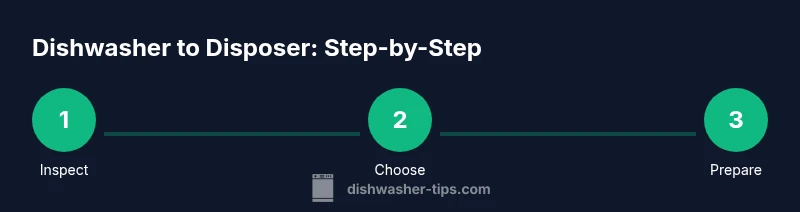
- 1
Inspect
Inspect the disposal inlet and the plumbing under the sink to determine whether you will use a direct connection or an air-gap setup. Look for the disposal's model-specific inlet size and any obstructions that could interfere with hose routing.
Tip: Note model numbers and check compatibility before buying adapters. - 2
Choose
Decide between an air-gap kit and a direct connection based on local codes and your disposal’s knock-out plug status. If the code requires an air gap, plan the deck-mounted device accordingly.
Tip: If unsure about local codes, contact a licensed plumber for guidance. - 3
Prep
Prepare hoses and adapters by laying out parts and confirming a clean surface around the disposal area. Remove the knockout plug only after you are ready to connect; leaving it in during prep prevents accidental leaks.
Tip: Keep a container ready to catch water during knockout plug removal. - 4
Remove
Remove the knockout plug from the disposal inlet if you’re using the direct connection. Use a flathead screwdriver carefully to pry it out without damaging the disposal.
Tip: If the plug is stubborn, apply a little penetrating oil and reattempt after a few minutes. - 5
Install
Install the adapter kit to the disposal inlet, secure with clamps, and ensure a snug fit. If using an air gap, install the device per its instructions and connect the drain line to the disposal or tailpiece.
Tip: Tighten clamps evenly to avoid kinked hoses. - 6
Attach
Attach the dishwasher discharge hose to the adapter or air-gap outlet. Ensure the hose slopes slightly downward toward the disposal to promote proper drainage.
Tip: Avoid sharp bends that can impede flow or cause leaks. - 7
Test
Restore power and run a complete cycle with the sink drain open to check for leaks and confirm drainage. If you notice leaks, tighten clamps, re-seat the connections, or replace faulty parts.
Tip: Perform multiple test cycles to ensure stability over time.
People Also Ask
Can you connect a dishwasher directly to a garbage disposal?
Yes, a direct connection is possible where allowed by code, using a compatible inlet adapter and hose. Always verify with your local plumbing codes and the disposal manufacturer’s instructions.
You can connect directly if your local codes permit it and you have the right adapter and hose.
When is an air gap required by code?
Many areas require an air gap to prevent backflow into the dishwasher. If your jurisdiction requires it, install the air-gap device according to the manufacturer’s directions.
If your area requires an air gap, install one following the directions.
What should I do if I notice a leak after installation?
Shut off power, inspect hose connections, clamps, and adapters. Re-seat parts and replace worn gaskets if needed. If leaks persist, consult a licensed plumber.
Power off, check connections and clamps, reseat parts, and consider professional help if leaks continue.
Can I reuse an old hose or adapter?
Reuse is possible only if the parts are in good condition, free of cracks, and compatible with the disposal and dishwasher. Replace worn components to reduce leak risk.
You can reuse if they’re in good shape and compatible; otherwise replace worn parts.
Do I need to remove the knockout plug if not using the disposal inlet?
If you’re not using the disposal inlet, you do not remove the knockout plug. Remove it only when you’re preparing to connect to the disposal.
Only remove the knockout plug when you plan to connect to the disposal.
Is it dangerous to work near electrical outlets and water?
Yes. Always cut power at the breaker before starting, keep water away from electrical components, and follow all safety guidelines in the appliance manuals.
Shut off power and keep water away from electrical parts to stay safe.
Watch Video
What to Remember
- Plan a code-compliant connection (air gap or direct) before starting.
- Use compatible adapters and secure hose clamps firmly.
- Remove the knockout plug only when you’re ready to connect.
- Test thoroughly for leaks and ensure proper drainage.