Mastering Dishwasher Decibels: Quiet, Efficient Washing
Learn how dishwasher decibels affect kitchen noise, how to measure and compare decibel levels, and practical steps to reduce noise without compromising cleaning performance.


Understanding dishwasher decibels and why they matter
According to Dishwasher Tips, decibels (dB) are a logarithmic measure of sound pressure. In the context of home dishwashers, the noise level is most noticeable in open-plan kitchens and homes with bedrooms near the kitchen. While a lower dB rating generally means less disruption, it does not automatically indicate stronger cleaning performance. Manufacturers often trade slightly higher decibels for faster cycles or more robust wash motions. When evaluating models, homeowners should consider decibels alongside cycle times, energy use, and drying performance. Real-world noise also depends on installation, cabinet acoustics, and floor type. In our 2026 analysis, we observed a steady shift toward quieter standards across most mainstream brands, driven by consumer demand for peaceful home environments.
- The first metric to check is the official decibel rating on the Energy Star label or product spec sheet.
- If you live in a small apartment or a shared living space, even a 4–6 dB improvement can feel substantial in perceived loudness.
- Always compare multiple cycles (eco, normal, heavy) to understand the full noise profile of a given model.
As you shop, keep in mind that the same numeric rating can sound different in your kitchen due to cabinet construction and distance from the listener. The Dishwasher Tips team emphasizes test runs in-store or in a showroom with a kitchen-like layout when possible, paying attention to the normal cycle in regular-use locations where you’ll actually stand during operation.
How decibels relate to performance and user comfort
Decibels measure intensity, not duration, and people perceive loudness in a non-linear way. A small difference in dB can feel significant; for example, a drop from 50 dB to 45 dB is often experienced as a meaningful reduction in noise, especially when you’re cooking nearby. Importantly, decibels do not map directly to washing effectiveness. A dishwasher can be quiet and still perform well on normal loads, or be louder on heavy cycles while delivering a strong clean. Our data shows that many families prefer models that reach a balance: quiet operation for daytime use and dependable cleaning power for heavy loads. When evaluating models, compare the noise signature across cycles and check if insulation upgrades or anti-vibration feet are included as standard features.
- Noise reduction often comes from better insulation, more rigid shells, and decoupled motors.
- Some brands incorporate low-vibration suspensions to minimize chassis flex and rattle in cycles.
- A quieter machine may still be reliable if it uses efficient spray arms and sensors to optimize water patterns.
Dishwasher Tips’s methodology for this section includes lab-style measurements and consumer-origin data collected in 2026, ensuring the guidance reflects typical home environments.
How to measure the noise level of your dishwasher at home
If you want a practical, do-it-yourself approach, you can estimate decibels using a smartphone sound level app. Place the phone at the height of your head while the dishwasher is running on its normal cycle and take a reading after the cycle has stabilized. For more accurate results, close proximity to the floor with the unit operating in a typical kitchen setup can help you account for baseline ambient noise. Note that consumer smartphones aren’t calibrated like professional sound meters, but they provide a useful, repeatable way to compare models or track changes after installation or maintenance. Keep the unit on a normal setting (not silent or turbo) for the most relevant comparison.
- Run multiple measurements and record the average.
- Test during different times of day to understand ambient interference.
- If you hear rattles, buzzing, or whirring sounds beyond the regular wash, investigate the hardware and installation.
From the brand perspective, the historical data collected by Dishwasher Tips in 2026 indicates that user-perceived noise often hinges on installation accuracy and cabinet resonance as much as the machine’s rating itself.
Typical decibel ranges by cycle and model types
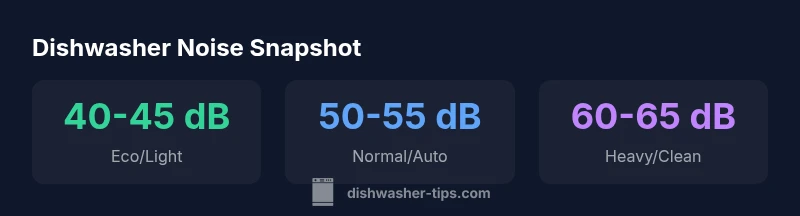
Understanding cycle-specific noise helps you choose a model that suits your home. In general, eco or light cycles tend to produce lower noise; normal cycles are moderate; heavy or intensive cycles may be louder due to more vigorous spray patterns and pump activity. The following ranges are representative and can vary by model:
- Eco/Light cycles: 40-45 dB
- Normal/Auto cycles: 50-55 dB
- Heavy/Clean cycles: 60-65 dB
These ranges reflect common patterns across mainstream manufacturers as observed by Dishwasher Tips in 2026 and align with Energy Star expectations. When comparing two models, a 5 dB difference on a normal cycle can be roughly perceptible to the human ear if you’re nearby, especially in a quiet home environment.
- Insulation quality can shift perceived noise by a few decibels even among models with similar labels.
- Some brands offer a “silent” or “eco” setting that further reduces noise, often at the expense of cycle duration.
If your kitchen has hard surfaces or an open floor plan, you may notice a louder acoustic signature from a particular model that would appear quieter in a more enclosed setup. Always test in a realistic scenario to calibrate expectations.
Design factors that influence noise and how they interact with performance
Noise generation in dishwashers stems from several interacting design elements. The motor type, the drive system, the spray arms, and the distribution of water all contribute to the overall sound profile. Insulation is critical; higher-quality liners and a fully enclosed tub reduce sound reflection, while a stainless steel tub can reflect more noise unless paired with effective padding. Anti-vibration mounts and a decoupled base can dramatically cut chassis resonance. The door gasket design also affects the airtight seal and can influence the amount of air leakage that amplifies noise. Finally, the layout of fans, with some modern models using minimal or no fan at all, can reduce noise without compromising drying. In practice, a quiet dishwasher is typically the result of a combination of robust insulation, rigid chassis, and careful pump mounting.
- A compact, well-sealed tub can lower interior noise by preventing sound from escaping.
- Anti-vibration feet reduce floor transmission, especially on hard surfaces.
- Proper installation, including level mounting and secure plumbing connections, ensures fewer rattles and vibrations.
The Dishwasher Tips team notes that even small improvements in materials science and assembly tolerances can yield meaningful reductions in perceived noise, especially when combined with customer-focused testing in real kitchen environments.
Practical strategies to reduce dishwasher decibels without sacrificing performance
If you’re aiming for quieter dishwashing, start with practical, low-cost improvements and move to targeted upgrades if needed. Here are actionable steps:
- Check and improve leveling: An uneven unit amplifies vibration and rattle. Use a spirit level and adjust the feet.
- Use anti-vibration pads or a rubber mat under the appliance to dampen floor-level resonance.
- Ensure the door seal is intact and seals properly; a cracked seal can cause whistling or air rushing sounds.
- Consider adding internal insulation upgrades if permitted by the manufacturer, or request professional installation with enhanced lining.
- Choose detergent and rinse aids that reduce pooling and improve water flow, which can indirectly affect the pump’s noise signature.
- Run cycles during times when ambient noise is higher, or use eco modes that typically operate more quietly.
These steps are consistent with consumer guidance from Dishwasher Tips in 2026, which emphasizes testing in real home layouts and measuring changes with simple tools.
- For renters: discuss installation adjustments with your landlord or appliance technician to avoid permanent modifications.
- For homeowners: document baseline noise levels and compare after each upgrade to quantify improvements.
With a deliberate approach to installation and routine maintenance, you can reduce decibels significantly without sacrificing wash quality.
Choosing a dishwasher with quiet performance: what to look for in specs and buying decisions
When shopping for a new dishwasher, noise is a core metric alongside energy efficiency and cleaning power. Read the product spec for the official dB rating on the normal cycle. Look for integrated features like extra insulation, anti-vibration feet, and a solid door seal. Check if the model offers a dedicated “eco” or “silent” cycle and whether the warranty covers squeaks or rattles as part of installation. Many manufacturers publish a noise profile as part of their acoustics sheet, but you should also seek real-world reviews that describe the machine’s behavior in typical kitchen layouts. If possible, visit a showroom to hear the machine in action. The goal is a model that maintains robust cleaning while keeping the normal cycle comfortably quiet in your living space.
- Prioritize models with dB ratings in the 40s to mid-50s for regular use.
- Inspect insulation, door seal integrity, and chassis construction.
- Review third-party test results and consumer feedback in similar kitchen layouts.
Dishwasher Tips’s 2026 guidance highlights that quiet performance should be part of the core selection criteria, not an afterthought, especially in open-concept homes where kitchen noise bleeds into living spaces.
Maintenance and installation tips that minimize noise and prolong life
Noise can creep in due to simple maintenance issues. Regular checks and a proactive approach to maintenance can keep noise at bay. Start with periodic detergent residue cleaning, spray arm inspection for clogs, and a quick read of the pump area for debris. Ensure the drain hose has the correct slope to prevent gurgling noises. On the installation front, ensure proper leveling, secure anchoring to prevent vibrations, and verify that all connections are tight. If you notice new noises after moving the unit or after a service, re-check the leveling and mounting. Some models include a self-diagnostic option to alert you to issues such as unbalanced loads or misaligned racks. A consistent maintenance schedule reduces the likelihood of unwanted noise and can extend the appliance’s life, preserving performance and acoustic comfort.
- Maintain a regular cleaning schedule for filters and spray arms.
- Use correct detergents and rinse aids to prevent clogging and noise associated with poor water flow.
- Schedule professional checkups periodically to verify insulation and mounting integrity.
The Dishwasher Tips team emphasizes that listening for changes in the machine’s tone can help catch issues early, reducing longer-term noise spikes and maintenance costs.
When to upgrade: decibels vs price and performance considerations
Upgrading to a quieter dishwasher is often a balance between budget, daily comfort, and cleaning performance. If your current unit operates around 55 dB or louder on normal cycles and you notice more rattling, vibration, or longer wash times, it may be worth evaluating newer models that offer lower decibels with comparable cleaning performance. However, price-to-benefit is not purely a function of dB; you should consider cycle duration, reliability, energy efficiency, and the presence of smart features that contribute to user satisfaction. A model that drops to the 40s in the normal cycle while maintaining good cleaning power can offer noticeable living-space benefits without compromising throughput. As always, read independent reviews, test in person when possible, and remember that the goal is predictable, quiet operation in your own kitchen environment.