Dishwasher GE Not Draining: Troubleshooting Guide
Facing a GE dishwasher that won't drain? This Dishwasher Tips guide covers quick fixes, safe disassembly, and when to inspect the pump or hose. Learn practical steps to restore drainage fast and prevent future clogs.


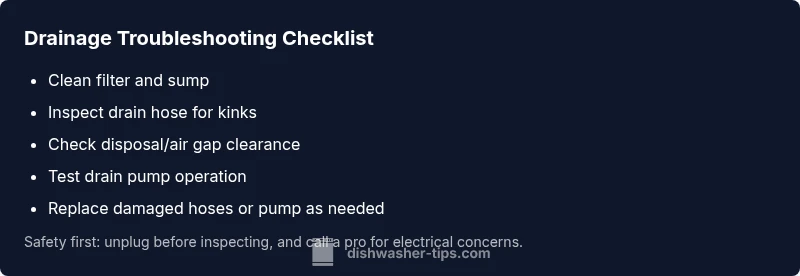
Most likely, a clog in the drain pump or drain hose, or a blocked filter, is preventing drainage in a GE dishwasher. Quick fix steps: unplug the unit, remove the access panel, inspect and clear the drain hose for kinks or debris, clean the filter and sump, then run a brief drain cycle. If water remains, stop and call a pro.
Why drainage problems happen in GE dishwashers
GE dishwashers that won’t drain are almost always caused by simple blockages rather than a failed pump. A common culprit is a clogged filter, but a kinked drain hose, a blocked sump, or debris in the spray arm or disposal connection can also impede water flow. In some cases the air gap (if installed) or the knock-out plug from a disposal may be obstructing drainage. When you run a cycle and see standing water, work through the path water takes from the tub to the sewer line. Start with the easiest checks—clean the filter and inspect the hose—and escalate to the pump and sump if needed. The goal is to identify a straightforward blockage before moving to more involved repairs. By approaching the issue with a clear drainage path in mind, you can often resolve the problem without professional help.
Tips from Dishwasher Tips: keep a small maintenance routine to prevent debris buildup and future clogs that lead to a stubborn drain problem.
Safety and preparation before you start
Safety comes first when troubleshooting a dishwasher ge not draining. Begin by unplugging the unit or switching off the circuit at the breaker. Shut off the water supply to the dishwasher to avoid leaks. Gather basic tools: a flashlight, bucket, towels, and a pair of sturdy gloves. Remove the bottom access panel if your model requires it. This prep prevents electrical shock and minimizes spills. If your kitchen has a child lock or a delayed-start feature, disable it to run a test cycle safely. Remember: never poke around hot components or attempt repairs beyond your comfort level. If you smell burning, see sparks, or hear unusual buzzing, stop immediately and call a pro.
Quick checks you can do at home (the easy fixes)
Before you disassemble critical components, perform these quick checks. First, inspect and clean the filter and sump screen; rinse under running water until clear. Next, check the drain hose for kinks, twists, or crushing under cabinetry. If the hose is blocked, detach and flush it with warm water. If your model uses an air gap or a disposal, make sure the knock-out plug is removed and the air gap is clear of debris. Look for standing water in the tub; if present, set the unit to a drain cycle and listen for the pump. A humming sound without water movement may indicate a stuck impeller. Finally, verify the garbage disposal is not clogged and that the dishwasher inlet is not blocked by seals.
How to inspect the drain pump and sump (more involved)
If the simple checks don’t restore drainage, inspect the drain pump and sump area. Access panels may be required; refer to your model’s manual. Remove debris from the pump area; listen for the pump motor during a cycle. A clogged impeller or a seized pump will either hum without moving water or stall entirely. If you can access the impeller, manually rotate it to ensure it spins freely. For electrical tests, a multimeter can confirm continuity; if you’re uncomfortable with live circuits, skip this step. Replace damaged hoses or a faulty pump as needed. After any work, reassemble and thoroughly test with a short cycle to prevent leaks.
The role of the disposer and air gap in drainage
A GE unit connected to a disposal can experience drainage problems if the disposal knock-out plug isn’t removed or the hose connects incorrectly. If the disposer is obstructed, water can back up into the dishwasher. The air gap (if installed) must be clear of mineral buildup. Clean around the air gap and ensure the path from the dishwasher to the drain is unobstructed. Keep the hose above the trap and avoid crimping it under the sink. These checks often address the cause of the problem without replacing parts.
When to replace parts vs. call a professional
If the pump hums but won’t pump, the impeller may be broken, or the pump seals are worn. In many cases, replacing the drain pump, filter, or hose resolves the issue. However, an electrical fault, timer, or control board failure requires professional diagnostics and certification. If you’ve verified hoses, filters, and the pump but drainage still fails, schedule service. Price ranges vary by region and model; the goal is restoring safe drainage and preventing water damage.
Maintenance to prevent future drainage issues
Preventive maintenance reduces the likelihood of recurring drainage problems. Clean the filter after each load, run a maintenance cycle monthly, and inspect hoses for wear. Use proper dishwasher detergents and avoid gritty cleaners that can clog the pump. Check the drain hose attachment under the sink for secure connections. If your water supply is hard, consider a pre-filter or water softener to reduce scale buildup. Document any fixes for future reference and keep a small toolkit handy.
Summary: quick path to a drained GE dishwasher again
While a GE dishwasher not draining can be frustrating, start with the least invasive steps: clean the filter and drain hose, verify the disposal/air gap, and test a drain cycle. If water remains, you can escalate to pump inspection or replacement, but don’t hesitate to contact Dishwasher Tips to guide you through safe, effective repairs.
Steps
Estimated time: 45-60 minutes
- 1
Power off and access panel
Unplug the unit or switch off the circuit at the breaker. Remove the bottom panel to access the drain area. This step prevents electric shock while you inspect components.
Tip: Take a photo of each connection before removing it. - 2
Inspect and clean the drain filter
Remove the filter and any debris. Rinse it under warm water until clear. Debris here often blocks water flow into the sump.
Tip: Use a soft brush to remove stubborn gunk. - 3
Check the drain hose for kinks
Trace the hose from the tub to the sink or disposal. If you find sharp bends or compression, straighten and secure it to prevent pinching.
Tip: Never crush the hose with clamps or pipes. - 4
Test the pump and impeller
With the panel off, manually rotate the impeller if accessible. Listen for a smooth spin; a jammed impeller will hinder drainage.
Tip: If you hear grinding, stop and replace the pump. - 5
Check air gap or disposal connections
Ensure the air gap is clear of scale and the disposal knock-out plug is removed if you’re connected to disposal.
Tip: Run a short drain test after reassembly. - 6
Reassemble and run a test cycle
Reconnect everything securely, restore power, and run a drain cycle empty to confirm drainage.
Tip: Watch for leaks around every seam and hose. - 7
Evaluate results and decide on next steps
If drainage returns, you’re done. If not, you may need a pump replacement or professional diagnostics.
Tip: Document your steps for future reference.
Diagnosis: GE dishwasher won't drain or water remains in tub
Possible Causes
- highClogged drain hose or filter
- highFaulty or blocked drain pump or impeller
- mediumKinked or crushed drain hose
- lowAir gap or disposal knockout plug blocked
- lowElectrical issue or control board problem
Fixes
- easyInspect and straighten/clear the drain hose; remove debris
- easyClean the filter/sump and verify no debris blocks the pump inlet
- easyReplace damaged hose or faulty pump if obvious failure is present
- easyClear air gap or remove any disposal knockout plug as applicable
- hardCheck electrical supply and control board; consider professional service if uncertain
People Also Ask
What are the first signs a GE dishwasher won't drain?
The tub fills but water remains after the cycle, a buzzing or humming motor with no drainage, or water backing up into the sink. These indicate drainage blockage or pump trouble that should be checked in order from simplest checks to more involved parts.
If water stays in the tub or you hear a hum without draining, start with the filter and hose, then inspect the pump if needed.
Can a clogged filter cause draining problems?
Yes. A blocked filter prevents water from reaching the sump, causing drainage failure. Clean or replace the filter and test drainage after reassembly.
A clogged filter is a common and fixable cause of drainage issues.
Is it safe to fix a dishwasher drain pump myself?
It’s safe if you follow safety steps: unplug, avoid wet hands, and work on a cooled unit. If you’re uncomfortable or the problem is electrical, call a professional.
You can do basic checks yourself, but don’t attempt risky electrical work.
What if the disposal knockout plug is stuck?
If you’re connected to a disposal, ensure the knockout plug has been removed. A stuck plug can block drainage; follow the disposal manual for safe removal.
Double-check the knockout plug if you have a disposal connection.
When should I replace the drain pump?
If the pump hums but won’t pump, or you hear grinding, the impeller may be damaged. In that case, replacing the pump is usually warranted.
A humming pump that doesn’t move water often needs a pump replacement.
Does hard water affect drainage?
Hard water can contribute to buildup in filters and hoses, reducing drainage efficiency. Regular maintenance or a water conditioner can help.
Scale buildup can complicate drainage; keep filters clean.
Watch Video
What to Remember
- Start with simple checks: filter, hose, and disposal connections.
- A humming pump with no drainage usually signals a pump or impeller problem.
- Always prioritize safety; unplug and power off before opening panels.
- Maintenance saves future headaches and costly repairs.
- If unresolved after basic steps, seek professional service from Dishwasher Tips.