Does a Dishwasher Vibrate Like a Washing Machine? A Practical Guide
Explore whether dishwashers vibrate like washing machines, diagnose common causes, and learn practical fixes to reduce movement and noise. A 2026 Dishwasher Tips analysis informs homeowners and renters.


If you’re asking does dishwasher vibrate like washing machine, the short answer is: not usually, but it can occur when the load is unbalanced, the feet are uneven, or a component wears. A quiet hum is normal; loud, rattle-like movement signals an issue that merits inspection. This guide explains typical vibration, how to diagnose it, and practical fixes you can perform yourself.
Introduction: Why vibration matters in dishwashers
According to Dishwasher Tips, understanding does dishwasher vibrate like washing machine begins with separating normal operating movement from true wobble. In most installations, a gentle hum and only minor motion during wash and drain is expected. But when vibration is loud, frequent, or shifts with each cycle, you’re looking at a potential imbalance, a loose foot, or a worn component. This guide, grounded in Dishwasher Tips Analysis, 2026, walks through why dishwashers vibrate, how it differs from a washing machine, and practical steps you can take to diagnose and reduce movement.
A key distinction is that a dishwasher's vibration is typically intermittent and tied to the wash action and water flow, whereas a washing machine often exhibits continuous, drum-driven movement. By tracing vibration to its source—installation, load, or mechanical wear—you can apply targeted fixes rather than replacing the unit. Throughout this article you’ll find actionable checks and safe maintenance tips from the Dishwasher Tips team to help homeowners troubleshoot with confidence.
How vibration presents itself in modern dishwashers
Vibration can manifest in several forms: a soft thump as the spray arms start, a constant background rumble when the pump runs, or a noticeable wobble that makes dishes shift inside the rack. Modern dishwashers use anti-vibration feet and rigid chassis to dampen movement, but material wear, uneven flooring, and incorrect load distribution can override those design features. When you hear metal-on-plastic clacking or see the unit visibly tilting during cycles, you’re looking at an imbalance that deserves closer inspection. This section explains how to identify the specific vibration pattern you’re dealing with and why it matters when choosing a fix.
does dishwasher vibrate like washing machine? Key differences in motion
Does dishwasher vibrate like washing machine? Not typically. The key differences lie in drive method, load distribution, and mounting. A dishwasher uses a solid, cabinet-integrated frame and short strokes, producing a localized vibration that should remain contained. A washing machine involves a rotating drum with more pronounced inertia, which explains why its vibration can feel stronger and travel farther. Recognizing these differences helps homeowners avoid misdiagnosis and apply the right remedy, such as leveling for dishwashers or addressing a misaligned or unbalanced washer separately.
Common causes of vibration: load, level, and wear
Several factors commonly contribute to dishwasher vibration. Load imbalance occurs when heavy items are clustered on one side; unlevel installation causes the entire unit to tilt slightly; worn feet or a degraded anti-vibration mount can fail to dampen movement; a clogged filter or misaligned spray arm can also disrupt stability. Importantly, shelf wobble inside the rack, loose door latches, or a faulty seal can transfer motion to the tub. This section helps you pinpoint the root cause by examining load patterns, mounting, and internal components.
Diagnostics: quick checks you can perform today
Start with the simplest checks. First, make sure the dishwasher is level using a carpenter’s level and adjust the feet until the bubble sits centered. Next, redistribute dishes to avoid heavy items shadowing each other; place tall items between shorter ones for balance. Run a short cycle with no loading and listen for changes in vibration—any remaining wobble suggests a mounting issue or worn feet. Inspect the front feet for looseness and verify the cabinet is secure. If vibration persists, inspect the spray arms and filter for obstruction that could create uneven water flow and cause movement.
Fixes: leveling, feet, and load distribution
Resolved vibrations begin with a solid base. Relevel the unit, ensuring all four feet contact the floor evenly. If the floor isn’t perfectly flat, consider applying a vibration-damping mat under the unit. Replace worn feet or tighten mounting screws as needed, and check the anti-vibration components for wear. Rebalance dishes by distributing weight across racks and avoiding bulky clusters. For repeat offenders, install dedicated anti-vibration pads under the feet, and confirm the appliance is isolated from cabinet rails or adjacent cabinetry that could carry movement.
Installation, floors, and cabinet influence on vibration
Vibration sensitivity increases on uneven or soft floors, such as older wooden subfloors or carpeted areas. In kitchens with linoleum or tile, edges may shift slightly, transferring vibration to the cabinet. For renters or compact spaces, portable models demand extra attention to leveling and placement away from walls or tall cabinets. This section outlines practical steps to mitigate installation-induced vibration, including checking the floor integrity, using rigid mounting surfaces, and ensuring adequate clearance for airflow and drainage.
Maintenance practices to keep vibration at bay
Regular maintenance reduces the likelihood of vibration. Clean the filter and spray arms to maintain consistent water flow, which stabilizes the wash action. Inspect door latches and seals for play that could transfer movement to the tub. Periodically check the motor coupling and pump for wear, as improper tension or degraded bearings increase vibration. Keeping the interior free of debris and running a diagnostic cycle every 6–12 months helps detect drifting alignment or mounting issues early.
Noise vs vibration: understanding the difference
Noise often accompanies vibration but isn’t the same thing. A high-pitched whine, buzzing, or squealing can indicate motor issues or impeller damage, while vibration is more mechanical and often tied to load or leveling. Distinguishing the two helps you apply the correct remedy, whether that means lubricating a motor bearing (if serviceable) or rebalancing the rack. This section provides practical cues to tell when noise is a symptom of vibration and when it’s a separate problem.
Built-in vs portable: vibration considerations
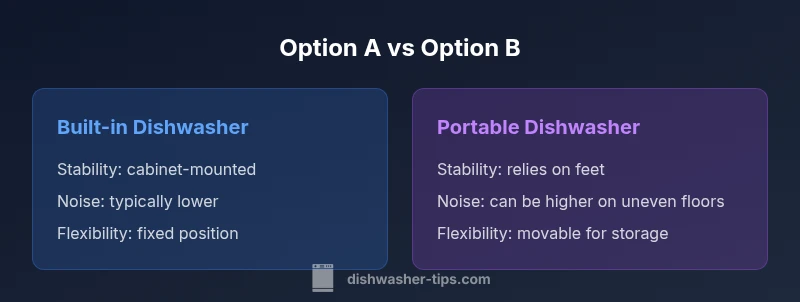
Built-in dishwashers are typically more stable due to cabinet mounting, yet they can still vibrate if the installation isn’t square or if the flooring shifts over time. Portable units rely on their own feet and surface friction; they benefit from anti-vibration mats and careful placement away from walls. This comparison clarifies how design and installation context influence vibration risk and informs your choice if you’re selecting a new unit for a space with known floor irregularities.
Practical steps for renters and homeowners
Whether you rent or own, a structured approach helps. Start with level checks and load distribution, then tackle mounting or padding improvements if wobble persists. For persistent vibration, consult the dishwasher’s warranty terms before replacing parts, as some fixes or pads may affect coverage. The goal is a stable, quiet cycle that preserves your kitchen’s comfort and your dishwasher’s longevity.
Quick step-by-step checklist to reduce vibration
- Level the unit and confirm all feet are in contact with the floor. 2) Evenly distribute dishes and avoid heavy loads on one side. 3) Inspect and clean filters and spray arms. 4) Add anti-vibration pads if necessary and secure loose panels. 5) Run a short cycle to verify improvement. 6) If vibration continues beyond these steps, seek professional service.
Next steps: when to call a pro
If a thorough DIY approach yields only marginal improvement, it’s time to call a technician. Worn bearings, motor mounts, or pump failures require specialized tools and parts. Scheduling a professional assessment ensures safety and preserves warranty when applicable, and it helps you decide whether a repair or replacement offers better long-term value.
Comparison
| Feature | Built-in Dishwasher | Portable Dishwasher |
|---|---|---|
| Installation type | Built-in under-counter, cabinet-mounted | Portable on floor or countertop |
| Typical noise and vibration profile | Generally quieter when properly installed | Potentially louder if moved or on uneven surfaces |
| Stability features | Fixed feet with anti-vibration design | Movable feet; may require mats or padding |
| Flexibility | Permanent fit in a kitchen | Can be moved or stored when not in use |
| Best use case | Permanent residence with family-sized loads | Renters or tight spaces needing mobility |
The Good
- Helps choose the right setup for space and stability
- Identifies root causes early to prevent damage
- Provides actionable fixes homeowners can perform themselves
- Encourages proactive maintenance and smoother operation
- Supports renters needing portable solutions
Disadvantages
- Some fixes may require professional service for complex components
- Portables can be less stable and produce more vibration on unlevel floors
- DIY fixes could affect warranty if not done correctly
Leveling, load distribution, and careful mounting resolve most vibration issues; replacement is rarely necessary.
For most homes, simple checks fix vibration quickly. Start with level and weight distribution, then inspect feet and mounting. If the issue persists, a professional assessment confirms whether a repair or replacement offers better long-term value.
People Also Ask
What causes dishwashers to vibrate?
Vibration is usually caused by an imbalance in load, an uneven floor, worn feet or mounts, or obstructions inside the tub. Addressing these factors one by one helps isolate the source.
Common causes include load imbalance and unlevel feet. Start with level, then check the load distribution and interior components.
Is vibration normal in a dishwasher?
Some vibration is normal as the pump and spray arms operate, but excessive movement or loud rattling is not and should be investigated.
A little vibration is normal, but loud wobble isn’t. If it feels off, do a quick diagnostic check.
Can an uneven floor cause vibration?
Yes. An uneven or soft floor can amplify movement. Leveling the unit and using a rigid surface or anti-vibration pads can mitigate this issue.
An uneven floor often causes vibration; fix the level and consider a pad for stability.
How do I level a dishwasher?
Use a level to check front-to-back and side-to-side. Adjust the adjustable feet until the bubble sits centered. Recheck after a cycle.
Place a level on the door to check, then adjust the feet until level in both directions.
Are anti-vibration pads safe for dishwashers?
Yes, when used correctly, anti-vibration pads or mats can dampen movement and reduce noise. Follow manufacturer guidelines.
Pads can help, just make sure you use ones rated for appliances and don’t block air flow.
Will upgrading to a quieter model solve vibration problems?
Upgrading can help if your current unit is inherently noisy, but most vibration issues are installation- or load-related and can be fixed without replacement.
A newer model might be quieter, but fix the root cause first to get the most value from an upgrade.
What to Remember
- Check and adjust level and feet before each cycle
- Distribute dishes evenly to minimize wobble
- Use anti-vibration pads if necessary
- Differentiate vibration sources from noise
- Renters benefit from portable options