E15 Bosch Dishwasher Error: Urgent Troubleshooting and Fixes
Urgent guide to diagnose and fix the E15 error on Bosch dishwashers. Learn quick safety steps, common causes, DIY fixes, costs, and when to call a pro from Dishwasher Tips.


An E15 error on Bosch dishwashers indicates water in the base pan has tripped the flood protection. It usually points to a leak in the tub, door seal, hoses, or a faulty float switch. Power off immediately, wipe up any spills, and carefully inspect for leaks. If water remains or reappears, call a professional right away.
What the E15 Bosch Dishwasher error means
When your Bosch dishwasher displays E15, it is signaling flood protection has been triggered because moisture is detected in the base pan. According to Dishwasher Tips, this is a high-priority fault that requires immediate attention. The root cause is almost always a leak somewhere in the tub, door seal, or drainage system, but a faulty float switch can also set off the alarm. In any case, the machine should be powered off right away to prevent water damage to your kitchen floor. The E15 error cannot simply be reset; you must identify and address the underlying leak before attempting to run a new cycle. This distinction matters because a simple reset would reintroduce a flood risk if the underlying leak is still present. The goal is to stop water ingress, dry the base pan, and verify that the leak source is fixed before testing the appliance again.
Quick safety first: power off and dry up
Immediate safety steps are non-negotiable with an E15. Unplug the machine at the outlet or switch off the circuit, then use towels or a mop to remove standing water from the base pan. Do not run the dishwasher again until the leak is located and addressed. If you notice water pooling under the unit or pooling on the floor near the cabinet, place a shallow tray to catch drips and protect the floor. This is not just about stopping the leak; it’s about preventing electrical hazards and potential mold growth in damp environments. By handling safety first, you protect your home and your own peace of mind.
Common sources of E15 in Bosch models
Most homeowners encounter E15 due to leaks around four major areas: the door seal or gasket, tub base or crack in the tub, the drain hose or filter assembly, and the float switch or sump. Less common but possible causes include a faulty inlet valve or a damaged wiring harness that affects sensor readings. The likelihood of each cause can vary by model and age, but leaks near the door seal and tub are consistently the top culprits. Inspect these areas for cracks, deformations, or obvious dampness, and check for hidden leaks behind panels or under the dishwasher.
How the drainage system relates to E15
A clogged drain filter, kinked drain hose, or a failed drain pump can lead to water backing up into the base pan, triggering E15. Start with the simplest checks: remove and clean the drain filter, inspect the drain hose for kinks or pinch points, and verify the pump housing is clear of debris. If the drain system is compromised, water remains in the sump, sending a flood alert. In some Bosch models, the pump can seize or the impeller can break, causing insufficient drainage and E15. Regularly cleaning the filter and inspecting hoses can prevent this issue.
Step-by-step quick fixes you can try safely (before calling a pro)
If you’re comfortable with minor DIY and there is no active electrical hazard, you can perform a few quick checks. First, remove standing water from the base pan and dry the area. Then check the door seal for cracks or gaps and replace it if signs of wear are evident. Next, disconnect and inspect the drain hose for kinks or blockages; clear any debris in the filter and sump area. Finally, reset the base by powering the unit off for 60 seconds and then turning it back on. If the leak persists, stop and contact a professional.
When to call a professional and typical costs
If the leak source is not obvious or water continues to appear after basic checks, professional service is required. A service call typically ranges from a modest amount to several hundred dollars depending on the location and extent of the leak. In many cases, replacing seals, hoses, or a faulty float switch can be resolved for a reasonable amount, while tub or base repair may incur higher costs. Remember, extensive interior repairs may involve more significant time and labor. The key is to get a precise diagnosis and a written estimate before any replacement parts are ordered.
Maintenance tips to prevent E15 in the future
Regular preventive care reduces the odds of E15 recurring. Schedule annual inspections if your model is older, and clean the filter after every 20–30 cycles to prevent debris buildup. Use proper detergents and rinse aid to minimize residue that can affect seals and valves. Keep doors closed firmly and avoid overloading the rack, which can deform gaskets. Finally, consider installing a moisture detector near the dishwasher or on the floor adjacent to the unit for early flood detection.
Troubleshooting with Bosch diagnostic resources and community help
Bosch provides model-specific manuals and diagnostic tips that can help you interpret E15 alongside other fault codes. In addition, reputable home appliance forums and the Dishwasher Tips community can offer practical, field-tested advice. When using any online guidance, ensure you cross-check with your exact Bosch model number and serial, as E15 interpretations can differ slightly. Keep a log of symptoms, timestamps, and any test results to share with a technician.
Final quick-reference checklist and next steps
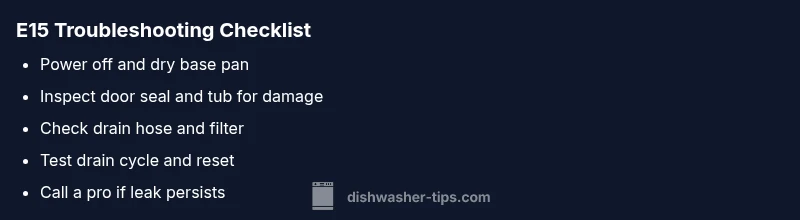
As you approach a potential fix, keep this concise checklist handy: 1) Confirm water in base pan; 2) Unplug and dry area; 3) Inspect door seal and tub; 4) Check drain hose and filter; 5) Attempt a controlled drain test; 6) If no resolution, contact a professional with the model details and the symptoms observed. This approach minimizes wasted time and ensures you have the right information for service.
Steps
Estimated time: 45-60 minutes
- 1
Power off and unplug the unit
Unplug the dishwasher at the outlet and switch off the circuit if needed. This minimizes risk during inspection and prevents electrical shock. Ensure your hands are dry before touching any metal surfaces.
Tip: Always start with safety—water and electricity do not mix. - 2
Remove standing water from the base pan
Use towels or a sponge to soak up water in the base pan. Wring out the sponge outside the kitchen to prevent rewetting the area. This step makes leak sources easier to locate and reduces mold risk.
Tip: Keep a small basin handy for collecting water during this step. - 3
Inspect the door seal and tub for damage
Check the exterior and interior door seals for cracks, warping, or fullness that might indicate a leak path. Also look for cracks in the tub or sump area. Replace any damaged seals or damaged tub sections as necessary.
Tip: Use a flashlight to illuminate hard-to-see corners. - 4
Check drain hose, filter, and sump area
Inspect the drain hose for kinks or blockages, remove the filter assembly, and clean any debris from the sump area. A clogged drain can cause water to back up into the base pan and trigger E15.
Tip: Do not use harsh chemicals—wipe instead of scrubbing with abrasive tools. - 5
Test the drain system and reset the base
After cleaning, reassemble the filter and run a short drain cycle to see if water clears from the base pan. If water remains, perform a complete reset by unplugging again for 60 seconds, then powering up.
Tip: Document the result of each test to share with a technician. - 6
Inspect the float switch and sump for obstruction
Ensure the float switch moves freely and is not stuck down. Debris can hold it down, falsely signaling water present. Check the wiring harness for any obvious damage.
Tip: If you hear clicking from the base during tests, it may indicate a faulty float switch. - 7
Decide on next steps and call a pro if needed
If leaks persist after checks and the base pan still holds water, or you cannot locate the source, stop and call a professional. Have the model, error code, and test results ready to speed up service.
Tip: Request a diagnostic visit and a written estimate before work begins.
Diagnosis: Bosch dishwasher shows E15, flood detected, base pan moisture
Possible Causes
- highLeak in tub, door seal, or tub gasket
- mediumFaulty float switch or sump
- lowDrainage system blocked or kinked
Fixes
- easyPower off and remove standing water; inspect door seal for cracks
- mediumInspect and replace faulty float switch or sump if needed
- easyUnblock drain hose or clear blockages in pump filter
- hardRepair tub leak or seal damage; replace damaged tub
People Also Ask
What does E15 mean on a Bosch dishwasher?
E15 indicates water in the base pan triggering flood protection. It usually means a leak in the tub, door seal, hoses, or float switch. Immediate action is required to prevent damage.
E15 means there's water in the base pan that stops the dishwasher to prevent flooding. Act quickly and check for leaks.
Can I fix E15 myself?
Some minor leaks and blockages can be addressed by inspection and cleaning, but many cases require professional testing and parts replacement. If you’re unsure, don’t risk electrical hazards.
You can try basic inspections, but if you’re unsure, call a professional.
Is E15 dangerous for my home?
Yes, water near electricity can cause shocks or mold growth. Treat E15 as a flood risk and power off the unit until the source is identified and repaired.
Yes, E15 is a flood risk, so stay safe and shut off power first.
How long does it take to fix E15?
Repair time varies with cause. A quick hose or seal replacement may take 1–2 hours, while tub or base work can extend to several hours—often same-day if parts are in stock.
It depends on the leak, but some fixes can be done in a few hours; more extensive repairs may take longer.
How can I prevent E15 in the future?
Regularly clean filters and check seals, avoid overloading, and perform periodic inspections of hoses, gaskets, and the base pan to catch wear early.
Keep filters clean and inspect seals to prevent E15 down the line.
Will E15 reset on its own after drying?
No. E15 requires a confirmed fix of the leak and a successful test cycle to clear the fault. It will typically remain until the protection is satisfied.
No—E15 needs a real fix and a test cycle to clear.
Watch Video
What to Remember
- Act quickly to prevent flood damage
- Identify leak sources before repair
- Call a pro if the leak source is unclear
- Regular maintenance reduces E15 risk