ffbd2420us: Urgent Dishwasher Error Troubleshooting
A rapid, step-by-step plan to diagnose and fix the ffbd2420us error on your dishwasher, with safe DIY fixes and guidance on when to call a professional.


ffbd2420us indicates a drainage or sensor fault in your dishwasher. The quickest relief is a reset, then cleaning the filter, inspecting the drain hose for kinks or clogs, and running a test cycle with an empty drum. If the code persists, follow the full diagnostic flow or call a pro.
What ffbd2420us Means in Everyday Terms
ffbd2420us is a fault code that appears on modern dishwashers when the machine detects an issue with draining or sensing water height. For homeowners, this often translates to the dishwasher either not emptying the tub at the end of a cycle or reporting an abnormal reading from the water level sensor. In plain terms, the machine cannot complete its drain cycle, which triggers an error. The cause can be as simple as debris in the filter or as involved as a failing sensor or pump. Understanding this distinction helps you choose the right next step, avoid unnecessary parts replacements, and minimize downtime. Because this is a drainage/sensing issue, it often manifests only during longer cycles or heavy loads, when the system has more water to move and measure. By approaching ffbd2420us with a methodical mindset, you can often restore function without professional service, especially if you catch it early.
Quick Fixes You Can Try Right Now
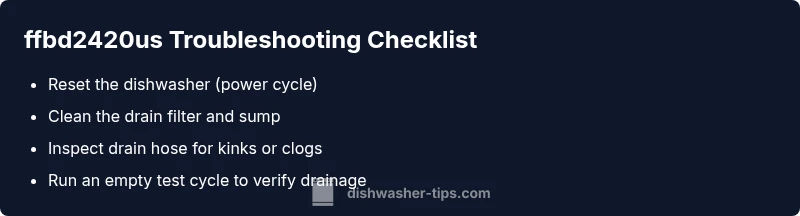
Before pulling apart major components, try these fast, low-risk steps. First, reset the dishwasher by turning it off, unplugging for 60 seconds, then powering back on. Next, open the lower access panel, remove the filter and clean any debris from the sump. Reassemble and run an empty cycle to see if the error clears. Check the drain hose for kinks or clogs and inspect the air gap/floating sensor (or float switch) for sticking. If your model has a self-cleaning drainage feature, run that as well. Finally, confirm the filter basket and spray arms are seated correctly; misalignment can trick the sensor into an error. If the code returns, move to the diagnostic path below.
Diagnostic Pathway: Symptoms, Causes, and Fixes
Start with symptoms: ffbd2420us on the display, drain cycle interrupted, or water remaining in the tub after a cycle. Then ask: is the drain path clear? Are the filters clean? Is the drain hose properly routed? Based on the answer, the likely causes are: clog in the filter (high likelihood), drain hose issues (medium), or a faulty drain pump or sensor (low). Corresponding fixes range from easy (cleaning) to hard (pump replacement). Use a step-by-step approach: verify power, then components, then movement of water, and finally test again with a no-load cycle. Document the sequence and time spent to help with future troubleshooting.
Most Common Cause: Drainage Filter Clog and How to Confirm
In many dishwashers, ffbd2420us is triggered by debris collected in the drain filter or sump screen. This reduces water flow and confuses the program’s sensors, leading to a drainage fault. To confirm, check the filter for chips of food, broken glass, or hard water buildup; remove and rinse thoroughly. Inspect the sump area for hair or fiber that can trap water. Reinstall the filter securely and run a short test cycle with no load to confirm whether drainage finishes normally. If the code returns, the root cause might be deeper and may involve the drain pump or sensor.
Step-By-Step Overview for the Most Common Fix
- Power down and unplug; 2) Remove lower access panel and filter; 3) Rinse the filter and sump, remove stubborn debris; 4) Reassemble and test with an empty cycle; 5) Inspect drain hose for kinks and ensure proper routing; 6) If still present, proceed to professional service.
Other Potential Causes and How to Tack Them
Other causes could be a faulty drain pump, a malfunctioning sensor, wiring problems, or a failed control board. If the filter is clean but the code persists, you may have a pump failure or a sensor calibration issue. Additional checks include testing the drain pump for continuity, inspecting the control board for burnt components, and verifying the float switch operates freely. Remedies vary from cleaning and reseating connectors to replacing a component; expect costs to range from $50-$250 for parts and $100-$400 for professional labor depending on the model and part.
Safety Precautions and When to Call a Professional
Working with live electronics and water requires caution. Always unplug the unit before opening panels, and never bypass safety interlocks. If you smell burning insulation, notice sparking, or the fault recurs after the above steps, stop and call a licensed technician. Pro service is recommended for complex issues like drain-pump failure or control-board faults, where improper repairs can cause further damage or pose safety risks.
Preventive Tips to Avoid ffbd2420us Recurrence
To minimize future drain-related faults, clean the filter monthly, ensure proper load distribution, and check hose routing during every clean cycle. Use the recommended detergent and avoid overloading the tub, which can overload the drain system. Regularly inspect the float switch for smooth movement and keep the sump area free of debris. A quick quarterly check can save you hours of downtime.
Steps
Estimated time: 30-60 minutes
- 1
Power down and safety check
Unplug the dishwasher and shut off the circuit to eliminate any risk of shock. Wait 60 seconds for capacitors to discharge.
Tip: If you have a recessed outlet, unplug from the wall rather than using the door switch. - 2
Access the filter and sump
Remove the lower access panel or kickplate. Take out the drain filter and inspect the sump for debris.
Tip: Have a towel handy for residual water. - 3
Clean filter and sump
Rinse the filter under running water; scrub the sump gently to remove residue. Reinspect seals for wear.
Tip: Never use metal tools that could scratch or gouge plastic. - 4
Check drain hose and routing
Inspect the drain hose for kinks or crush points; ensure it is properly routed to prevent backflow.
Tip: Check the hose connection at the base for leaks. - 5
Reconnect and test
Reassemble the base, plug in, and run a short empty cycle to verify drainage completes.
Tip: Be prepared for water to spill during the first test—have towels. - 6
Evaluate the result
If ffbd2420us recurs, stop and escalate to a professional, as further failures could indicate a pump or control issue.
Tip: Document symptoms and times to share with a technician.
Diagnosis: Dishwasher displays ffbd2420us and stops mid-cycle
Possible Causes
- highClogged or dirty drain filter
- mediumDrain hose kink or blockage
- lowFaulty drain pump or sensor
Fixes
- easyClean the drain filter and sump screen
- easyInspect drain hose for kinks; remove clogs
- hardTest or replace the drain pump or sensor module
People Also Ask
What does ffbd2420us mean on my dishwasher?
ffbd2420us signals a drainage or sensor fault. It often indicates the drain path or water-height sensing isn’t completing a cycle. Follow the diagnostic flow to verify simple fixes first.
ffbd2420us means a drainage or sensor fault. Start with easy fixes, then move to detailed diagnostics.
Can I fix ffbd2420us myself?
Yes, many cases are solvable with a reset, filter cleaning, and hose checks. If the code persists after these, more advanced tests or components may be needed.
Yes, start with basic checks; if it stays, you may need a professional.
Is ffbd2420us related to leaks?
Not always, but a clogged drain or loose hose can cause backflow that triggers the code. Inspect seals, hoses, and connections for signs of leakage.
Sometimes connected to hose or seal issues; check those first.
How long does it take to fix?
Simple fixes can take 20-40 minutes. More complex issues involving pump or sensor replacement may take 1-2 hours or more, depending on the model.
Most DIY fixes take under an hour; major parts may take longer.
When should I call a professional?
If the code returns after DIY fixes or you notice burning smells, water near electricals, or pump failure signs, contact a licensed technician.
Call a pro if it persists after DIY steps or you smell burning.
Watch Video
What to Remember
- Reset and inspect drain path first
- Thoroughly clean the drain filter
- Check drain hose routing and kinks
- Escalate if code persists after DIY steps