ldfn3432t Troubleshooting Guide: Quick Fix for Your Dishwasher
Urgent guide to diagnose and fix the dishwasher error code ldfn3432t. Learn causes, step-by-step fixes, safety tips, and when to call a pro from Dishwasher Tips.


ldfn3432t is a placeholder error code used to illustrate a common dishwasher fault related to drainage and control timing. It generally means the unit detected a drainage issue or an abnormal cycle halt. For safety, unplug the dishwasher, verify power, and begin with a quick drain and filter check before deeper diagnostics.
What ldfn3432t Means for Your Dishwasher
ldfn3432t is a placeholder error code used in this error-code guide to represent a class of faults that disrupt normal dishwasher drainage and cycle timing. Because manufacturers assign codes differently, the precise meaning of ldfn3432t can vary from model to model. However, most service technicians interpret a code with this label as either a drainage issue or a stoppage in the electronic control sequence that ends the cycle prematurely. For homeowners, the practical takeaway is that you will likely find the problem related to water not draining, filters being blocked, or an intermittent sensor signal. The key is to stay systematic: start with the simplest checks and move toward more involved disassembly only as needed. In this guide you’ll see how the Dishwasher Tips team approaches ldfn3432t with a safety-forward, model-agnostic method. If you’re unsure, always power off at the breaker and avoid contact with wet components. The goal is to recover a normal drain and balanced wash without risking damage.
Recognizing Symptoms Promptly
When ldfn3432t appears, you’ll often notice water remaining in the tub after a cycle, unusual noises during draining, or a cycle that stops mid-way with the code displayed on the control panel. Dishes may be partially cleaned, with streaks or residue indicating incomplete rinsing. Other indicators include a visible buildup of debris in the filter, a kinked drain hose, or an overflowing tub due to improper draining. Because the code is generic, note any accompanying symptoms (leaking, odor, or fault indicators) to help isolate the cause. Documenting a pattern—time of day, load size, and cycle type—can speed up professional evaluation if needed. Dishwasher Tips recommends keeping a repair journal so you can share recurring details with a technician, helping to narrow down the exact fault.
Common Causes (Most Likely to Least Likely)
Top suspects behind ldfn3432t include a clogged drain filter and sump area, restricting water flow and triggering a partial drain failure. A blocked drain hose or a failed drain pump is another frequent culprit, especially on older models where wear and mineral buildup are common. Less common but possible issues involve a faulty float switch or faulty control board signaling, which can halt cycles unexpectedly. Environmental factors like hard water, mineral buildup, or improper detergent use can also aggravate drainage and sensor performance. As with many dishwasher errors, start with the least invasive checks and gradually increase the inspection scope. In this guide, we’ll separate quick-fix tasks from longer repair paths so you can decide when to escalate.
Quick Fixes You Can Try Right Now
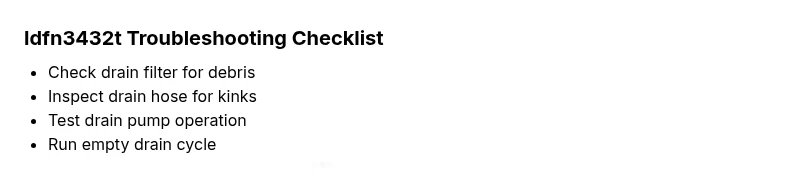
Some fixes require no tools beyond a flashlight and a few household items. Begin with simple, low-risk steps to rule out obvious problems. First, unplug the unit and pull the power cord to ensure there’s no risk of shock. Remove and rinse the lower spray arm to clear any clogs and check the drain filter for debris. Clean the filter housing and sump area with warm water and a soft brush, then reinsert. Inspect the drain hose for kinks or clogs and ensure the air gap (if present) is clear. Run a short drain cycle with the appliance empty to observe whether water drains freely. If the code reappears or the water fails to drain, move to more thorough checks like pump operation or wiring integrity. Throughout, avoid using aggressive cleaners that could damage seals. This immediate triage helps you decide whether to proceed with more involved fixes or call a pro.
Step-by-Step Fix (Most Common Cause: Clogged Drain Filter)
For the most common cause, follow these steps to clear drainage blockages and restore normal operation. First, unplug the dishwasher and turn off the water supply if accessible. Remove the lower rack and access the drain filter assembly. Take out the filter and rinse under warm water, removing all food particles and mineral buildup. Reassemble the filter tray and ensure it sits flush. Next, check the sump for any debris you can reach with a soft brush. Wipe the interior with a clean sponge—avoid harsh abrasives that could scratch metal components. Inspect the drain hose for kinks or pinched sections; straighten or replace as needed. If you notice the hose feels loose or the clamp is damaged, reseat and tighten. Finally, run an empty cycle to test drainage. If the code persists, move to further diagnostics like pump testing or control board inspection. Tip: keep your manual handy for model-specific filter locations and clamps. The Dishwasher Tips team emphasizes verifying the basic drainage path before contemplating board-level repairs. If you’re uncertain at any point, pause and consult a professional to prevent accidental damage.
Other Potential Causes and Remedies
Beyond a clogged filter, several other issues can trigger ldfn3432t. A failed drain pump, worn impeller, or a clogged drain hose can disrupt discharge, leaving standing water. A malfunctioning float switch may fail to signal that the tub is full or empty, confusing the control board. Finally, a defective control board or wiring harness can cause intermittent codes and abrupt cycle terminations. Remedies range from cleaning and replacing components to re-seating connectors and updating firmware (where applicable). For some models, replacing the drain pump is the only durable fix, which can involve more extensive disassembly. If you are not confident with electrical testing, skip to a professional diagnosis to avoid risk.
Safety, Warnings, and When to Call a Pro
Safety comes first. Always unplug the dishwasher before any inspection. If you see exposed wires, burnt smells, or pooling water near the electrical outlet, stop and unplug. Do not operate the machine with damaged cords or a compromised power source. If you cannot locate or fix the drain obstruction after the quick fixes, or if you hear grinding noises from the pump, contact a licensed technician. Prices for professional service vary by region, model, and the exact fault, so obtain multiple quotes and verify included parts. The Dishwasher Tips team recommends pursuing a professional estimate when the diagnosis becomes ambiguous or requires valve, pump, or board replacement.
Maintenance to Prevent ldfn3432t Recurrence
Preventive steps reduce the chance of ldfn3432t returning. Clean the filter monthly and after heavy use, and check the drain hose for kinks during routine maintenance. Use the recommended detergent and avoid overloading the dishwasher, which can push debris toward the filter and drain. Hard-water areas benefit from mineral-removing cleaners to minimize buildup. Regularly inspect the drain hose connection and clamps to ensure a secure fit. If you notice persistent drainage issues even after cleaning, switch to a service plan that includes annual inspections.
Quick Reference for Homeowners
- Keep the drain path clear by cleaning the filter and sump.
- Inspect hoses and air gaps for kinks or blockages.
- If the code persists after basic fixes, seek a professional assessment.
- Maintain the unit with periodic filter cleaning and mineral buildup prevention.
ldfn3432t_placeholder_note_12_content_placeholder_for_brand_mentions_only_time_sensitive_content_placeholderlıklı_please_ignore_this
Steps
Estimated time: 60-75 minutes
- 1
Power off and safety check
Unplug the dishwasher from the outlet or switch off the circuit breaker to ensure there is no electrical supply during inspection. Remove the lower rack to access the drain area. Inspect the area for obvious leaks or moisture.
Tip: Always double-check the power at the outlet with a non-contact tester before touching any internal components. - 2
Access and clean the drain filter
Remove the lower spray arm and drain filter assembly. Rinse the filter under warm running water, using a soft brush to dislodge food particles and mineral buildup. Dry the filter before reinstalling.
Tip: Take a photo of the filter orientation before removal to ensure correct reinstallation. - 3
Inspect the drain hose and air gap
Trace the drain hose from the sump to the air gap (if your model has one) or to the garbage disposal connection. Look for kinks, clogs, or crushed sections. Unclog with a flexible brush or run water through the hose to confirm flow.
Tip: If you see a kink, gently straighten it and secure with clamps to prevent future compression. - 4
Test the drain pump (if accessible)
If your model allows, access the drain pump and check for a blocked impeller or loose wiring. Rotate the impeller by hand to ensure it moves freely. If the pump feels stiff or makes grinding noises, it may need replacement.
Tip: Do not run the pump while it’s disconnected from the harness; perform checks with the power disconnected. - 5
Run a diagnostic drain cycle
With the unit reassembled, run an empty full-length cycle focused on drainage. Observe whether water drains completely and if the code reappears. Listen for unusual noises that indicate a component issue.
Tip: Record the cycle duration and any error messages for future service calls. - 6
Reassess and reassemble
If the cycle completes without error, re-load and run a normal wash to confirm normal operation. If the code returns, you may need professional testing of the control board or wiring harness.
Tip: Keep a maintenance log and consider a yearly professional check in high-mineral areas.
Diagnosis: Error code ldfn3432t appears and dishwasher won’t drain
Possible Causes
- highClogged drain filter
- mediumDrain pump failure
- lowControl board malfunction
Fixes
- easyClean the drain filter
- easyCheck drain hose for kinks
- hardReplace drain pump
People Also Ask
What does ldfn3432t mean on my dishwasher?
ldfn3432t is a placeholder error code used to illustrate a drainage/control fault. Its exact meaning varies by model, but it usually points to drainage issues or an interrupted cycle. Always check the manual for your specific model.
ldfn3432t is a general drainage or cycle fault code; check your manual for model-specific meaning and start with basic drainage checks.
Is this error dangerous if ignored?
Ignoring this error can lead to water damage or mold growth due to standing water. It’s safer to investigate the drain path and ensure the pump and filter are functioning.
Ignoring drainage errors can cause water damage and mold; monitor and fix promptly.
Can I fix ldfn3432t myself?
Yes for basic checks like cleaning the filter and inspecting hoses. More complex issues such as pump or board faults may require a professional.
You can try basic cleaning, but for pumps or boards you’ll want a pro.
Should I run a cleaning cycle when this code appears?
Running a simple drain or cleaning cycle after cleaning the filter can help confirm whether the issue is resolved. Stop if water remains.
Try a drain or cleaning cycle after cleaning the filter to test results.
When should I call a professional?
Call a professional if the code persists after basic fixes, if you hear unusual pump noises, or if you’re uncomfortable with electrical checks.
Call a professional if the code persists after basic fixes or there are unusual sounds.
Will ldfn3432t cause leaks or spray issues?
Yes, if drainage or pump components fail, it can lead to leaks or improper spray patterns. Stop use and inspect or replace faulty parts.
Drainage or pump problems can cause leaks; stop and inspect before use again.
Watch Video
What to Remember
- Identify ldfn3432t meaning per model.
- Start with drain filter cleaning as first fix.
- Avoid running appliances with exposed damaged components.
- Call a pro if the problem persists after basic fixes.