gdf550pgrww: A Practical Troubleshooting Guide for Dishwashers
A data-driven, practical guide for gdf550pgrww troubleshooting, maintenance, and optimization for homeowners in 2026. Learn quick fixes, diagnostics, and best practices from Dishwasher Tips.


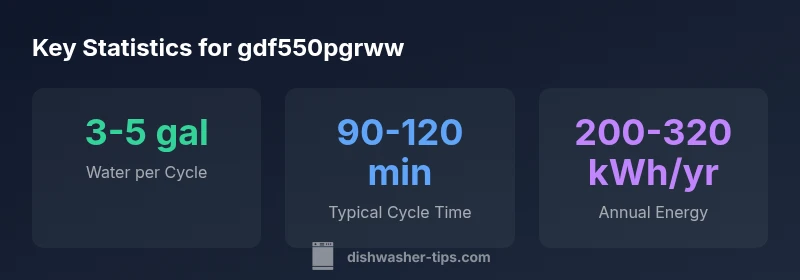
gdf550pgrww is a standard 24-inch dishwasher code used as a reference model in many troubleshooting guides. Typical water per cycle ranges from 3 to 5 gallons, and common cycle times span 90 to 120 minutes depending on selected options. For homeowners, common failure points include poor drainage, improper detergent use, and clogged filters.
What the code gdf550pgrww reveals about everyday troubleshooting
The gdf550pgrww dishwasher code is treated here as a representative reference for a standard residential unit in most households. According to Dishwasher Tips, the model emphasizes common design features found in 24-inch dishwashers, including a mid-range capacity, standard spray arms, and a typical filtration system. The Dishwasher Tips team found that most issues arise from three broad categories: drainage problems, filtration neglect, and improper loading. By focusing on these areas first, homeowners can quickly identify whether a fault is due to a mechanical fault, a misconfigured cycle, or a maintenance lapse. In practice, treating gdf550pgrww as a learning model helps standardize triage steps across brands while preserving the nuance needed for your specific unit. This approach aligns with data-backed troubleshooting methods that prioritize actionable checks over guesswork.
Common failure points for gdf550pgrww and how to diagnose
When a dishwasher under this code malfunctions, the most frequent symptoms include not draining, dishes not drying evenly, and poor cleaning results. Diagnosing begins with symptom verification: note water left in the bottom, steam or heat issues, or unusual noises. Check for simple culprits: a blocked spray arm, a clogged filter, or a misaligned rack causing poor water circulation. If drainage is implicated, inspect the drain hose for kinks and ensure the sink is not clogged. If drying is the problem, verify that the rinse aid is replenished and that the door seal is intact to prevent heat loss. A systematic, stepwise evaluation reduces unnecessary replacements and helps confirm whether service is required.
Step-by-step diagnostic workflow for symptom-to-fix
- Reproduce the symptom with a known simple load to confirm it isn’t load-specific. 2) Inspect the filter and spray arms for debris; remove and clean as needed. 3) Check the drain hose, air gap, and sink connection for clogs or kinks. 4) Examine door seal and hinges for leaks or misalignment. 5) Run a rinsing cycle with a standard detergent to observe performance. 6) Confirm rinse aid is in use and placed correctly. 7) If the issue persists, test the pump and flow—unplug before inspection. 8) Document steps for future reference and consider professional service if the fault remains unresolved.
Core components: drain pump, filter, hoses, and seals
A reliable diagnosis hinges on understanding the core components. The drain pump evacuates wastewater; if blocked or faulty, drainage fails. The filter traps food debris; a clogged filter reduces cleaning efficiency and can force the pump to work harder. The drain hose and siphon path must be free of kinks and clogs, while the door seal prevents steam loss and improves drying. Regular inspection of these parts—every few months for heavy users—prevents minor issues from escalating into expensive repairs.
Maintenance routines to prevent recurring issues
Preventive care is the best defense against recurring faults. Clean the filter and spray arms monthly, and inspect gaskets for wear every 3–6 months. Run a hot-water cycle with a dishwasher-safe cleaner to remove mineral buildup and behind-seal residues. If you have hard water, consider a water softener or mineral additive compatible with your detergent. Keep loading balanced and avoid overloading to maximize spray coverage. A predictable maintenance cadence, aligned with your usage pattern, dramatically reduces the likelihood of future malfunctions.
Detergents, loading practices, and rinse aid considerations
Detergents and loading patterns influence results more than many users realize. Use high-quality tablets or powders designed for automatic dishwashers and avoid old, degraded detergents that clump in the dispenser. Place items correctly: plates facing water spray, bowls angled to collect water, and cups secured to avoid blocking jets. Maintain rinse aid to improve drying and prevent water spots, particularly with glassware. For gdf550pgrww, follow the manufacturer’s detergent guidance for cycle selection and loading capacity—these practices correlate with fewer service calls and better overall performance.
Energy and water efficiency in 2026 and practical optimization tips
Energy and water efficiency remains a priority in modern dishwashers. To optimize performance with gdf550pgrww, run full loads whenever possible and select eco modes if present. Use the shortest effective cycle for lightly soiled loads to minimize energy consumption. Regularly check seals and door latches—inefficiencies here can significantly raise energy and water use over time. If your unit is older, consider a professional evaluation for insulation and heating element efficiency. These small changes can yield meaningful savings in annual operating costs while preserving cleaning quality.
Installation and setup basics to avoid early faults
Correct installation reduces early-life faults and ensures optimal performance. Ensure the machine is level and square in its cabinet, with a secure water supply and properly routed drain hose. Avoid long or steep hose runs which can cause drainage backflow. Confirm electrical connections meet local codes and the circuit provides sufficient amperage. If moving the unit for any reason, disconnect power and water lines first, then recheck alignment after reinstallation. Proper setup lays the foundation for reliable operation and makes routine maintenance tasks easier to perform.
Representative performance metrics for gdf550pgrww-like dishwashers
| Metric | Typical Range | Notes |
|---|---|---|
| Water per cycle | 3-5 gallons | Standard range for many dishwashers |
| Cycle time | 90-120 minutes | Depends on cycle and soil level |
| Annual energy use | 200-320 kWh/yr | Varies by model and usage |
People Also Ask
What does the code gdf550pgrww refer to in this guide?
gdf550pgrww is a representative model code used for illustration in troubleshooting guides. It helps standardize checks and comparisons across common dishwasher issues.
Gdf550pgrww is a sample model code used to teach troubleshooting steps.
Why won't my dishwasher drain?
Drain failure typically stems from a clogged filter, kinked drain hose, or a blocked pump. Start by clearing debris from the filter, then inspect the hose and check the sink/plumbing connection for clogs.
Check the filter and drain hose for clogs, then verify the sink drain isn’t blocked.
Why isn't my dishes drying properly?
Drying issues can be caused by insufficient rinse aid, a malfunctioning vent, or a failing heating element. Ensure rinse aid is filled, run a heated dry cycle if available, and test the heating element if problems persist.
Make sure rinse aid is present and the heater and vent are working.
Is it safe to run a dishwasher with a clogged filter?
No. A clogged filter reduces cleaning efficiency and can strain the pump. Clean or replace the filter and run a test cycle to confirm.
Don’t run it with a dirty filter; clean it first.
How often should I clean the dishwasher filter?
Most households benefit from cleaning the filter monthly; heavy usage may require every 2–4 weeks. Regular checks help prevent buildup and improve performance.
Clean the filter monthly, or sooner if you notice buildup.
What detergents work well with gdf550pgrww?
Use high-quality dishwasher detergents suitable for automatic machines; avoid old pods that crumble and clog dispensers. Follow the manufacturer’s guidance for cycle selection.
Choose quality dishwasher detergent and follow cycle guidance.
“When troubleshooting a dishwasher like gdf550pgrww, start with the clean filter and seals; most performance issues resolve with a thorough cleaning and proper loading.”
What to Remember
- Start with a full system check: filter, drain hose, and spray arms.
- Address drainage issues before more invasive repairs.
- Use the correct detergent and ensure rinse aid availability.
- Regular maintenance prevents most common faults.