Why Are Dishwasher Pods Not Dissolving? A Practical Troubleshooting Guide
Urgent troubleshooting guide for when dishwasher pods aren’t dissolving. Learn the top causes, step-by-step fixes, safety tips, and how to prevent future pod dissolution issues from Dishwasher Tips.


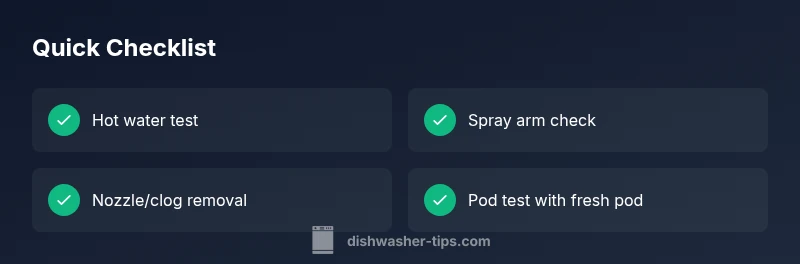
Pods failing to dissolve are typically due to three quick culprits: water that’s not hot enough, inadequate wash action, or an old/expired pod. Start by running a hot cycle with a fresh pod, check that spray arms are spinning freely, and verify the water temperature reaches at least 120°F. If the problem persists, inspect the detergent type and the dishwasher’s filter for blockages.
Understanding the Problem and the Immediate Question
If you’ve ever asked, how come my dishwasher pods are not dissolving, you’re not alone. Pods are designed to release their detergent in the brewing conditions inside your dishwasher, but a handful of common issues can prevent dissolution. According to Dishwasher Tips, the most frequent causes are too-cold water, insufficient wash action due to spray-arm problems, or using an old pod that has degraded in its packaging. This section explains how pods function and why these conditions matter, so you can quickly target the root cause without unnecessary guesswork.
First, Check the Basics: Temperature, Water Level, and Detergent Type
Begin with the simplest possibilities. Verify that you’re using a cycle that heats water adequately and that your hot water line is supplying heat. Run the hot water faucet at the kitchen sink for 10–15 seconds before starting the dishwasher to ensure the heater has a head start. Confirm the water temperature reaches around 120–140°F (49–60°C) during the cycle if you can. Also, confirm you’re using a single high-quality pod per wash, and that you’ve not mixed pods with other detergents as this can hinder dissolution. A quick glance at the dishwasher’s detergent drawer and the pod’s packaging helps here.
Common Causes: Hard Water, Degraded Pods, and Loading Errors
Hard water minerals can coat the pod and the inside of the dishwasher, reducing contact with water. Similarly, an expired or damaged pod may not dissolve properly. Incorrect loading, like placing a pod behind dishes or under a rack where water cannot reach it, is another frequent culprit. Dishwasher Tips notes that the pod should be placed in the dispenser and closed securely to ensure full contact with hot water.
Diagnostic Flow: Symptoms to Diagnosis
If you notice pods are intact after a cycle, begin with: (1) Did the cycle start as hot-wash or eco-friendly settings? (2) Was the spray arm spinning freely, with no debris? (3) Is the water temperature within target range? (4) Are filters clean and unobstructed? Following this sequence helps separate problems caused by water temperature, spray coverage, or mechanical blockages. These checks are safer and faster than swapping detergents repeatedly.
Step-by-Step Fixes for the Most Likely Cause
The most common fix is simple: ensure hot water and clear spray arms. If you suspect hardness, consider a descaling cycle or water-softening solution. Cleaning the filter and sump can also restore proper flow, letting the pod dissolve completely. Finally, use fresh pods of the correct type and avoid dual-dose products that can overwhelm the dispenser. This section provides practical actions that not only fix the current cycle but also improve overall wash performance.
Safety Tips, Warnings, and Common Pitfalls to Avoid
Always unplug the unit before cleaning the sump or filters to avoid electrical hazards. Do not mix detergents, bleach, or other cleaners with pods. Avoid overloading the dishwasher, which blocks water flow and prevents pods from dissolving. If you’re unsure about electrical components or the heater, it’s safer to contact a professional. Regular maintenance reduces the risk of these problems recurring.
Prevention: How to Keep Pods Dissolving Consistently
Establish a simple maintenance routine: check and clean the spray arms every 3–6 months, run a hot-water-only cycle monthly, and replace pods on their shelf-life dates. If you live in hard-water areas, consider a water-softening solution or mineral deposit prevention to maintain the dispenser’s reliability. Using the manufacturer-approved detergent type for your model is essential for consistent pod dissolution.
When to Call a Professional and What to Expect
If you’ve completed all checks and the pods still won’t dissolve, a professional inspection may be needed. The technician will verify heater integrity, water temperature, spray-arm function, and the dispenser mechanism. They’ll also inspect the filtration system for blockages and evaluate overall dishwasher health. Early intervention helps prevent long-term damage and continued waste of detergent.
Steps
Estimated time: 30-60 minutes
- 1
Test hot water at the sink
Turn on your kitchen faucet to full hot and let it run for 30 seconds. This preloads hot water into the line so the dishwasher starts with a hotter bath for the pod. This simple step often resolves non-dissolution caused by cold water.
Tip: Pre-warm the cycle to boost detergent activation. - 2
Inspect spray arms for clogs
Remove the lower and upper racks and check each spray arm for debris or mineral buildup. Clean with a soft brush and rinse under running water. Reassemble and run a short hot cycle to test flow.
Tip: Use a toothpick to clear small holes if necessary. - 3
Check and clean the filter/sump
Locate the dishwasher filter at the bottom of the tub. Remove, rinse under warm water, and scrub away any trapped food particles. A clean filter improves water circulation to dissolve the pod.
Tip: Do this every 1–3 months depending on usage. - 4
Verify temperature settings and cycle choice
Choose a hot-wash or heavy cycle for the test run. Confirm the dishwasher heats water; use a diagnostic feature if available to confirm the final rinse temperature.
Tip: Avoid eco modes for troubleshooting heavy-duty residue. - 5
Try a fresh pod and correct placement
Use a new pod of the correct formulation and place it in the dispenser, ensuring the lid closes properly. Do not place pods in other compartments or directly on dishes.
Tip: Never reuse deformed pods; replace immediately. - 6
Run a test cycle and observe
Run a full hot-cycle test and check whether the pod dissolves completely and dishes come clean. If residue remains, proceed to a deep clean of the dispenser and routine maintenance.
Tip: Document symptoms for future reference and pro help if needed.
Diagnosis: Dishwasher pods not dissolving or leaving residue after a wash
Possible Causes
- highWater not reaching pods due to clogged spray arms or poor water pressure
- highWater temperature too low for proper detergent dissolution
- mediumExpired, damaged, or incompatible detergent pod
- lowImproper loading or dispenser lid not sealing, preventing pod release
Fixes
- easyInspect and clean spray arms, remove obstructions, and run a hot cycle to restore optimal water flow
- easyEnsure water heater is functioning and water reaches recommended temperature during a cycle; run hot-water fill prior to cycle
- easyReplace with fresh pods of the same brand and correct formulation; check shelf-life on packaging
- easyCheck dispenser lid alignment and door gasket; reseat the dispenser and run a test cycle
People Also Ask
Why are my dishwasher pods not dissolving even on a hot cycle?
The pods may be old or degraded, or there could be a blockage in water flow or heater settings. Start by ensuring the water is hot enough, spray arms are clear, and the dispenser is functioning properly. If it persists, inspect the filter and consider trying a fresh pod.
Pods not dissolving on hot cycles are usually due to a clogged spray arm, insufficient water temperature, or an old pod. Check temperature, clear the arms, and try a fresh pod.
Can old or expired pods fail to dissolve?
Yes. Pods can lose effectiveness over time, and an expired or degraded pod may fail to dissolve properly. Always use fresh pods and store them in a cool, dry place away from moisture.
Old pods can fail to dissolve. Use fresh pods and store properly.
What environmental factors affect pod dissolution?
Water temperature, water hardness, and cycle type significantly influence pod dissolution. Hard water minerals can coat the pod and dispenser, while cold water reduces dissolution speed.
Water temperature and hardness affect how well pods dissolve.
Should I switch to powder if pods won’t dissolve?
If pods consistently fail, you may temporarily try powder or gel to determine if the issue is pod-specific. However, address root causes (temperature, spray action, dispenser) for long-term reliability.
You could try powder to test, but fix the pod issue for lasting results.
How can I test if my dishwasher heats water properly?
Run a diagnostic or hot cycle and monitor the final rinse temp with a thermometer if your machine doesn’t display it. If the temperature is not within target, the heater or thermostat may need service.
Test the heater by checking the final rinse temp; if it’s low, repairs may be needed.
Is it safe to run an empty cycle to fix this?
Running an empty hot cycle can help clear scales and check heating function, but it won’t solve loading issues or clogged spray arms. Use this as a diagnostic step, not a cure-all.
An empty hot cycle can help diagnose heater function but won’t fix loading problems.
Watch Video
What to Remember
- Test hot water before cycles to verify temperature.
- Keep spray arms and filters clean to ensure water reach.
- Use fresh, proper-formulation pods only.
- If issues persist, check dispenser alignment and consider professional help.
- Prevent future problems with regular maintenance.