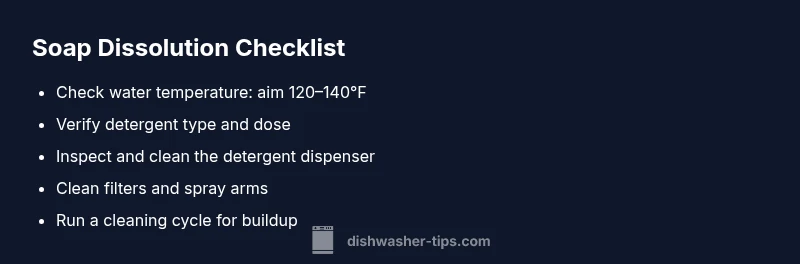
Why is Dishwasher Soap Not Dissolving?
Urgent, practical guide to diagnose and fix dishwasher soap not dissolving, covering hard water, detergent choice, dispenser issues, and safe fixes.


The most likely causes behind why is dishwasher soap not dissolving are hard water minerals and a blocked dispenser, combined with improper detergent choice or loading. Start by ensuring hot water reaches the dishwasher (120–140°F), confirm the dispenser opens during the cycle, and verify you’re using the right detergent type and dose for your machine. If the issue persists, inspect filters and spray arms.
Common Causes When Soap Won't Dissolve
If you’re wondering why is dishwasher soap not dissolving, the answer often lies in a few core factors: water temperature, mineral content, detergent type, and how you load dishes. Hard water minerals like calcium and magnesium can bind with soap, forming insoluble compounds that resist dissolution. This is especially true when the cycle uses cooler water or when the detergent tablet is designed for higher temperatures but is dumped into a lukewarm cup. Additionally, the wrong detergent format for your dishwasher can contribute to poor dissolution—powder detergents need adequate heat and proper dosing, while some pods require the cup to open cleanly to release the formula. Finally, an overloaded rack or a clogged spray path can prevent water from circulating efficiently to reach the detergent cup and dishes. Dishwasher Tips emphasizes choosing detergent compatible with your unit, loading correctly, and maintaining clean filters to keep soap dissolving reliably.
How Water Temperature and Mineral Content Affect Soap Dissolving
Water temperature is a primary driver of soap dissolution. Most machines perform best when water enters around 120–140°F (49–60°C). If your household water heater is set too low or if the incoming water cools during the wash, the soap may stay clumped rather than dissolve. Hard water compounds further complicate this by binding with soap molecules, reducing suds and leaving gritty residue. To combat this, pre-run hot water at your faucet for a minute before starting the cycle, and consider a water-softening strategy if you consistently deal with hard water. This can dramatically improve how quickly and completely the detergent dissolves, and it can improve overall cleaning performance.
Detergent Formulation, Dose, and Loading Practices
Your choice of detergent and how you load it matters greatly for dissolution. Powder detergents can clump in cold or hard water, while tablets rely on timely cup opening and exposure to hot water. If you suspect your soap isn’t dissolving, verify you’re using the detergent type recommended for your model and cycle. Follow dosage instructions precisely, avoid overfilling the dispenser, and ensure the cup lid or dispenser latch isn’t blocked by tall dishes or an overpacked rack. The Dishwasher Tips team notes that achieving optimal dissolution often requires synchronized detergent type, correct dosing, and unobstructed water flow to the cup.
Dispenser Mechanism and Spray Arm Checks
A malfunctioning detergent dispenser is a frequent culprit for why soap won’t dissolve. Inspect the dispenser lid, hinges, and seals for grime or residue that could prevent it from opening. A partial seal may keep the detergent from entering the wash. Also inspect the spray arms to ensure blocked jets aren’t choking water pressure or dispersing soap away from the dishes. If the dispenser fails to open or water cannot reach the detergent, the system will fail to dissolve the soap and distribute it evenly. Clean all visible blockers and test the mechanism with an empty cycle to confirm proper operation.
Cleaning the Filters, Jets, and Drain Path
Blocked filters or clogged drainage can hamper water circulation, limiting the distribution of detergent and water to the load. Start by removing and rinsing the filter screen and any food debris from the sump. Inspect the pump and spray arms for mineral buildup or soap scum, and remove any blockages. A clean drainage path ensures water reaches the detergent cup and jets. Regular maintenance—especially in areas with mineral-rich water—keeps soap dissolution predictable and improves overall cleaning performance.
Quick Fixes and When to Seek Help
If the issue persists after checking temperature, dispenser function, and loading, run a cleaning cycle with a dishwasher-safe cleaner to remove mineral buildup and soap scum. Use fresh detergent and ensure the cycle runs on a hot setting. If you still observe undissolved soap, there may be a more persistent mechanical problem such as a failing heater, a damaged dispenser, or a severely blocked spray system. In those cases, contacting a licensed technician is advised to prevent further damage and avoid wasted detergent and frustrated cycles.
Preventive Maintenance to Keep Soap Dissolving Consistently
To prevent recurring issues with soap not dissolving, schedule periodic maintenance: check water hardness and adjust conditions if needed, replace aging filters, and inspect cup mechanisms monthly. Use the correct detergent for your machine and cycle, store detergent in a dry place to avoid moisture exposure, and perform a monthly cleaning cycle with a dishwasher cleaner. Small, proactive steps reduce the chances of soap not dissolving and protect your dishwasher’s efficiency.
Steps
Estimated time: 60-90 minutes
- 1
Verify water temperature before loading
Run hot water from the kitchen faucet and let it run for about a minute to ensure the incoming water is hot. This helps the detergent dissolve more effectively once the cycle begins.
Tip: Hot water at the start reduces cold-start dilution of detergent. - 2
Check detergent type and dose
Confirm you’re using the correct detergent format for your dishwasher (powder vs tablet) and follow the package’s recommended dose for your load size. Avoid using damp or old detergent.
Tip: Use the exact amount recommended; too little can leave residue, too much can oversaturate and still not dissolve. - 3
Inspect the detergent dispenser
Open the dispenser and look for crust, soap build-up, or a misaligned lid. Clean any residue and test the mechanism using a short cycle with an empty rack to see if the cup releases.
Tip: If the lid won’t open, replace the dispenser or have it repaired. - 4
Clear filters and spray arms
Remove and rinse the bottom filter, wash arm, and any screens. Debris can block water flow, reducing contact with soap and leading to incomplete dissolution.
Tip: Use a soft brush to remove mineral buildup gently. - 5
Run a dishwasher cleaner cycle
Use a dishwasher-safe cleaner to remove mineral buildup from the interior, filters, and jets. This can improve overall performance and dissolve soap more reliably.
Tip: Follow cleaner instructions and run with empty dishwasher. - 6
Assess load arrangement
Avoid blocking the detergent cup with large dishes, lids, or tall items. Ensure there’s space for water to circulate and reach the cup during the wash.
Tip: Arrange items to allow water to reach the bottom and rear spray arms.
Diagnosis: Dishwasher soap not dissolving
Possible Causes
- highHard water/high mineral content
- mediumIncorrect detergent type or moisture-affected detergent
- mediumDispenser not opening properly or blocked
- highWater temperature too low at the start of cycle
- lowOverloaded rack blocking water flow to detergent cup
Fixes
- easyTest and raise water temperature to within 120–140°F (49–60°C) before starting a cycle
- easyReplace or switch to a detergent type compatible with your machine and cycle; pay attention to dose
- easyClean the dispenser lid, seals, and any blocks inside the cup; ensure the lid opens during the cycle
- easyClean filters and spray arms to restore proper water flow and reach to the detergent cup
- easyRun a cleaning cycle with dishwasher-safe cleaner to remove mineral buildup
- mediumIf the problem persists, consult a professional technician for heater, dispenser, or pump checks
People Also Ask
Why is my dishwasher soap not dissolving even when I load correctly?
Several factors can cause this: hard water causing mineral buildup, dispenser not opening, or using the wrong detergent for your dryer model. Start by testing water temp, cleaning the dispenser, and verifying the detergent format and dosage.
Hard water and dispenser issues are common. Start by warming water, then clean the dispenser and check the detergent type and dose.
Is hard water the main reason detergent won’t dissolve?
Hard water can significantly reduce soap dissolution by binding minerals to the soap and forming films. If you have mineral-rich water, a water conditioner or a softening approach can help improve performance.
Yes, hard water is a common culprit. Consider water softening if the issue persists.
Can dishwasher pods fail to dissolve?
Pods can fail to dissolve if the dispenser doesn’t open, if the load blocks water flow, or if the water temperature is too low at the start of the cycle. Ensure the dispenser works and that cups are not obstructed.
Pods can fail when the cup doesn’t open or water can’t reach them due to a blockage.
What water temperature is ideal for detergent dissolution?
Most detergents dissolve best between 120–140°F (49–60°C). If your water is cooler, try a hot water wash or pre-warm water for the cycle.
Aim for about 120 to 140 degrees Fahrenheit for best soap dissolution.
When should I replace detergent or the dispenser?
If the dispenser shows wear, cracks, or consistent failure to release detergent, or if the detergent brand you use is old or ineffective, consider replacement. Regularly check expiry dates on pods.
If you notice repeated failure to release detergent or wear on the dispenser, consider replacement.
Watch Video
What to Remember
- Test water temperature and adjust for hot cycles
- Use the correct detergent type and dose
- Clean dispenser, filters, and spray arms regularly
- Run a cleaning cycle occasionally to prevent buildup
- Consult a professional if issues persist after basic checks