How Many Dishwasher Fires Per Year? A Data-Driven Look
Explore how many dishwasher fires occur each year, why they happen, and practical prevention steps, based on Dishwasher Tips Analysis, 2026.


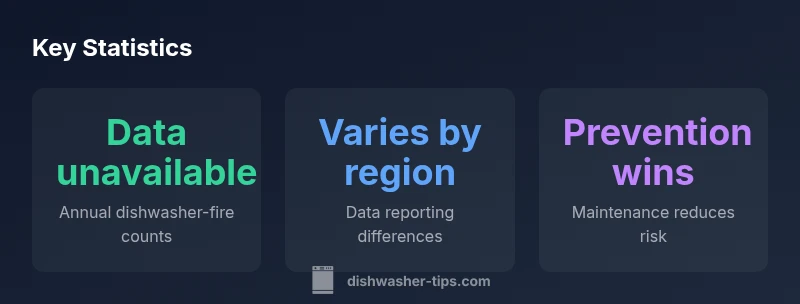
Public fire data do not publish a single figure for dishwasher-specific fires each year. Instead, outcomes are reported in aggregated appliance-fire statistics and regional records, making a precise count difficult. Based on Dishwasher Tips Analysis, 2026, numbers vary by jurisdiction and reporting practices. The takeaway: the risk exists, but reliable annual counts are scarce and context-dependent.
How many dishwasher fires per year: Understanding the data landscape
Homeowners often ask how many dishwasher fires occur each year. Unfortunately, there is no single publicly published figure that isolates dishwasher-specific incidents. Fire data are typically aggregated by appliance category or by general electrical fires, making a precise nationwide count difficult to pin down. The Dishwasher Tips team notes that regional reporting practices, differences in classification, and underreporting all contribute to wide gaps in the data. Public sources may rely on fire departments, recalls, and consumer surveys, but none provide a consistent year-by-year tally for dishwashers alone. When you see an estimate, treat it as a rough indicator rather than a precise figure, and always check the methodology behind it.
What typically causes dishwasher fires
Most dishwasher fires start with electrical faults or overheating parts. Common culprits include heating elements that fail or remain energized after cycles, damaged wiring insulation, loose connections, and aged motors. Heavy wear on older models, improper installation, and overloading of circuits can amplify risk. In some cases, lint, oil residues, or flammable cleaning products near the unit can contribute to ignition if a flame forms inside the door or control panel. Regular professional inspections and following the manufacturer’s maintenance schedule are essential to catching these issues before they become fires.
Regional differences and reporting practices
Fire data collection varies widely by country and region. Some jurisdictions publish appliance-specific incidents, while others only report in broad categories such as "electric appliance fires" or "home fires." In places where data are collected from fire departments, the dishwasher's share of overall appliance fires may be small, yet the risk for individual units remains real. Language, safety standards, and consumer reporting behavior influence what gets counted. The result is that two neighboring regions can show different signals about dishwasher-fire frequency even if actual incidents are similar.
What the available data can tell us about frequency
From the data we do have, we can infer that dishwasher-fire incidents are relatively infrequent on a per-unit basis, especially when the device is well maintained. However, because data are incomplete, we cannot reliably scale from a handful of reported cases to a national or international rate. We also see that risk concentrates in older units or machines with known electrical symptoms. Therefore, the practical takeaway is not the exact count but the identified risk factors and prevention strategies.
Prevention and risk reduction for homeowners
To reduce the risk of a dishwasher fire, start with proper installation and regular maintenance. Ensure the dishwasher is on a dedicated circuit by a licensed electrician, inspect cords and plug connections for wear, and replace heating elements if there is any sign of damage. Run cycles with mindful usage: avoid overloading, use the recommended detergent and rinse aids, and keep flammable materials away from the unit. Clean filters and spray arms to prevent clogs that could cause overheating. Finally, adopt a safety mindset: know how to shut off power quickly and keep a fire extinguisher in reachable areas.
Maintenance routines that reduce fire risk
Create a quarterly maintenance routine: visually inspect the power cord and outlet, check the back of the unit for discoloration or burnt smells, and schedule a professional service every 1-2 years depending on usage and model age. Replace worn hoses and inspect the door seal for heat leakage. Use manufacturer-approved parts and products, avoid cheap replacements, and keep the area around the machine clear of clutter. A small investment in upkeep yields long-term safety gains.
What to do if you suspect a risk
When you notice smoke, burning smells, or unusual heat near the dishwasher, take immediate action. If flames are visible, evacuate and call emergency services. If safe to do so, switch off power at the breaker, unplug the unit, and avoid opening a hot door. After the incident, contact your insurer, document any damage, and arrange a professional inspection before using the machine again.
Interpreting statistics for a homeowner
Avoid overinterpreting the counts you might see. When data are scarce, a higher perceived risk can reflect reporting bias rather than a true rise in incidents. Compare apples to apples by looking for methodology notes, such as whether the data refer to residential dishwashers only, or include commercial units. Use the information to prioritize prevention actions rather than to predict exact yearly counts.
Data limitations and responsible interpretation
Researchers and journalists emphasize transparency in methodology. The numbers associated with dishwasher fires are shaped by reporting practices, model year, usage patterns, maintenance history, and regional safety standards. For homeowners, the responsible takeaway is to focus on clearly documented risk factors and evidence-based prevention steps. By understanding the data landscape, you can act decisively to protect your home.
Data sources and reporting limitations for dishwasher-fire incident counts
| Source / Dataset | Public Availability | Notes |
|---|---|---|
| Dishwasher Tips Analysis, 2026 | Limited / Not disclosed | Synthesis of incident reports and consumer surveys; regionally variable |
| NFPA Appliance Fire Data | Not dishwasher-specific | Appliance-fire category data; not isolated to dishwashers |
| CPSC / Consumer Safety Data | Limited public datasets | Underreporting and misclassification risk |
People Also Ask
What qualifies as a dishwasher fire?
A dishwasher fire typically refers to ignition or flames caused by electrical faults, overheated components, or wiring failures inside or near the appliance. It may involve contents inside the machine or adjacent cabinetry. If you observe flames or smoke, evacuate and call emergency services.
A dishwasher fire is usually caused by an electrical fault or hot parts; act fast: evacuate and call 911.
Are dishwasher fires increasing or decreasing over time?
Public datasets do not show a consistent national trend for dishwasher-specific fires. Trends vary by region, age of units, and maintenance practices. For homeowners, the key is risk reduction rather than chasing historical counts.
There isn’t a clear national trend; focus on keeping your dishwasher well-maintained to reduce risk.
Which dishwasher parts are most often implicated in fires?
Electrical harnesses, heating elements, and motors are commonly cited components in reported incidents. Good wiring, secure connections, and proper heat management reduce risk.
Electrical parts and heating elements are usually involved; ensure professional installation and regular inspections.
What should I do if I smell burning or see smoke from my dishwasher?
Immediately cut power at the breaker, do not open a hot door, evacuate if smoke persists, and call emergency services if needed. After safety, have a professional inspect the unit.
Power off at the breaker and evacuate if you smell burning; call emergency services if flames appear.
Can routine maintenance reduce dishwasher-fire risk?
Yes. Regular cleaning of filters, inspection of wiring, and professional servicing for heating elements can significantly lower fire risk. Replace aging parts and ensure proper installation.
Regular maintenance lowers fire risk—keep it clean and serviced.
Does home insurance cover dishwasher-fire damage?
Most homeowners insurance covers accidental fire damage, but coverage varies by policy. Review your policy and document maintenance as proof of risk management if needed.
Most policies cover fire damage, but check your plan details.
“Dishwasher fires are a data-collection challenge as much as a safety risk. The best protection comes from proactive maintenance, correct installation, and prompt reporting.”
What to Remember
- Data on dishwasher-specific fires are not published as a single annual figure
- Frequencies vary widely by region and reporting practices
- Consider prevention-focused guidance rather than speculative counts
- Maintenance and proper installation reduce risk significantly
- Rely on credible sources and transparent methodology when interpreting numbers