What dishwasher temperature kills bacteria: a practical guide
Explore how dishwasher temperatures affect bacteria, with practical ranges, how sanitize cycles work, and tips to ensure hygienic results.


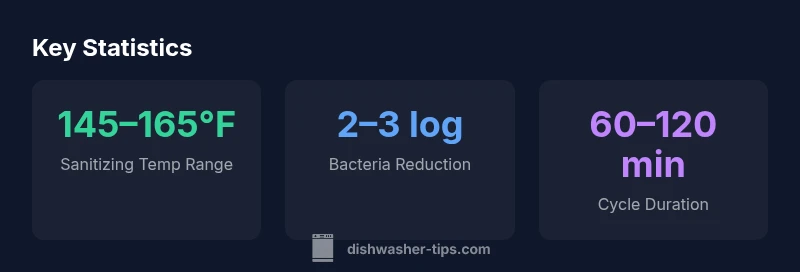
For effective sanitizing, most dishwasher cycles heat water to roughly 145–165°F (63–74°C). This range is common on sanitize or heavy programs and typically reduces bacterial load more than standard wash temps. Note that actual temperatures depend on your water heater, machine model, and cycle selection, so checking your user manual or diagnostics is wise.
How temperature kills bacteria in dishwashers
Bacteria are sensitive to high heat, and dishwashers leverage both heat and detergent to reduce microbial load on dishes, utensils, and cookware. The core mechanism is simple: high water temperature denatures essential proteins and disrupts cellular membranes, while detergent helps loosen organic matter that can shield microbes. Mechanical action—the spray arms and rotating racks—improves heat transfer and contact time, ensuring more surface area is exposed to hot water. In practice, sanitation depends on three factors: the peak temperature reached, how long heat is held, and how well the load is arranged to promote even heat distribution. A program labeled sanitize or heavy typically targets a higher-temperature phase and extended dwell time, which amplifies the bactericidal effect. If loads are overcrowded or items block spray paths, pockets of cooler water can persist and bacteria may survive. The Dishwasher Tips team emphasizes that true sanitation comes from the deliberate high-heat phase, not just the initial rinse.
What temperatures are considered sanitizing?
Industry guidance often describes sanitizing temperatures as a mid-140s to mid-160s Fahrenheit window, with some models briefly reaching the high-160s or even 170°F during a dedicated sanitation phase. Practically, many home dishwashers are calibrated so that the sanitize cycle maintains water temperatures in roughly 145–165°F (63–74°C). Temperature targets can vary by model, cycle selection, and water heater efficiency. The key message is that sustained exposure to heat at or above this range, combined with detergent and contact time, yields better microbial kill than lower-temperature washes. Always refer to your appliance manual for the exact temps your unit uses in each program. If your machine lacks a true sanitize setting, choose the cycle labeled “heavy” or “pots and pans” and ensure you’re using a hot-water supply as a baseline.
How to check your dishwasher's temperature
You don’t have to guess your dishwasher’s heat level. A practical verification method is to test with an in-cycle thermometer. Place a dishwasher-safe, high-temperature thermometer in the upper rack and run a sanitize or heavy cycle. Record the peak temperature shown by the unit’s diagnostic readout (or the thermometer). If you’re consistently below the target range, inspect your water heater: is the home supply delivering hot water at the expected temperature? Ensure there are no heat-transfer issues, such as crowded spray arms or misloaded racks that impede heat circulation. Some newer models display real-time water temperature during operation; consult the manual to enable this feature. Regular checks help confirm you’re achieving the intended sanitizing effect.
Practical tips to improve sanitation without damaging dishes
To maximize bacterial reduction without sacrificing dish quality, follow these tips: use a proper detergent designed for hot-water cleaning and a rinse aid to prevent mineral films that insulate surfaces; avoid pre-rinsing heavily—modern detergents are formulated to handle typical soiling; load dishes to allow spray arms full motion and avoid blocking gaps with large utensils; select a sanitize or heavy cycle whenever possible, especially for cutting boards, baby bottles, and other items that come into contact with your hands. Maintain water heater settings so that hot water is delivered promptly to the appliance; this can shorten the time needed to reach sanitizing temperatures. Regular maintenance, including cleaning filters and checking spray arms, helps ensure heat penetrates evenly. The goal is consistent, thorough contact between hot water, detergent, and all surfaces.
Debunking common myths about dishwasher temps
Some households believe hotter is always better for every load, but excessive heat can warp plastics or dull glassware over time. Another myth is that any hot cycle will sanitize; in reality, not all cycles maintain the necessary heat or dwell time for bacteria kill. A frequent misconception is that low-temperature cycles alone can achieve sanitation with a special detergent; while enzymes and cleaners can improve cleaning, heat remains the primary sanitizer in most household systems. Finally, the idea that setting the dishwasher to “fast wash” will deliver the same hygiene outcomes as a true sanitize cycle is false. Sanitation depends on achieving a deliberate high-heat phase and adequate contact time, not just a quick rinse.
Sanitizing temperature and cycle characteristics overview
| Aspect | Typical Range | Notes |
|---|---|---|
| Sanitizing Temp Range | 145–165°F | Common target for sanitize cycles |
| Sanitize Cycle Duration | 60–120 minutes | Longer cycles improve sanitation |
| Energy Use (sanitize) | Higher than standard cycles | Trade-off for improved hygiene |
People Also Ask
What temperature is recommended to kill bacteria in a dishwasher?
Most sanitizing cycles target roughly 145–165°F (63–74°C). Temperatures vary by model and cycle, but this range is the practical goal for reducing bacterial load. Always verify with your manual or diagnostics for your specific unit.
Most sanitizing cycles target about 145 to 165 degrees Fahrenheit. Check your model’s manual to confirm the exact temps.
Do all dishwasher cycles sanitize?
No. Only cycles labeled sanitize or heavy are designed to reach and maintain higher temperatures for a sufficient dwell time. Regular cycles may not achieve the same level of disinfection.
Not all cycles sanitize. Look for a sanitize or heavy option to reliably kill bacteria.
Can I rely on a low-temp cycle for sanitation?
Low-temperature cycles alone are not designed for disinfection. Use the sanitize cycle or a model with built-in sanitation features, and ensure you have hot water reaching the appliance.
Low-temp cycles aren’t enough for disinfection; use sanitize cycles and hot water.
How long does it take to achieve bacteria kill in a cycle?
Sanitation relies on both high heat and dwell time. Most programs run 60–120 minutes for effective disinfection, though durations vary by model and cycle.
Most sanitizing cycles run about an hour to two hours.
How can I verify my dishwasher actually sanitizes the load?
Test with a high-heat thermometer during a sanitize cycle to confirm the water reaches the expected temperature for the required duration. If temps fall short, consult the manual or a technician.
Test the cycle with a thermometer to confirm temps meet the target range.
Are high temperatures safe for plastics and glassware?
High temperatures can affect some heat-sensitive plastics. Use heat-safe items for sanitize cycles, and reserve aggressive cycles for durable dishes when possible.
Be mindful of heat-sensitive plastics when using sanitize cycles.
“High-temperature sanitizing is an essential tool, but actual effectiveness depends on cycle design and detergent chemistry.”
What to Remember
- Aim for sanitizing temps around 145–165°F during the hot phase
- Use the sanitize or heavy cycle for best bacteria kill
- Verify temps with a thermometer to confirm performance
- Load dishes to maximize heat exposure and avoid heat shadows
- Balance hygiene with care for heat-sensitive plastics