How to Put Dishwasher Filter Back In
Learn how to put dishwasher filter back in with a practical, model-agnostic approach. This guide covers locating, cleaning, reinstalling, and testing your filter to improve drainage and cleaning results.


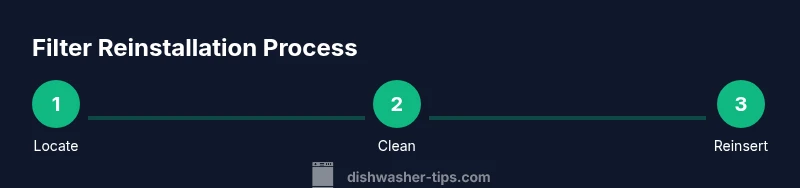
To put the dishwasher filter back in, start by powering off the dishwasher and locating the filter housing under the lower spray arm. Remove debris, rinse the filter, and reinsert it until it locks in place. This simple reset helps improve drainage and cleaning performance. Gather a flashlight, a soft brush, and a towel for best results.
Why re-installing the dishwasher filter matters
A clean, correctly positioned filter is essential for optimal water flow, efficient rinsing, and thorough cleaning. When the filter is clogged or misaligned, you may notice streaks on dishes, standing water, or longer wash cycles. According to Dishwasher Tips, regular attention to the filter is a simple, effective way to prevent more serious problems down the line. This section explains the broader importance of correct filter placement and how it ties into overall dishwasher maintenance. Understanding this will help you spot issues early and avoid costly repairs. The goal is not only to reinstall but to establish a routine that keeps your appliance running smoothly for years. Practitioners who track maintenance trends report fewer recurring clogs when filters are checked monthly, a trend you can leverage with a quick weekly check.
Filter types and where to find them
Dishwashers use several filter styles, including plastic mesh screens, flat filters, and cylindrical filters. The exact design varies by model, but the core idea is the same: capture food particles while allowing water to circulate freely. To locate yours, start at the bottom of the tub and look for a circular or rectangular housing. If you have a toe-kick panel, you may need to remove it to access the filter. Always reference your user manual for model-specific guidance, but the concepts below apply broadly and will help you identify the correct orientation and seating space.
Safety first: prep before you touch the filter
Before you begin, power off the machine and unplug it if accessible. Use a flashlight to illuminate dark corners, and wear gloves if you’re dealing with sharp rims or moldy debris. Clear the area around the dishwasher to avoid dropping screws or parts. Have a towel handy to wipe away water that may spill when removing the filter. These precautions reduce the risk of slips and protect you from hidden grime. This prep work also makes the reinstallation smoother, because you’re not rushing under time pressure.
Locating and accessing the filter housing
In most models, the filter housing sits at the bottom of the tub, just behind the lower spray arm. Some designs require removing a panel or a rack to access the assembly. Use a flashlight to inspect the housing for fingerprints, grime, or trapped debris. If you see any visible damage or warping, take a photo and consider replacing the filter rather than forcing it back in. Accessing the filter properly is half the battle; rushing this step leads to misalignment and future leaks.
Removing debris and cleaning the filter
Carefully remove the filter and any trapped debris. Rinse the filter under lukewarm running water, using a soft brush or an old toothbrush to loosen stubborn particles. Inspect the housing for mineral deposits or residue and wipe it clean with a non-abrasive sponge. Avoid using harsh chemicals that could degrade rubber seals. A quick rinse and gentle scrub set the stage for a secure reinsertion and improved wash performance.
Inspecting the filter for wear or damage
Check for cracks, loose meshes, or warping in the filter frame. A damaged filter will not seal properly and can allow debris to bypass the filtration system. If you notice any damage, replace the filter rather than attempting a risky reinstallation. Spare filters are commonly available from manufacturers or compatible third-party brands. Regular inspection helps you catch wear before it becomes a leak or performance problem.
Reinstalling the filter correctly
Align the filter with its seating guides and insert it until it sits firmly in place. Some filters click into position; others require a gentle twist to lock. Do not force the filter—if it doesn’t seat smoothly, back out and realign. Once it’s snug, wipe away any remaining moisture around the housing. A properly seated filter ensures optimal water flow and reduces the chance of leaks during cycles.
Running a test cycle and confirming success
After reinserting the filter, run a short wash cycle or a rinse to verify proper operation. Look for uniform water flow, no unusual noises, and no signs of leakage around the filter housing. If you observe drainage or performance issues, re-check the seal orientation and seating. This quick test confirms that your reinstallation is successful and reduces the likelihood of a mid-cycle reset.
Maintenance habits to extend filter life
Create a routine to inspect and clean the filter weekly or every two weeks, depending on usage. Keep a small toolkit nearby for quick checks, and photograph the filter orientation if you’re unsure about reassembly. By integrating these habits, you’ll sustain clean dishes and minimize the risk of clogs. Regular maintenance is cheaper than repeated repairs and keeps your dishwasher functioning at its best.
Quick troubleshooting if things go wrong
If a leak appears after reinsertion, power off the unit and re-check the seal alignment and seating. A misaligned seal or a damaged gasket is often the culprit. If the issue persists, consult the user manual for model-specific guidance or contact a service technician. This proactive approach saves time and reduces the risk of water damage.
Tools & Materials
- Flashlight or phone flashlight(Illuminate dark filter housing to see debris and orientation)
- Soft-bristle brush(Gently scrub the filter and housing without scratching)
- Non-abrasive sponge(Wipe down the housing surfaces and seals)
- Dish soap(Use a mild soap to clean the filter surface)
- Towel or rag(Dry the area and catch drips after cleaning)
- Container for debris(Catch and dispose of debris safely)
- Gloves (optional)(Protect hands from grime and sharp edges)
Steps
Estimated time: 20-25 minutes
- 1
Power down and access
Turn off the dishwasher and unplug if accessible. Use a flashlight to locate the filter housing under the tub or behind a toe-kick panel. This step ensures you can safely reach the filter without electrical risk.
Tip: Keep the door open during inspection to avoid steam burns. - 2
Remove the filter
Gently release the filter from its seat and place it in a container. Note the orientation so you reinstall it the same way. Debris may be trapped between the filter and housing.
Tip: Take a quick photo of the filter in place before removal for reference. - 3
Clean and inspect
Rinse the filter under lukewarm water and use a soft brush to remove stubborn particles. Wipe the housing and seals with a sponge. Check for cracks or warping.
Tip: Avoid harsh chemicals that could damage seals. - 4
Reinsert and secure
Align the filter with the guides and push or twist as required until it sits firmly. Do not force it if it won’t seat—realign and try again.
Tip: A properly seated filter should not move easily when touched. - 5
Test run and check
Run a short cycle to verify proper drainage and no leaks. Inspect the housing for moisture after the cycle completes.
Tip: If leaks occur, re-check seals and seating before calling support. - 6
Finalize and maintain
Wipe up any remaining moisture and return the rack to its place. Schedule a quick filter check next week to keep performance high.
Tip: Incorporate filter checks into your weekly routine for best results.
People Also Ask
Do all dishwashers have filters?
Most modern dishwashers use some form of a filter, but designs vary. Some have self-cleaning features, while others rely on a mesh screen. Always consult your model’s manual for specifics, but the general steps to inspect and reinstall are similar.
Most dishwashers have a filter, but the design varies. Check your manual for specifics and follow the general steps to inspect and reinstall.
What if the filter won't click back in?
First, pause and recheck alignment with the seating guides. If the filter is warped or damaged, replace it. If alignment seems correct but it still won’t lock, consult the manual or contact support for model-specific guidance.
If it won’t lock, recheck alignment and consider replacement if warped; consult the manual for model-specific steps.
How often should I clean the filter?
Aim to inspect and clean the filter every 1–4 weeks depending on usage and soil level. Heavily used kitchens may benefit from weekly checks.
Check and clean the filter every few weeks, more often if you run the dishwasher daily or have a lot of food debris.
Can re-installing the filter improve cleaning if there are drainage issues?
Yes. A clogged or mis-seated filter reduces water flow, hurting cleaning performance. Reinstalling after cleaning or replacing a worn filter can restore proper drainage.
Reinstalling a clean, properly seated filter can restore drainage and improve cleaning.
What safety precautions should I take?
Always turn off power to the unit and unplug if accessible. Use a flashlight for visibility and wear gloves if the debris is dirty or sharp.
Turn off power, use a flashlight, and wear gloves to stay safe while inspecting and cleaning.
My dishwasher leaks after reinserting the filter. What should I do?
Leakage usually signals a seal misalignment or a damaged gasket. Recheck seating and seals. If the problem persists, stop and consult the manual or a technician.
If leaking, recheck the seal and seating; persistent leaks may require professional help.
Watch Video
What to Remember
- Inspect the filter regularly to prevent clogs.
- Clean, dry, and re-seat the filter correctly.
- Test with a short cycle to confirm proper operation.
- Replace worn filters to maintain performance.
- Keep a simple maintenance routine to extend life.