How to Stop a Dishwasher Safely Mid-Cycle
Learn practical steps to stop a dishwasher safely mid-cycle, including panel cancellation, power shut-off, water valve handling, and safe restart tips for homeowners and renters.


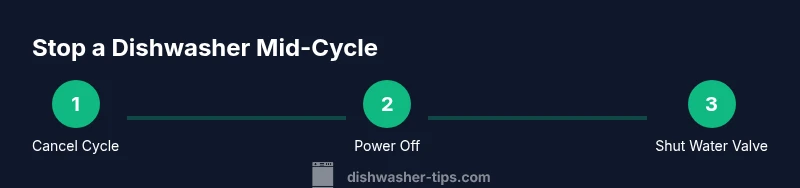
Learn how to stop a dishwasher safely mid-cycle with confidence. If the control panel responds, use the Cancel or Pause function first. If it won’t stop, power off at the wall or breaker and, if needed, shut off the water inlet. This guide covers panel options, safety tips, and when to call a pro.
Understanding why you might need to stop a dishwasher mid-cycle
Everyday household tasks sometimes require stopping a dishwasher mid-cycle. You might need to rescue overflowing water, halt a malfunctioning panel, or pause to unload a delicate load. Understanding how to stop dishwasher safely begins with recognizing common triggers like a clogged drain, a jammed spray arm, or a misbehaving control panel. According to Dishwasher Tips, being prepared with a basic plan reduces risk and makes the fix faster. In this guide, we cover safe steps, model-agnostic methods, and practical tips to minimize mess and water waste. By learning these techniques, a homeowner or renter gains confidence handling unexpected pauses without stressing expensive appliances. The aim is to help you stop the cycle without creating a bigger problem, while preserving your dishes and your kitchen floor.
Immediate safety steps you should take
Before you touch any controls or unplug anything, ensure your safety and the safety of those nearby. Start by turning off the dishwasher on the control panel if possible. If the panel is unresponsive, locate the dedicated breaker in your home's electrical panel and switch it off to cut power. Then, to prevent ongoing water flow, close the dishwasher’s water inlet valve if accessible. Keep children and pets away, and wear gloves to protect hands from hot surfaces and sharp edges. Once power is cut, you can begin handling the unit with more room to work and reduce the risk of scalding or spills.
How to stop the cycle using the control panel
Most dishwashers offer a Cancel, Stop, or Pause function. To stop safely, press the Cancel or Pause button and hold it until the indicator shows the cycle has terminated or the display resets. If your model uses a two-step process (Pause then Cancel), follow that sequence. If the display remains active or beeps continuously, rely on the power-off method described in the previous section and proceed with caution. Remember, some models require you to select a different cycle (like Start) after stopping to reset the system.
When the dishwasher won't respond: force stop vs reset
Some cycles become stuck due to sensor faults or electronic glitches. If the unit ignores input, wait a moment after power is reconnected, then try Cancel again. If still unresponsive, unplug or switch off the breaker again and give the unit a minute to reset before trying a new cycle. Do not force the door open while the unit is under pressure—hot steam can escape and cause burns. If you detect abnormal noises or smells, discontinue attempts and seek professional help.
What happens to the wash water and racks after stopping
Stopping a cycle may leave water in the bottom or on the rack. Expect residual water to drain slowly after you shut power off, and steam may rise when you open the door. Always open the door slowly and stand back to avoid a splash. Remove the rack only when you are sure water is contained and the interior is cool enough to handle. If you notice pooling, place towels to catch drips and prevent water damage to the floor.
Drying and unloading after a mid-cycle stop
Once the interior is safe, you can unload if necessary or leave everything in place until a complete reset occurs. If you’re re-running a cycle, place dishes properly to avoid crowding. Dry hands, and use a dry towel to wipe the door seal to prevent moisture transfer to other surfaces. This helps ensure the next cycle starts clean and reduces the chance of redepositing moisture on dishes.
Post-stop troubleshooting to prevent repeat stops
Regular maintenance can reduce mid-cycle stops. Clean the filters, inspect the door latch, check hoses and the drain, and ensure the spray arms are free from obstructions. If the issue recurs, consult the model manual or Dishwasher Tips for model-specific guidance. Consistent checks can prevent future interruptions and keep cycles running smoothly.
Special considerations for different configurations
If you have a built-in or portable unit, the basic safety steps still apply, but access to valves and breakers may differ. Electric models rely on power disconnection, while gas-powered appliances rely on electrical control safety as well. Built-in disposal incompatibilities or blocked drain lines can cause mid-cycle stumbles; address these by inspecting drains and ensuring the disposal is not interfering with the dishwasher.
Maintenance to reduce the need to stop cycles
Keep your dishwasher running smoothly by performing routine maintenance: clean filters monthly, inspect the door seal for wear, ensure the drain hose is clear, and use the recommended detergent type and amount. Avoid overloading and ensure dishes are properly arranged so water can circulate freely. Routine care reduces the likelihood of mid-cycle stops and improves overall performance.
Quick-start safety checklist before starting future loads
- Check that the inlet valve is fully open before starting a cycle
- Ensure the door seal is clean and intact
- Do not overload; place items to allow spray arms to rotate freely
- Confirm the water supply and electrical connections are secure
- Keep kids and pets away during operation to avoid accidents
- Have towels handy for potential leaks and steam
Final notes: staying safe and when to call a pro
If you encounter repeated mid-cycle stops or persistent panel unresponsiveness, it is wise to contact a licensed technician. The Dishwasher Tips team recommends documenting model information and the symptoms before you call so you can get faster, more precise assistance. Remember, safety comes first; don't pressure a unit into completing a cycle if you suspect a fault.
Extra tip from Dishwasher Tips
According to Dishwasher Tips, keeping a basic maintenance routine and knowing where to shut off power and water can save time and prevent damage during emergencies. This proactive approach helps you stop mid-cycle safely and re-start with confidence after a quick check.
Tools & Materials
- Safety gloves (nitrile or rubber)(Protect hands from hot water and sharp edges)
- Absorbent towels or rags(Place around the base to catch spills)
- Flashlight(Inspect interior for obstructions and leaks)
- Bucket or shallow tray(Catch leaking water during prep)
- Screwdriver set (Phillips/flathead)(Only if you need to inspect panels or disconnect hardware)
- Owner’s manual or model-specific service guide(Helpful for model-specific steps and safety warnings)
Steps
Estimated time: 15-25 minutes
- 1
Try canceling from the control panel
If the cycle is still running, locate the Cancel/Reset or Pause function and press it until the cycle stops or the display resets. If the panel completes this action, you have safely halted the cycle without powering down other systems.
Tip: If the display shows a clear 'canceled' signal, proceed to the next safety steps. - 2
Power off at the wall or breaker
If the panel is unresponsive, switch off the circuit breaker or unplug the unit from the outlet to cut all power. This ensures there’s no ongoing operation and reduces the risk of leaks while you inspect.
Tip: Stand back from hot water and use gloves when approaching the unit. - 3
Shut off the water supply
Turn clockwise the inlet valve on the water line to reduce flow and potential leaks during the stop procedure. If you cannot locate the valve, skip this step but keep an eye out for any drips when you re-power.
Tip: If you hear unusual sounds, stop and reassess before continuing. - 4
Open the door safely after power is off
Wait a moment after power is disconnected, then open the door carefully to vent steam and inspect the interior. Stand back to avoid a sudden spray of hot water.
Tip: Use gloves or a towel to handle the door and seals. - 5
Remove dishes only if they pose a hazard
If dishes are blocking access or posing a hazard, remove them with care. Do not yank or force items that are hot or heavy; place them aside on a protected surface.
Tip: Organize the load to ease future cycles and prevent reoccurrence. - 6
Dry and contain water
Use towels to soak up remaining water at the bottom and around the door to prevent slips and floor damage. Wipe the seal and inner surfaces to prepare for the next cycle.
Tip: Have towels ready before you begin this step. - 7
Reset to test a new cycle
Reconnect power, re-open the water valve, and run a short test cycle to verify normal operation. Observe for leaks and verify that the unit completes the cycle.
Tip: Choose a quick, light cycle for testing first. - 8
Call a professional if needed
If the cycle won’t stop or the unit behaves erratically after basic steps, contact a licensed technician. Provide model information and symptoms to speed up diagnosis.
Tip: Do not operate the dishwasher if you suspect electrical faults.
People Also Ask
Is stopping a dishwasher mid-cycle safe for all models?
In most cases yes, but some models require a specific cancel sequence. Always follow the manual for your model.
In most cases it's safe, but check your model's manual for the exact cancel steps.
What should I do if the panel won't respond?
Power off at the wall or breaker, then check the plug and circuit. If still unresponsive, contact manufacturer support.
Power off, check the circuit, and call support if needed.
Can stopping mid-cycle cause water damage?
Stopping can leave some water, but following safety steps minimizes risk. Use towels to manage any leaks.
There might be some water, but you can handle it with towels and care.
When should I unload dishes after stopping?
Wait until the interior is safe and dry, then unload or re-run after a full reset.
Wait for it to cool and dry before unloading.
Should I restart with the same cycle after stopping?
Yes, once everything is safe and dry, you can restart with a new cycle.
Yes, but ensure it's safe first.
What if the dishwasher keeps restarting after I stop it?
This suggests a control or relay issue; stop and consult a professional.
If it keeps starting, call a technician.
Watch Video
What to Remember
- Cancel the cycle from the panel first.
- Power off or breaker disconnect if the panel is unresponsive.
- Shut water inlet to minimize leaks when stopping.
- Open the door carefully after power is off.
- Unplug and inspect safely; call a pro for persistent issues.